Categories
Recovery & Wellness tfc Community

Keeping Fit During the Holidays: Tips for Moms & Expecting Moms

The holidays are here, and with them come festive decorations, endless to-do lists, and of course, delicious food at every turn! It can feel like the perfect storm for skipping workouts and overindulging, but staying active and feeling your best is still entirely possible. Fitness and wellness do not need to be complicated; small, consistent choices can make a big difference for your energy, mood, and overall well-being.

In this post, we will explore realistic ways to fit activity into busy holiday schedules, share quick and effective workouts for moms (that are pregnancy-approved, too!), offer general movement tips, and cover holiday-friendly nutrition and hydration strategies to keep you feeling good inside and out.

Incorporating Workouts into a Busy Holiday Schedule

The holidays are hectic, and finding time for yourself can feel impossible, which is why planning is your best friend. Early mornings, nap times, or even a few minutes before holiday events can become your workout windows. Think of this time as a little hard-earned “me time;” a moment to prioritize self-care amidst the chaos.

Micro workouts that take only 10 to 15 minutes can fit seamlessly into even the busiest days. You can combine movement with mindfulness techniques such as guided meditations, mindful walking, or yoga/prenatal yoga. This approach nurtures both body and mind, helping you feel grounded and energized. For more ideas on including mindfulness in your workout routine, check out my prior post on Mindfulness and Meditation Techniques for Expecting Moms.

Remember to approach your holiday workouts with flexibility and self-compassion. Progress matters far more than perfection, and every little movement counts. As I like to say, a little bit of anything is still more than a whole lotta nothin’!

Quick and Effective Workouts

Low-impact, safe exercises are perfect for expecting moms, especially when time is tight. Walking, prenatal yoga, and bodyweight strength exercises are easy to do at home, in a hotel room, or even in the living room between holiday tasks.

Here are a few quick routines to keep you moving:

  • A 10-minute core and glute circuit to strengthen your back and support your pelvic floor.
  • A 15-minute yoga flow to stretch tight muscles and calm your mind.
  • Short walking intervals during errands or while prepping for holiday gatherings to sneak in extra steps.

Adjust the intensity based on how you feel each day, your trimester (if applicable), and your comfort level. If you would like a tailored approach to fit your schedule, energy levels, and stage of motherhood safely, I’d love to help you design a personalized program that keeps you moving and confident this season!

Reach out here for a FREE consultation!

General Activity Tips Beyond Workouts

Even outside structured workouts, staying active can be simple and fun! Try to move throughout your day through light stretching, standing breaks, and walking.

NEAT, or non-exercise activity, can have a surprisingly big impact. Dancing with your kids while wrapping gifts, tidying up, cooking, or brisk walking while shopping all count as valuable movement.

Strength-building does not have to mean heavy lifting. Carrying groceries safely, picking up packages, and practicing good posture while bending or lifting are all ways to strengthen your muscles gently and stay functional through the holidays.

Nutrition and Hydration for Energy and Wellness

Food is fuel, but it is also an important part of holiday joy, social connection, and family traditions. Balance is key, so try to focus on getting your protein, fiber, and healthy fats to keep energy steady.

Start with smaller portions, especially when faced with multiple tempting dishes. Our eyes often end up bigger than our stomachs, so eating slowly gives your mind time to register fullness, usually taking about 15 minutes.

For quick, healthy snack ideas, check out my prior post The Best High-Protein Snacks on Amazon for Busy Moms and Health-Minded Eaters.

Hydration is just as important as nutrition, particularly during busy or festive days. Keep a water bottle nearby and sip frequently.

Finally, practice mindful eating. Enjoy holiday treats without guilt, savor the flavors, and listen to your hunger and fullness cues. This approach helps you feel nourished and satisfied while still participating fully in the holiday celebrations.

Takeaways

Small, consistent movement combined with mindful, balanced eating can make the holiday season more enjoyable and less stressful for moms or moms-to-be. Remember, progress matters more than perfection, and every step counts – literally and figuratively!

Bookmark these tips, and share your own holiday fitness hacks in the comments below! Explore our prenatal and postpartum workout programs or personalized training options to stay active, energized, and confident through the season.

Leave a Reply

Categories
Prenatal Fitness tfc Community

How to Navigate Gym Workouts as a Pregnant Person

Pregnancy changes everything, including how your workouts feel. Suddenly, movements that once felt easy may feel different, and the gym environment can sometimes feel intimidating when your body is changing daily. The good news is that staying active during pregnancy is not only possible but also incredibly beneficial for you and your baby! With the right adjustments, you can feel strong, safe, and confident in the gym.

If you’re looking for more personalized guidance as your pregnancy progresses, I offer pre- and postnatal fitness consultations designed to help you move safely and effectively every step of the way. 🫶

Why Exercise During Pregnancy Matters

Regular movement during pregnancy can do wonders for your energy, reduce common aches and pains, support better sleep, and even help prepare your body for labor and postpartum recovery, Beyond the physical, exercise is also a powerful mood booster and can help manage stress during a season that is often full of change.

A common myth is that working out while pregnant is dangerous. In reality, most women can and should remain active, provided they have their healthcare provider’s clearance and are following safe modifications.

For a deeper dive into the specific benefits, check out some of my other posts on pregnancy exercise:

Safety First: What You Should Know Before Stepping Into the Gym

Before beginning or continuing a gym routine, talk with your doctor or midwife. Every pregnancy is unique, and medical clearance ensures you’re starting from a safe place.

General safety guidelines include listening closely to your body, avoiding overheating, and staying hydrated. This is a time to maintain your fitness and feel good, not to chase new personal records or push yourself to extremes.

Be mindful of warning signs like dizziness, sudden cramping, bleeding or shortness of breath. If any of these occur, it’s best to stop immediately and seek medical guidance.

You might also like my article on what diastasis recti is and how to heal it postpartum, which covers how core changes during pregnancy can impact your exercise choices.

Smart Gym Strategies for Pregnancy

Pregnancy is the perfect season to focus on functional movements such as pushing, pulling, hinging, squatting, and single-leg work. These exercises build strength that supports you in daily life; whether that’s carrying groceries, lifting a car seat, or simply maintaining good posture.

In the gym, shift toward slightly lighter, manageable weights with higher repetitions to achieve muscle fatigue without the risk of dropping heavy weights; pay extra attention to your form and stability. Instead of exercises that put too much pressure on the belly bump (like crunches, barbell hip thrusts, or explosive jumping), opt for safer, more supportive alternatives. For example, using an incline bench rather than laying flat, choosing cable machines over heavy free weights, or using resistance bands can all provide challenging yet gentle ways to train.

This is also a great time to lean on supportive gear. A maternity belt can make certain movements more comfortable (or just provide some much needed relief from carrying your baby bump around all day long!), and a well-fitting sports bra designed for pregnancy can help you feel secure and confident through your workouts.

I used this maternity band throughout my pregnancy both in the gym and while on my feet for long stretches and really appreciated the extra support! I was also a big fan of using kinesiology tape to provide gentle support without feeling the bulkiness of a Velcro band. As a curvier gal, I really love these sports bra nursing bras from MomCozy and Kindred Bravely, which were able to support my changing body during pregnancy and are still getting plenty of use postpartum, too!

For more on versatile gear, see my post on Fitness Gear and Equipment for Moms: What You Really Need, which highlights tools that are pregnancy-friendly and space-saving!

Listening to Your Body and Adjusting Through Each Trimester

Your body will feel different in each trimester, and your workouts should adapt with it.

In the first trimester, aim for consistency while lowering intensity when needed. Think of this stage as laying the foundation for a healthy pregnancy routine.

By the second trimester, your body is making the most visible changes. This is the time to prioritize core and pelvic floor support while focusing on exercises that strengthen your back and hips.

In the third trimester, mobility, breath work, and gentle strength should take the lead. This helps your body stay comfortable and prepares you for labor and recovery.

Remember that healing and fitness are not linear. Every body is different, and it’s perfectly okay if your workouts don’t look the same from week to week! If you’d like trimester-by-trimester support, I’d love to help you design a customized fitness plan that evolves with your body.

Building Confidence in the Gym While Pregnant

Pregnancy can bring a new set of insecurities, especially in a public gym environment. The best mindset shift you can make is to focus on what feels good for your body right now instead of comparing yourself to others or even to your pre-pregnancy self.

Advocate for your comfort! You don’t owe anyone an explanation for how you move or why you’re modifying exercises. And if you’d prefer to tune out the chismosos who might be watching, put on your headphones and get lost in your playlist, mama.

Remember; pregnancy is about building strength, resilience, and self-care. It’s not about hitting new max lifts or chasing performance goals.

Conclusion and Next Steps

You can absolutely navigate the gym during pregnancy with the right knowledge, a flexible mindset, and a few smart modifications. Staying active will not only help you feel better day to day but will also support you in labor and recovery.

Keep showing up, even if your workouts look different than they once did. Movement is about progress, not perfection!

If you’d like more tips on pregnancy fitness, postpartum recovery, and building strength as a mom, subscribe to my newsletter and join our supportive community of mamas walking this same journey!

Leave a Reply

Categories
Postpartum Strength Prenatal Fitness tfc Community

Fitness Gear and Equipment for Moms: What You Really Need

As moms, our days are so full; school drop-offs and playdates, work, meals, and bedtime routines. Finding time for yourself (let alone a workout) can feel impossible! The good news? You don’t need a big expensive gym or garage full of bulky equipment to stay active.

With just a few versatile pieces of gear, you can create a minimalist “mom gym” that works for your lifestyle, your body, and your stage of motherhood. Below, I’ll walk you through the must-have essentials, a few nice extras if you want variety, and pregnancy-friendly picks to keep workouts safe and supportive.

As an Amazon Associate, I earn from qualifying purchases. This means if you click a link and make a purchase, I may receive a small commission at no extra cost to you. I only recommend products I personally use or trust.

Why Minimalist Fitness Gear Works for Moms

  • Saves time: No need to commute to a gym or wait for machines; everything is home with you, at your fingertips.
  • Saves space: Compact tools fit under the couch, in a basket, or even in the trunk of your car!
  • Saves money: Investing in a few quality pieces that you’ll actually use is less than a gym membership you won’t have time to go to.

Most importantly, minimalist gear gives you the freedom to fit in movement when it works for you. Whether that’s a 20-minute workout during nap time or stretching while your kids play, simple gear keeps fitness accessible and realistic.

Must-Have Essentials for Every Mom

  1. Yoga Mat
    • Your yoga mat is the foundation for everything from strength to stretching to Pilates to well, yoga! A good mat can even give you a little extra cushion or support for floor play or tummy time with your littles. Look for a yoga mat that provides cushioning, stability, and gives you a designated “me space” that makes workouts feel intentional.
  2. Resistance Bands and/or Hip Bands
    • Portable, affordable, and incredibly effective. Resistance bands are small but mighty, adding challenge to strength and toning workouts without taking up any space! Hip bands in particular are great for lower body and core moves like squats, glute bridges, bicycle crunches, or lateral walks.
  3. Adjustable Dumbbells (Optional Upgrade)
    • If you’re ready to take strength training up a notice, adjustable dumbbells are a smart investment. They save space compared to a full weight rack and allow you to progress gradually, which is key for building strength and supporting everyday mom life (hello, carrying toddlers and groceries in!).

Nice-to-Have Additions (If You Want More Variety)

  • Kettlebell – perfect for dynamic full-body workouts like swings, deadlifts, and squats.
    • MINIMALIST WIN: Check out this super cool adjustable weight that can serve as dumbbells, a barbell, or a kettlebell for a truly efficient space-saver!
  • Stability Ball – Builds core strength, improves balance, and doubles as a desk chair for better posture!
  • Foam Roller – Think of this as a self-massage tool. It’s wonderful for recovery, easing sore muscles, and counteracting long days of carrying kids or sitting in your office.
    • LEVEL UP: Foam Rolling too painful? Try this deep-tissue massage gun instead for a DIY treatment.

Pregnancy-Friendly Gear Picks

If you’re currently pregnant or planning for a baby, a few supportive tools can make movement safer and more comfortable:

(Tip: Many of these items will continue to serve you well postpartum, especially for gentle recovery and core rebuilding.)

How to Choose the Right Gear for You

When building your minimalist setup, think about:

  • Space: Where will you store or use it?
  • Budget: Start small; you don’t need everything at once.
  • Workout style: Do you prefer strength, yoga, or cardio-based movement?
  • Stage of motherhood: Pregnancy, postpartum,or chasing toddlers will all shape your needs.

Start with one or two essentials, then add on as you discover what you love most.

Putting it Together: Your Minimalist Mom Gym

Your perfect setup can be as simple as:

  • 1 yoga mat
  • 1 set of hip bands
  • 1 set of strength tool (like resistance bands, dumbbells, or a kettlebell)

That’s it! With these three things, you can create endless workout possibilities without feeling overwhelmed by equipment or clutter.

Fitness for moms doesn’t have to be complicated; in fact, sometimes simple is best! With just a few well-chosen pieces, you can stay active, strong, and energized through every season of motherhood.

👉Check out my post Build Your Home Gym for Under $500 if you’re curious about creating a bigger setup!

👉Shop my mom-friendly gear here.

👉Got your gear and ready for your workouts? Get personalized support with my program design and in-home or virtual training! Book a FREE consultation or sign up for my email list to get more mom-focused workouts, recipes, and wellness tips straight to your inbox.

You’re doing so much for your family already! Now, it’s time to make fitness simple and doable for you! 🤍

Leave a Reply

Categories
Postpartum Strength tfc Community

Adapting Your Fitness Routine for the Postpartum Phase

Becoming a mama is one of life’s most incredible transitions – full of joy, newness, laughter, and love! But, let’s be honest; it can also feel overwhelming sometimes. Between sleepless nights, adjusting to your new role, and trying to keep an entire human alive, finding the time and energy for yourself (let alone a workout) often feels impossible.

That’s exactly why creating a postpartum fitness routine is less about “bouncing back” and more about finding ways to feel strong, supported, and cared for in this new season. In this post, I’ll walk you through realistic, community-driven steps to help you gently return to movement again after giving birth.

Want more encouragement like this? Subscribe to my newsletter for postpartum wellness tips, fitness resources, and community support.

Lean on Your Support System

One of the biggest hurdles new moms face is time, Between recovery and the endless mental load, it’s easy to feel like working out is completely out of reach. This is where your support system – your partner, your family, and close friends, can step in.

Ask for 30 minutes of coverage so you can move your body – whether it’s for a walk, yoga, or a strength session. If you have older kids, turn “play time” into a mini workout for you by chasing, stretching, or dancing together.

So, how can we fit in workouts as a new mama? The answer is; you don’t do it alone! Leaning on your support network creates breathing room for your self-care.

Need tailored guidance to help balance the mental load? I’d love to help! Explore my personal training services designed specifically for postpartum moms.

Join Mommy & Me Fitness or Community Groups

Exercise doesn’t have to be a solo act! In fact, moving alongside other mamas can make all the difference. Mommy & me workouts offer accountability, connection, and a way to bond with your baby while you care for yourself.

If you’re local to the SoCal IE, I’d love to invite you to my Coffee Run group – we meet at the park, run/walk/jog with our littles, and end with coffee and conversation. It’s fitness, friendship, and caffeine all in one!

Not nearby? Look for community classes, virtual groups, or stroller fitness meetups in your area. The key is finding support and encouragement so you’re not going it alone.

Ready to connect? Check out the Coffee Run schedule and join us!

Create a Realistic Routine That Fits This Season

This phase of life isn’t about grinding or chasing a quick bounce back. Instead, it’s about building a postpartum workout routine that honors your energy, recovery, and priorities.

Start small – 10 to 15 minutes a few times a week is plenty for getting back into it! Consistency is far more powerful than intensity right now. Some days will be easier than others, and that’s okay!

It can all feel like a lot, and leave you wondering “how do I start exercising postpartum?” Simple: begin where you are, and remember, your worth is not defined by how quickly you “get back” to anything.

For more on creating realistic goals, read my post How to Set Realistic Goals During Pregnancy – there are great tools that transfer well to a postpartum routine, too!

Prioritize Recovery and Core Health

Before diving back into your old workouts, focus on recovery first. Gentle pelvic floor and core strengthening, mobility work, and breath work help restore your foundation. Always get clearance from your healthcare provider before starting any exercise.

If you’re wondering what exercises are safe after birth; think gentle, restorative movements like diaphragmatic breathing, bridges, walking, and light core activation before progressing.

I specialize in pre- and postnatal fitness and would love to help! Start here: Postpartum Fitness: Getting Back on Track After Baby for safe movement ideas and guidance. Then reach out when you’re ready for a personalized plan for progression!

Embrace Flexibility and Self-Compassion

Some days your movement might look like a stroller walk. Other days, your body might call for a nap – and that’s perfectly okay! Your body is healing, your mind is adjusting, and you’re learning how to be a mama in real time.

When motivation dips, remind yourself: a little bit of anything is still more than a whole lotta nothin’! Gentle stretching, a short walk, or even mindful breathing all count.

When it comes to how to stay motivated postpartum, it’s all about releasing the pressure of perfection and focusing on progress.

Want regular motivation and gentle reminders? Sign up for my weekly emails filled with encouragement and practical tips!

Conclusion: Your Journey, Your Pace

Every postpartum journey looks different. Whether you lean on your partner for help, join a community like our Coffee Run, or simply take 10 minutes for yourself, know this: your postpartum fitness routine should empower you, not exhaust you!

By building in support, choosing realistic steps, focusing on recovery, and practicing compassion, you’ll find your rhythm again – one that helps you feel strong, confident, and cared for.

Ready to start? Book a free consultation, join our Coffee Run and Mommy & Me Fitness Class, or subscribe to my newsletter for ongoing postpartum wellness support. You’ve got this, mama!

Leave a Reply

Categories
Postpartum Strength Prenatal Fitness tfc Community

Building a Support System for Your Fitness Journey as a New Mom

Becoming a mom is life-changing in the best – and sometimes most overwhelming – ways. Between feedings, naps, and adjusting to your new normal, it can feel nearly impossible to carve out time for your own health. If you’ve been wanting to start (or restart) your fitness journey, you’re not alone in feeling like you need more than just willpower – you need support!

A strong support system is the difference between feeling isolated and actually enjoying your postpartum fitness journey. In this post, we’ll explore why support matters, who you can lean on, and how to create a realistic plan that works for your life right now. Stick around to the end for resources and ways to connect with a mom community near you!

Why Support Matters in Postpartum Fitness

Support isn’t just a nice bonus – it’s essential!

  • Mentally and emotionally: Having someone in your corner reduces the sense of being overwhelmed and helps you stay motivated. Accountability keeps you showing up, even on days where it can be hard to get going.
  • Physically: Recovery takes time. Having others encourage rest when needed – or step in so you can take a workout break – makes progress safer and more sustainable.

Why do moms need support with fitness? Because it takes more than physical effort; it takes encouragement, accountability, and the reminder that you’re not doing this alone!

Lean on Your Partner or Family

Your first circle of support is often right at home.

  • Ask for help with baby swaps: One partner watches the baby while the other gets their workout in.
  • Make it a family activity: Try stroller walks, hikes, or dancing in the living room together.
  • Share the load: A partner or family member can help with meal prep or household tasks so you can use that time for movement.

Even extended family or close friends can step in – and are often happy to do so! Try setting up childcare trade-offs – “I’ll watch your little/s tomorrow afternoon if you can watch mine next week!” Support doesn’t have to be fancy; it just has to be intentional.

Join a Mommy & Me Group

Sometimes, you need community beyond your household or immediate tribe. Mommy & Me fitness groups bring connection, movement, and support together in one space.

  • No need to arrange childcare – you bring your baby with you!
  • Surround yourself with other moms who get it.
  • Create social connections while getting your workout in.
  • Bond with your baby through safe, fun activities.

At The Fitness Cult, we offer Mommy & Me classes as well as our local Coffee Run meetups – a fun way to combine movement, community, and a little caffeine!

What are mommy and me fitness classes? They’re group workouts designed for mamas and babies together, making it easier (and more enjoyable!) to stay active.

Create a Realistic Routine

One of the biggest hurdles for new moms is simply finding the time to be active!

Start by setting expectations that fit your current season of life. (For more on this, check out my earlier post How to Set Realistic Fitness Goals During Pregnancy for guidance!

Here are a few ideas to try:

  • Nap workouts: Use short nap windows for a quick strength or mobility session.
  • Stroller or carrier walks: Fresh air + movement + extra resistance of pushing a stroller or carrying a little one with you = win-win-win!
  • Workout with your baby: Try squats or lunges while rocking them to sleep, planks during tummy time, or gentle yoga while they explore nearby.

How to find time to work out as a new mom? By weaving fitness into the flow of your daily routine instead of forcing long, rigid sessions. Remember, a little bit of anything is still more than a whole lotta nothin’!

Additional Support Strategies

Sometimes, it takes a little extra accountability and structure.

  1. Find an Accountability Buddy
    • Team up with a friend, another mom, or even a virtual partner! Daily texts or weekly calls and Facetimes can be enough to keep each other motivated.
  2. Leverage Online Communities and Resources
    • Whether it’s a private Facebook group, a local community board, or an online coaching program, digital spaces can offer 24/7 encouragement. My newsletter is a great place to start if you want regular postpartum-friendly fitness tips straight to your inbox!
  3. Work with a Postpartum-Specialized Trainer
    • A certified pre/postnatal trainer understands your unique needs and ensures your workouts are safe and effective. This level of support helps you avoid injury and progress with confidence. (If you’re looking for one-on-one guidance, I’d love to help – let’s chat!)

Putting It All Together

You don’t need to build the “perfect” support system overnight. Start small. Maybe that looks like asking your partner to take over bedtime once a week to get your movement in, or signing up for just one community class to get started.

Even one support pillar – partner, family, group, or buddy – can make all the difference. The important thing is that you don’t have to do this alone!

Ready for Your Next Step?

Your postpartum fitness journey should feel supported, not stressful.

Subscribe today to get exclusive postpartum fitness tips, realistic routines, and community resources sent right to your inbox.
☕ Or, if you’re local, join us for a Coffee Run meetup or try one of our Mommy & Me classes—we’d love to meet you and your little one!

And if you know another mom who could use some encouragement? Share this post with her—you never know whose day you’ll brighten!

Leave a Reply

Categories
Nutrition & Fuel tfc Community

The Best High-Protein Snacks on Amazon for Busy Moms and Health-Minded Eaters

Life gets hectic! Between school drop-offs, work deadlines, and evening errands, finding a healthy snack that’s quick, satisfying, and protein-packed can feel impossible. That’s why I’ve rounded up my favorite high-protein snacks on Amazon that save time, satisfy cravings, and support weight loss or muscle-building goals.

Whether you’re a busy mom, looking to up your protein intake, or simply want convenient snacks that keep you full and energized, this list has you covered.

As an Amazon Associate, I earn from qualifying purchases. This means if you click a link and make a purchase, I may receive a small commission at no extra cost to you. I only recommend products I personally use or trust.


Protein Bars & On-the-Go Bites

These bars are perfect for mornings on the run, post-workout refueling, or a sweet, protein-packed pick-me-up.

Ready Nutrition CLEAN Bar (Variety Pack)

  • Protein: 15g per bar
  • Fiber: 7g
  • Why I love it: Packed with clean ingredients, this bar keeps you full and energized. Perfect for a snack between errands or after a workout.
    Grab yours on Amazon!

FULFIL Protein Snack Bars (Variety Pack)

  • Protein: 15g per bar
  • Gluten-Free: Yes
  • Why I love it: Soft, chewy, and delicious, these bars feel indulgent while keeping protein levels high. A pantry staple for busy weeks.
    Shop now on Amazon!

Built Bar, Puff Protein Bars (Variety Pack)

  • Protein: 17–19g per bar (depending on flavor)
  • Bonus: Collagen added for joint and skin support
  • Why I love it: A lighter, fluffier option that’s perfect for breakfast on the go or a mid-day energy boost.
    Click here to shop on Amazon!

Sweet, High-Protein Treats

Indulge without guilt! These sweet options are high in protein but low in sugar and carbs.

Legendary Foods Protein Roll+ Sticky Bun Flavor

  • Protein: 22g per roll
  • Low Carb & Gluten-Free: Yes
  • Why I love it: Tastes like dessert, but fuels your body with protein. Great for satisfying a sweet tooth without derailing your goals.
    Shop this treat on Amazon!

Legendary Foods Protein Pastry+ Snack Box

  • Protein: 22g per bar
  • Zero Sugar Added & Low Glycemic: Yes
  • Why I love it: Perfect for meal replacement or a high-protein snack during busy afternoons. A delicious and convenient option.
    Grab yours on Amazon!

Breakfast & Snack Essentials

High-protein breakfast and snack options that keep you full and ready to tackle your day.

Kodiak Instant Oatmeal Packets, Maple Brown Sugar

  • Protein: ~10g per packet
  • Whole Grains: 100%
  • Why I love it: A filling, comforting breakfast or snack that’s ready in minutes. Perfect for a mom-on-the-go morning.
    Shop now on Amazon!

Chobani 20g Protein Lowfat Greek Yogurt, Strawberry Kiwi

  • Protein: 20g per serving
  • Why I love it: Thick, creamy, and packed with protein. A fantastic snack or breakfast that satisfies cravings and supports your fitness goals.
    Click here to buy on Amazon!

Crunchy & Savory Snacks

When you crave something crunchy or savory, these high-protein options hit the spot.

Drizzilicious Mini Rice Cakes Variety Pack

  • Calories: 90 per bag
  • Vegan & Gluten-Free: Yes
  • Why I love it: Light, crunchy, and perfect for a snack that won’t weigh you down. Great for both adults and kids!
    Shop on Amazon!

Chomps Grass-Fed Beef Jerky Snack Sticks

  • Protein: 10g per stick
  • Keto, Paleo, Whole30: Yes
  • Why I love it: Protein-packed, flavorful, and portable—ideal for road trips, school pick-ups, or a quick bite during a busy day.
    Grab yours on Amazon!

Protein Drinks & Shakes

Quick, ready-to-drink protein that’s convenient for busy schedules.

Fairlife Protein Shakes (Chocolate)

  • Protein: 30g per 11.5oz shake
  • Why I love it: Perfect for a post-workout refuel or an easy protein boost when time is short. Creamy, indulgent, and filling. I use it instead of coffee creamer!
    Shop now on Amazon!

Shop the Full List

For your convenience, here’s a quick roundup of all the high-protein snacks mentioned in this post!


FAQ: High-Protein Snacks for Busy Moms

Q: Are high-protein snacks good for weight loss?
A: Absolutely! Protein helps keep you full longer, stabilizes blood sugar, and supports lean muscle, making it easier to stick to your weight loss goals.

Q: What makes a snack “healthy” for busy moms?
A: Look for snacks with 10–20g of protein, moderate or low sugar, and convenient packaging for on-the-go eating.

Q: How much protein should a snack have?
A: Ideally, 10–20 grams per serving is perfect for keeping hunger at bay between meals.


Final Thoughts

Snacking doesn’t have to be a guilty pleasure. With these high-protein Amazon finds, you can satisfy cravings, fuel your body, and stick to your wellness goals, even on the busiest days.

Pick your favorites, stock your pantry, and make healthy snacking simple!

Shop the full list on Amazon now!

join the tfc community!

subscribe to be best friends 🤍

Weekly wellness tips & mom support, straight to your inbox 💌

Categories
Prenatal Fitness tfc Community

Fun Pregnancy Challenges: Encouraging Movement and Connection

Pregnancy is a season of transformation – your body is working harder than ever, and staying active can help you feel stronger, healthier, and more connected throughout the journey. Movement during pregnancy isn’t about pushing your limits; it’s about supporting your well-being, preparing for postpartum recovery, and embracing the joy that comes from staying active.

One of the most engaging ways to keep moving is by turning fitness into a game; pregnancy challenges. These fun, upbeat activities help you stay motivated while strengthening connections with your partner, friends, or other moms-to-be.

Why Movement Matters During Pregnancy

Staying active while pregnant offers both physical and emotional benefitsL

  • Improved circulation and reduced aches and pains – Movement helps with common discomforts like swollen ankles, back pain, and stiffness.
  • Boosted emotional well-being – Gentle activity lowers stress, improves mood, and helps reduce pregnancy-related anxiety.
  • Postpartum readiness – A consistent fitness routine during pregnancy creates a smoother recovery and helps rebuild strength after delivery.

(If you’re curious about specific exercises and safety tips, check out my post Safe Exercises for Each Trimester of Pregnancy and The Importance of Core Strength During Pregnancy.)

Fun Pregnancy Challenge Ideas

Here are some creative, approachable ways to add movement to your pregnancy:

1. Daily Walks Challenge

Set a goal for daily steps or distance – tailor it to your fitness level! Unsure where to start:

  • Just starting out: 5,000 – 6,000 steps (2 – 3 miles)
  • Turn up the challenge: 7,000 – 8,000 steps (3.5 – 4 miles)
  • Bring the heat: 9,000 – 10,000+ steps (4 – 5+ miles)

Invite your partner or a friend to join you for accountability. Share your progress on social media and tag me @the_fitnesscult with #thefitnesscult so I can cheer you on!

2. Prenatal Yoga Challenge

Yoga is wonderful for flexibility, relaxation, and core stability. Try a 30-day yoga challenge, featuring one prenatal-friendly pose each day. This not only eases tension but also creates a calming daily ritual.

(I recently wrote about how yoga and gentle exercise support pregnancy in my post The Benefits of Prenatal Yoga for Moms-to-Be – it’s a great place to start if you’re new to yoga!)

3. Partner Dance Challenge

Dancing with your partner is a fun way to bond and stay active! Experiment with different styles – salsa, ballroom, or even just swaying in your living room. Take a class together, go to a dance club or live music event, or create a playlist of songs that make you smile and get your groove on together a few times a week.

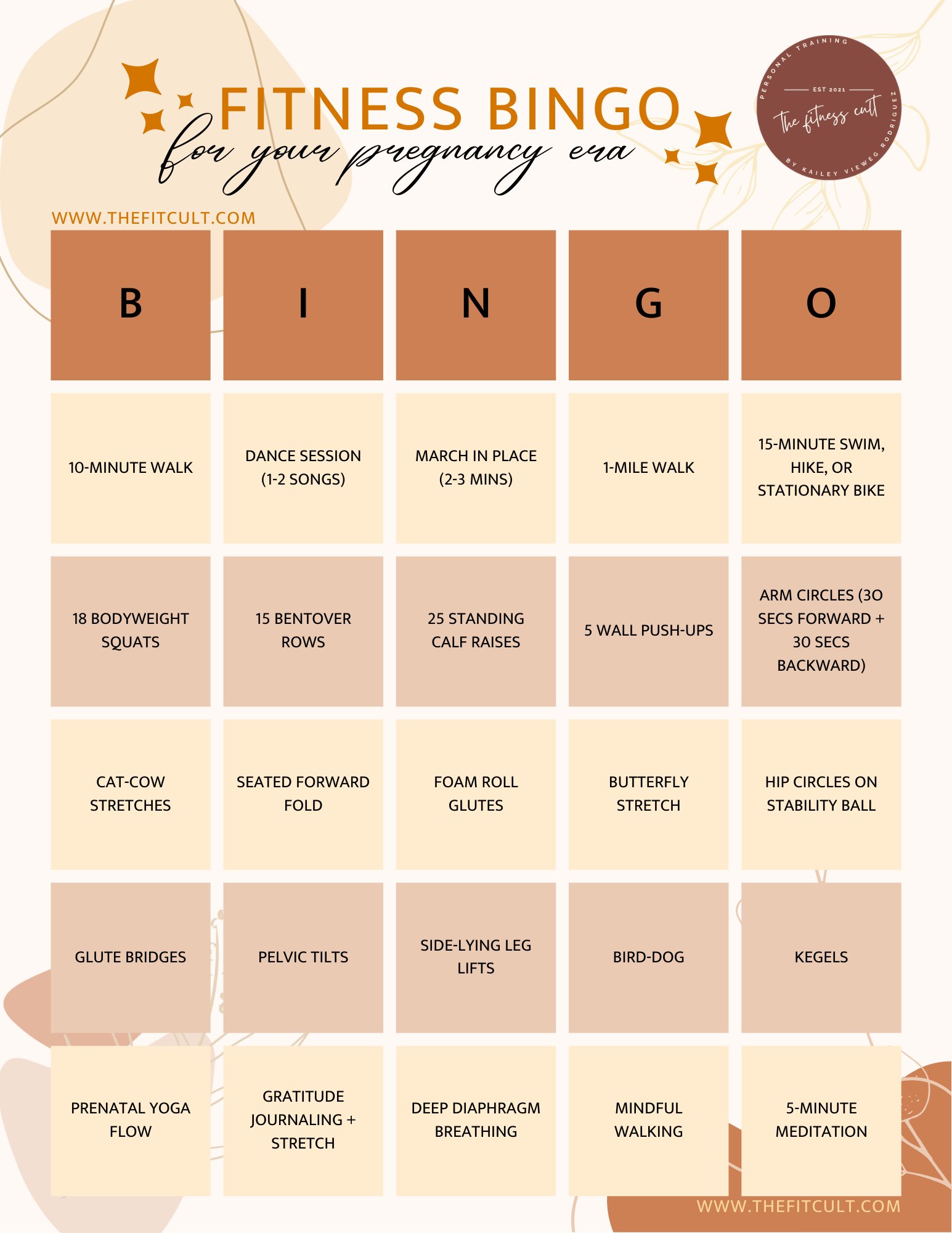
4. Fitness Bingo

Make movement fun by completing a prenatal fitness bingo card. Include activities like stretching, light strength moves, or a walk. Need ideas? Download my free pregnancy fitness bingo card here and see how many squares you can check off in a month!

Want to take it up a notch? For just $3.99, you can join the Prenatal Fitness Bingo Challenge and unlock a premium version of the card with extra activities, 3 prenatal workouts, and a guided journal, plus a special prize from me when you complete it! It’s a fun way to stay motivated, hold yourself accountable, and celebrate your progress along the way.

5. Crafting a Prenatal Routine

Challenge yourself to build a daily wellness routine that blends movement, rest, and creativity. Use a journal (here is my favorite fitness journal!), app, or calendar to track consistency – because small, steady steps add up to big changes over time.

Building Connections Through Movement

Movement is even more meaningful when it’s shared. Involving your partner, friends, or kids in these challenges adds accountability and joy. Community support is essential during pregnancy, which is why I host programs like:

  • Mommy & Me Fitness Classes – gentle, fun workouts designed for postpartum moms and their babies.
  • Coffee Runs – stroller-friendly runs/walks that end at a local coffee shop (a perfect mix of fitness and connection!).

Safety Considerations

Every pregnancy is unique. Here are a few reminders to keep movement safe:

  • Listen to your body—rest when you need it.
  • Modify intensity and exercises depending on trimester and fitness level.
  • Stay hydrated and avoid overheating.
  • Always check in with your healthcare provider before starting or adjusting your routine.

(If you’re unsure where to start, my post on safe pregnancy exercises offers a detailed breakdown.)

Wrapping It Up

Pregnancy is the perfect time to create habits that support both your health and happiness. Fun challenges like walking goals, yoga practices, dance nights, fitness bingo, and building daily routines can make movement something you look forward to.

Which challenge will you try first? Share your ideas and experiences in the comments—I’d love to hear what’s helping you stay active and connected!

If you’re ready to take the next step in your pregnancy fitness journey, I’d love to support you. Explore my training services, subscribe to the blog for more tips, or send me a message—I’ll help you create a safe, fun, and sustainable plan tailored to your needs!

Leave a Reply

Categories
Postpartum Strength tfc Community

What is Diastasis Recti? A Guide for Moms to Understand and Heal

Your body does amazing things during pregnancy — growing and carrying new life is no small task. But along with that transformation, many women notice changes in their core that don’t just “bounce back” right after birth. One of the most common postpartum concerns is diastasis recti — yet so many moms have never even heard of it until they’re experiencing it.

If you’ve noticed a lingering belly “pooch,” a gap down the middle of your stomach, or just a feeling of core weakness after pregnancy, you’re not alone — and you’re definitely not broken. Let’s talk about what diastasis recti is, why it happens, and how you can begin healing.

What is Diastasis Recti?

Diastasis recti is a separation of the rectus abdominis muscles — the “six-pack” muscles that run down the center of your belly. Normally, these muscles are held together by connective tissue called the linea alba.

During pregnancy, as your uterus grows and your abdominal wall stretches to make room for your baby, the linea alba can thin and stretch apart. This leaves a gap between the left and right sides of your ab muscles.

It’s incredibly common: research shows that up to 2 in 3 women experience diastasis recti after pregnancy.

Why Does It Happen?

Pregnancy puts a lot of pressure on your abdominal wall — and that’s not a bad thing; it’s simply part of the process. Several factors can influence whether diastasis recti develops and how severe it may be:

Growing Baby: As your belly expands, the connective tissue naturally stretches.

Hormones: Relaxin and progesterone soften ligaments and connective tissues, making them more flexible (and sometimes more prone to separation).

Multiple Pregnancies: With each pregnancy, your core muscles may weaken a little more if not properly supported.

Genetics: Some women’s connective tissue is naturally more elastic than others.

Movement Patterns: How you get out of bed, lift, or carry weight during pregnancy and postpartum can either help support your core — or put more stress on it.

How to Tell if You Have Diastasis Recti

A common sign is a visible “doming” or bulging down the midline of your stomach when you sit up, cough, or strain. You may also feel softness or a gap when pressing gently around your belly button.

The good news? This condition is treatable — and in many cases, fully reversible with proper care.

Healing Diastasis Recti Postpartum

Healing isn’t about doing crunches or planks — in fact, those moves can make things worse in the early stages. Instead, the focus is on retraining your core from the inside out. Here’s how:

1. Reconnect With Your Breath

Breathing properly is the foundation of healing. Start with diaphragmatic breathing, where you inhale into your ribs and belly and exhale while gently engaging your deep core (think: hug your baby gently toward your spine).

2. Engage the Deep Core Muscles

The transverse abdominis (your body’s natural “belt”) plays a huge role in closing the gap. Gentle exercises like heel slides, pelvic tilts, or modified dead bugs can help activate these muscles safely.

3. Strengthen the Whole Core System

Healing isn’t just about your abs — it includes your pelvic floor, back, and hips. A balanced, progressive program helps restore stability and function.

4. Avoid Common Aggravators

Movements that put excessive pressure on the midline (like crunches, sit-ups, and heavy twisting) can slow healing. Learning safe movement strategies for everyday activities — even how you roll out of bed — is just as important as exercise.

5. Seek Guidance

Every woman’s body and recovery are different. Working with a pre/postnatal certified trainer (like me!) ensures you get a customized program to support your healing safely and effectively.

The Takeaway

Diastasis recti is common, but it’s not something you have to “just live with.” With the right knowledge, movements, and support, you can absolutely restore strength to your core and feel confident in your body again.

Healing takes time, but every small step counts. And remember — your body has already done something incredible. Now it deserves the care and support it needs to thrive postpartum.

💌 Ready to Start Healing Your Core?

Subscribe to my newsletter for more pre- and postnatal fitness tips

Reach out to me directly for personal training or virtual coaching

Join our Mommy & Me fitness classes and walks for support, movement, and community

Your postpartum journey doesn’t have to be overwhelming. With guidance and consistency, you can rebuild strength, heal from the inside out, and feel empowered in your body again!

Leave a Reply

Categories
Prenatal Fitness tfc Community

How to Avoid Common Injuries While Exercising During Pregnancy

Pregnancy is an exciting, life-changing time – and it’s also a season where your body is working overtime. Staying active during pregnancy has incredible benefits; improved maternal health, support for your baby’s growth and development, reduced risk of complications during labor, and a smoother postpartum recovery.

But with all the physical changes happening, exercise can feel a little intimidating. Many moms worry about getting hurt, and with good reason – your body is more vulnerable to certain injuries and everything can feel more scary when you are carrying your baby!

The good news? With the right approach, you can enjoy the benefits of movement while minimizing risks. This post will walk you through the most common injuries during pregnancy, why they happen, and how to prevent them so you can feel confident and safe in your workouts.

Understanding Your Body Changes

Your body is adapting beautifully to grow and support new life, but these changes impact how you move and exercise.

  • Hormonal shifts: Relaxin and progesterone increase laxity in your muscles, ligaments, and connective tissue. This makes your joints feel looser – helpful for labor, but it can make you more prone to strains if you over-stretch or move too suddenly.
  • Weight gain and balance: As your bump grows, your center of gravity shifts forward, putting extra pressure on your joints and increasing your risk of falls.
  • Joint changes: Hips, knees, and lower back often feel more sensitive and less stable as pregnancy progresses.

These shifts don’t mean you should stop exercising – they just mean you need to be mindful of how you move to ensure you are supported.

Common Injuries During Pregnancy

The most frequent injuries and discomforts mamas-to-be experience while exercising include:

  • Back pain and pelvic pain (from postural changes and added strain on the spine)
  • Joint pain and strains (especially knees, hips, and ankles)
  • Muscle strains (from over-stretching or pushing too hard)
  • Falls or trips (due to a changing center of gravity and balance)

These injuries typically come from overextending joints, ignoring body signals, or participating in high-risk activities. Research has shown that while exercise during pregnancy is safe for most people, about 25-30% of injuries are related to slips, falls, or improper technique – making prevention key.

Pre-Exercise Considerations

Before you jump into any workout, it’s important to:

  1. Check with your healthcare provider to make sure exercise is safe for your pregnancy
  2. Assess your fitness level – what were you doing before pregnancy? Use that as a starting point for what’s safe to continue (with modifications as needed). For help here, you’ll love my post on How to Choose the Right Prenatal Exercise.
  3. Adapt to your trimester – your body feels different each stage of pregnancy. And if goal-setting motivates you, check out How to Set Realistic Fitness Goals During Pregnancy to keep your expectations balanced and encouraging.

Safe Exercise Guidelines

Choosing the right kinds of activities makes a big difference:

  • Best choices: Low-impact workouts like walking, swimming, stationary cycling, prenatal yoga, and modified strength training. These support strength and mobility without stressing joints.
  • Avoid: Contact sports, workouts with a high risk of falling (like skiing or horseback riding), and very high-intensity training that spikes your heart rate beyond a comfortable level.
  • Listen to your body: If you feel pain, dizziness, unusual fatigue, or cramping – stop. Discomfort is your body’s way of signaling it needs rest or modification. And if fatigue is something you’re struggling with, my post on Coping with Pregnancy Fatigue: Tips for Busy Moms will help you manage energy without guilt.

Warm-Up and Cool Down

Think of warming up as your own personal injury prevention insurance:

  • Warm-up: Start with 5-10 minutes of light walking, arm circles, or dynamic stretches to gently increase blood flow.
  • Cool down: Slow your pace, add gentle stretches, and focus on deep breathing to help your body recover and reduce stiffness.

Proper Technique and Equipment

Form matters more than ever during pregnancy!

  • Use good technique: Move with control and avoid locking joints or jerking movements. For extra support here, check out my post on The Importance of Core Strength During Pregnancy. Strong core muscles give your body stability and protect against unnecessary strain (as well as assisting in labor and delivery and promoting faster postpartum recovery!).
  • Footwear: Supportive shoes with good cushioning and a wide-enough toe box protect joints from unnecessary stress and promote better balance.
  • Modify movements: For example, swap out your regular squats and deadlifts with sumo stance positions to accommodate your growing belly, or move your push-ups from the floor to a wall or bench for incline push-ups.

Staying Hydrated and Nourished

Exercise during pregnancy isn’t just about moving – it’s about fueling your body, too.

  • Hydration: Sip water before, during, and after exercise to prevent overheating or dehydration.
  • Nutrition: Balanced meals with plenty of protein, healthy fats, and complex carbs will give you steady energy without spiking your blood sugar.
  • Timing: Avoid working out right after a heavy meal; instead, aim for a light snack 30-60 minutes before your exercise.

Pelvic Floor Health: Your Hidden Support System

One area that often gets overlooked during pregnancy fitness is the pelvic floor. These muscles support your internal organs such as your bladder, uterus, and bowels, and they play a critical role during labor and postpartum recovery.

When you exercise, focusing on proper breathing and gentle pelvic floor engagement can help prevent leaks, reduce back pain, and lower your risk of prolapse later on. Think of it as training the “foundation” of your core.

When to Not Exercise: Red-Flag Symptoms

While exercising is safe for most pregnancies, there are certain warning signs that mean it’s time to stop immediately and call your healthcare provider. These include:

  • Vaginal bleeding
  • Severe cramping or abdominal pain
  • Sudden dizziness or faintness
  • Shortness of breath before starting exercise
  • Chest pain or pounding heartbeat
  • Fluid leakage
  • Sudden swelling in hands, ankle, or face

These symptoms don’t necessarily mean something is automatically wrong – but they are still red flags to stop and check in with your doctor or medical team.

The Mind-Body Connection

Exercise isn’t just physical – it’s mental. Moving your body helps regulate hormones, reduce anxiety, and boost your mood, which is so important during pregnancy. Even a short walk or gentle mini-yoga sesh can help you feel more grounded, less stressed, and more connected to your changing body.

Conclusion

Pregnancy is not a time to give up exercise, just a time to move smarter. By understanding how your body is changing, choosing safe activities, supporting your pelvic floor, and listening to your body’s signals, you can greatly reduce your risk of injury while still reaping all the benefits of staying active!

Every mama’s journey looks different, and that’s the beauty of it. The key is honoring your body while giving yourself the gift of movement.

👉 Your turn: Have you found a favorite safe workout during pregnancy, or do you have tips for other moms-to-be? Share them in the comments—I’d love to hear from you!

💡 And if you’re ready for guidance tailored to you, I’d love to help. I offer personalized prenatal and postpartum coaching that supports your body through every stage of motherhood. Contact me today to start building your strong, safe, and sustainable fitness journey.

Leave a Reply

Categories
Nutrition & Fuel tfc Community

Healthy Pumpkin Protein Muffins (Easy, High-Protein Fall Recipe)

When pumpkin season hits, I always crave cozy fall flavors — but I don’t want to load up on sugar every time I reach for a muffin. These Healthy Pumpkin Protein Muffins are the perfect solution: fluffy, moist, and lightly sweet, with just enough chocolate to feel indulgent.

Each muffin has under 120 calories and nearly 9 grams of protein, making them a great option for a healthy breakfast on the go, a snack with coffee, or even a kid-friendly treat.

If you’re looking for an easy high-protein pumpkin recipe that’s pre/postnatal-friendly and supports your fitness goals, this one is a must-try!


Why You’ll Love These Pumpkin Muffins

  • Protein-packed – made with Greek yogurt, eggs, and vanilla protein powder
  • Lower in fat + sugar – but still rich with mini dark chocolate chips
  • Wholesome ingredients – using ground oats for fiber and lasting energy
  • Quick & freezer-friendly – bake once, enjoy all week (or freeze for busy mornings)

Pro Tips for the Best Muffins

  • Let the batter rest for 5 minutes before baking so the oats can absorb moisture and create a more traditional muffin crumb.
  • Bake at 375°F for 8–10 minutes, then finish at 350°F for fluffy tops and a moist, slightly denser center.
  • Sprinkle extra mini chocolate chips on top before baking for bakery-style muffins without adding too much sugar.

Pumpkin Protein Muffin Recipe

Makes 24 muffins

Printer-Friendly Version

📝 Ingredients

  • 1 can (425 g) 100% pure pumpkin
  • 1 ¾ cups ground oats (blend rolled oats until fine)
  • 2 cups nonfat plain Greek yogurt
  • 1 ¼ cups vanilla protein powder (whey or plant-based)
  • 3 large eggs + 2 egg whites
  • ¾ cup mini dark chocolate chips
  • 2 tsp baking powder
  • 1 tsp baking soda
  • 3 tsp pumpkin pie spice
  • 1 tsp ground cinnamon
  • 1 tsp vanilla extract

👩‍🍳 Directions

  1. Preheat oven to 375°F. Line a muffin tin with paper liners and lightly spray with cooking spray to prevent sticking.
  2. In a large bowl, whisk together the pumpkin, Greek yogurt, eggs + egg whites, and vanilla extract.
  3. In a separate bowl, mix ground oats, protein powder, baking powder, baking soda, pumpkin pie spice, and cinnamon.
  4. Combine wet and dry ingredients, stirring until just mixed (batter will be thick). Fold in chocolate chips.
  5. Divide batter evenly into 23 muffin cups (about ¾ full).
  6. Bake at 375°F for 8–10 minutes, then reduce oven to 350°F and bake another 10–12 minutes, until a toothpick comes out clean.
  7. Cool in pan for 5 minutes before transferring to a wire rack.

📊 Nutrition Facts (per muffin, based on 24 muffins)

  • Calories: 119
  • Protein: 8.2 g
  • Fat: 3.5 g (1.6g sat)
  • Carbs: 12.2 g (1.6g fiber, 4g sugar)

✨ These muffins are my go-to for busy moms who want fall flavor without sacrificing their health goals. If you make them, tag me @the_fitcult — I’d love to see your batch!

💌 Want more healthy pumpkin recipes, pre/postnatal workouts, and fit living tips for moms? Subscribe to my newsletter and join a community of women who are fueling their bodies and feeling strong.

Leave a Reply