Categories
Menopause & Perimenopause Postpartum Strength

Functional Fitness for Women and Aging Strong

There comes a point where the question shifts from “how do I look?” to “how do I feel?” and “how well can I move through my life?” That’s where functional fitness for women becomes the foundation; not just of your workouts, but also of your long-term health.

Whether you’re navigating pregnancy, postpartum recovery, juggling the demands of a busy life, or moving through perimenopause and menopause, your body is constantly adapting. And your fitness approach should evolve right along with it!

This isn’t about doing more (or less) it’s about training smarter. Training for the long game.

What is Functional Fitness for Women, Really?

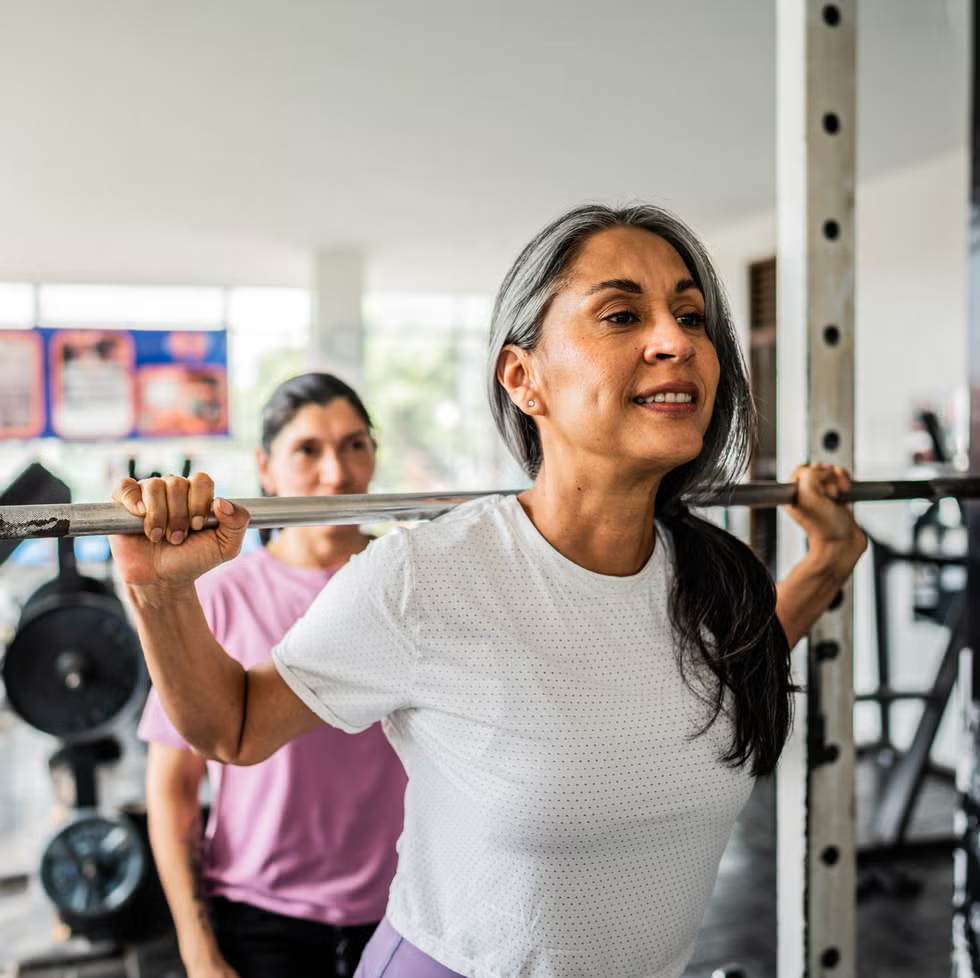
At its core, functional fitness for women means training your body to handle real life.

functional fitness for women vs aesthetic fitness comparison

Not just workouts, not just aesthetics…but the actual, physical demands of your day-to-day life.

Freedom of Movement

functional fitness for women in everyday life movements

Think about how often you:

  • Pick up your kids or grandkids
  • Carry groceries
  • Get up and down off the floor
  • Twist, reach, and bend throughout the day

Functional fitness builds strength and mobility so those movements feel easy, not exhausting.

Balance and Stability Through Functional Fitness

Balance isn’t something you have to lose with age; although it is something that often stops being trained as we age and suffers as a result.

When you prioritize functional fitness for women, you’re strengthening your small stabilizing muscles, joint control, and nervous system coordination. This becomes critical not just for performance, but for fall prevention and long-term independence.

Pain Management and Injury Prevention

Chronic aches like tight hips, sore backs, and stiff shoulders are often a results of weakness or muscle imbalance.

Functional training helps:

  • Support joints with stronger muscles
  • Improve alignment and movement patterns
  • Reduce strain on overworked areas

It’s one of the most effective ways to move from reacting to pain to preventing it, instead.

Why Functional Fitness for Women Changes with Age

Your body isn’t working against you, it’s changing its priorities.

Hormones shifts, recovery slows, and stress hits differently. And the strategies that worked in your 20s won’t always support you in your 30s, 40s, and beyond.

That’s where functional fitness becomes even more important:

  • You need more strength to support joints
  • More intentional recovery
  • Smarter programming instead of just more intensity

This is especially true during postpartum recovery and perimenopause and menopause. Different stages of life, but with the same need: rebuilding strength with purpose.

From Aesthetic Goals to Functional Strength

There’s nothing wrong with wanting to look good! But when that is the only goal, it can lead to overtraining, burnout, crash dieting, and frustration when results stall or efforts fall short.

Shifting toward functional fitness for women allows you to measure progress differently. Look for milestones like:

  • You feel stronger week to week
  • You move without pain
  • You have more energy throughout the day
  • You trust your body again

And ironically enough, the aesthetic changes often follow anyway! But now they’re a happy byproduct, rather than a source of pressure.

Muscle is Your Long-Term Protection Plan

Muscle isn’t just about strength, it’s your built-in support system. When trained functionally, muscle helps:

  • Protect your joints
  • Support bone density
  • Improve metabolism
  • Increase resilience to injury
  • Improve recovery after illness
benefits of muscle for longevity in women

If you want to go deeper into how strength training supports your bones long-term, check out Lifting Heavy for Women: Strong Bones at Any Age for a powerful breakdown of why lifting matters more as you age.

This is especially important during hormonal transitions, where muscle loss can accelerate if it’s not intentionally maintained.

Longevity Through Functional Fitness for Women

Longevity isn’t just about living longer, it’s about living well. True longevity shows up in everyday movements like getting up off the floor without help, carrying your own groceries, and traveling, playing, and moving freely.

This is what functional fitness for women protects. Whether you’re rebuilding postpartum or navigating perimenopause, the goal is the same: A body that supports your life, not limits it.

How to Train with Functional Fitness for Women

Here’s a simple framework for what functional training can look like in practice.

Prioritize Strength Training

Aim for 2-4 sessions per week, focused on:

  • Progressive overload
  • Controlled, intentional movement
  • Building, not just burning

This is where muscle is built and maintained.

Train Movement Patterns, Not Just Muscles

Instead of isolating everything or focusing only on particular muscle groups (like growing the booty but ignoring chest muscles!); focus on foundational patterns:

Illustration of functional movement patterns including squat, hinge, push, pull, and carry, with each exercise represented by a female figure.
  • Squat
  • Hinge
  • Push
  • Pull
  • Carry

These mirror real-life movement and make your training more efficient.

Support Recovery to Sustain Functional Fitness

Recovery is where your body adapts. That includes physical recovery and rest as well as sleep, nutrition, and stress management.

If you’re unsure how to support your body nutritionally, Protein for Women in Postpartum and Midlife is great place to start, especially when it comes to fueling muscle and recovery. You can also calculate your exact caloric needs for your body, goals, and lifestyle using our FREE calorie calculator!

And if you’ve ever felt stuck in the cycle of doing more and getting less in return, How to Balance Exercise and Rest to Avoid Burnout and Support long Term Fitness can help you reset your approach.

The Mindset Shift Behind Functional Fitness for Women

This is where everything clicks! Progress isn’t going harder and doing more until you’ve burnt yourself out. Progress is showing up consistently, training with intention, and listening to your body’s signals to adjust with it.

Functional fitness isn’t a short-term plan, but a lifelong strategy.

You’re Not Falling Behind, You’re Evolving

If your workouts look different than they used to, your goals have shifted, or your body feels different, that isn’t failure; it’s awareness.

Leaning into functional fitness is what allows you to stay strong, stay capable, and stay confident. Not just for now, but for decades to come!

Ready to Train for the Long Game?

If you’re ready to build strength that actually supports your life, not just your workouts, this is your next step!

Explore strength programs designed specifically for women navigating real-life transitions:

  • Postpartum recovery
  • Busy seasons of motherhood
  • Perimenopause and beyond

These programs are built around functional fitness for women, so you can train with purpose and feel the difference in everything you do.

join the tfc community!

subscribe to be best friends 🤍

Weekly wellness tips & mom support, straight to your inbox 💌
Categories
Menopause & Perimenopause

The Truth About Zone 2 Cardio in Menopause

If you’ve been told that walking is the safest or best form of exercise during perimenopause or menopause, you’re not alone.

Zone 2 cardio has become the gold standard recommendation for midlife women. It’s gentle. It’s accessible. It feels manageable on days when energy is low and joints feel stiff.

And to be clear: walking is helpful.

But here’s the truth many women are not being told: Zone 2 cardio in menopause supports health, but it does not fully protect your body from the changes happening beneath the surface.

If your goal is not just to “move more,” but to stay strong, capable, and resilient for decades to come, walking alone isn’t enough.

Let’s break down why.

What’s Actually Changing in Your Body During Menopause

Menopause is not just a phase. It’s a full body transition driven largely by declining estrogen levels, and those hormonal shifts affect far more than your cycle.

Muscle Loss Accelerates

Sarcopenia and muscle loss during menopause

Estrogen plays a protective role in muscle maintenance. As levels decline, sarcopenia (age related muscle loss) accelerates. Without intentional resistance training, women can lose muscle at a faster rate in midlife than at any other point.

Less muscle means:

  • Reduced metabolic health
  • Decreased strength and power
  • Higher risk of injury and falls

Bone Density Declines

Estrogen is also critical for bone remodeling. During menopause, bone mineral density decreases, increasing fracture risk, especially in the hips, spine, and wrists.

Walking does load the bones slightly, but not enough to meaningfully slow bone loss.

Stiffness and Chronic Pain Increase

Many women notice more joint stiffness, aches, and chronic pain in perimenopause and menopause. This is not because movement is dangerous, but because connective tissue adapts differently without estrogen.

Avoiding strength and power work often makes pain worse over time, not better.

For a deeper look at this connection, see Menopause and Joint Pain: The Estrogen Connection.

Cardiovascular Health Shifts

Hormonal changes also impact cardiovascular function. VO₂ max declines more rapidly with age in women, and heart disease risk increases after menopause.

Cardio matters. But the type and intensity matter too.

What Is Zone 2 Cardio, Really?

Zone 2 cardio refers to steady state, moderate intensity movement where you can still hold a conversation, but feel slightly challenged. For many women in menopause, this looks like:

  • Brisk walking
  • Easy cycling
  • Light jogging
  • Low intensity cardio classes

The benefits of Zone 2 cardio in menopause are real:

  • Improved aerobic base
  • Better blood sugar regulation
  • Reduced stress and cortisol load
  • Support for daily movement consistency

Zone 2 cardio is a foundation, not a complete system.

What the ACSM Guidelines Actually Recommend

According to the American College of Sports Medicine, adults should aim for:

ACSM cardio guidelines for midlife women
  • At least 30 minutes of moderate intensity cardio, 2 or more days per week for general health and maintenance

Notice the wording: minimum and general health.

These guidelines are not designed to:

  • Prevent muscle loss
  • Protect bone density
  • Maintain power and balance
  • Reduce fall risk

They describe the floor, not the ceiling.

Why Strength Training Is Non Negotiable in Menopause

Strength training is not about chasing soreness or lifting heavy for the sake of it. It is about preserving the tissue that keeps you mobile and independent.

Benefits of Strength Training in Menopause

  • Improved joint stability and pain management
  • Increased muscle mass and metabolic support
  • Bone loading that helps slow density loss
  • Better posture and daily function

Strength training also improves confidence. Many women discover they feel better when they stop avoiding resistance and start building capacity.

If you want guidance that fits real life and real bodies, this is where exploring structured strength programs designed for midlife can make a meaningful difference.

The Missing Link: Power and Plyometrics

This is the piece most women are told to avoid, and it may be the most important.

Power refers to your ability to produce force quickly. It declines faster than strength with age, and it plays a huge role in:

  • Balance and fall prevention
  • Cardiovascular capacity
  • Functional independence

Benefits of Plyometrics and Power Training

  • Improved heart health and cardio efficiency
  • Better coordination and reaction time
  • Support for menopause symptom management
  • Reduced fall risk when trained appropriately
Safe plyometric exercises for menopausal women

Plyometrics do not have to mean box jumps or high impact workouts. Power can be trained through:

  • Low amplitude hops
  • Medicine ball throws
  • Fast controlled step ups
  • Modified explosive movements

The key is progressive exposure, not intensity for intensity’s sake.

Safe Exercise Options for Perimenopausal and Menopausal Women

A well balanced routine includes:

Strength Training

  • 2 to 3 sessions per week
  • Focus on full body movements
  • Progress load gradually

Power and Plyometrics

  • 1 to 2 sessions per week
  • Modified based on joint health and fall risk
  • Emphasis on quality and control

Zone 2 Cardio

  • Used for recovery, aerobic base, and daily movement
  • Walking, cycling, hiking, or swimming

Pain, stiffness, and fear are signals to modify, not reasons to avoid entire categories of movement.

So… Is Zone 2 Cardio in Menopause Enough?

Zone 2 cardio in menopause is valuable. It supports heart health, consistency, and stress regulation.

But it is not enough on its own.

Walking keeps you moving.
Strength keeps you stable.
Power keeps you resilient.

When combined, they create a body that is not just active, but capable.

The Bottom Line

Your body in menopause is not fragile. It is adaptable.

You do not need to train like you’re in your twenties, but you also do not need to limit yourself to what feels “safe” forever.

If you want to age with strength, protect your joints, and support your long term heart health, your routine needs more than walking.

And if you’re ready to build that foundation with guidance designed specifically for this phase of life, now is the time to explore programs that support strength, power, and longevity together!

join the tfc community!

subscribe to be best friends 🤍

Weekly wellness tips & mom support, straight to your inbox 💌