Categories
Menopause & Perimenopause

Grip Strength: A Powerful Predictor of Women’s Lifespan

If there were one health metric that could quietly reveal how strong, resilient, and long-lived your body is likely to be, grip strength would be a top contender.

No labs.
No fancy wearables.
No hours in a doctor’s office.

Just how well you can hold onto something.

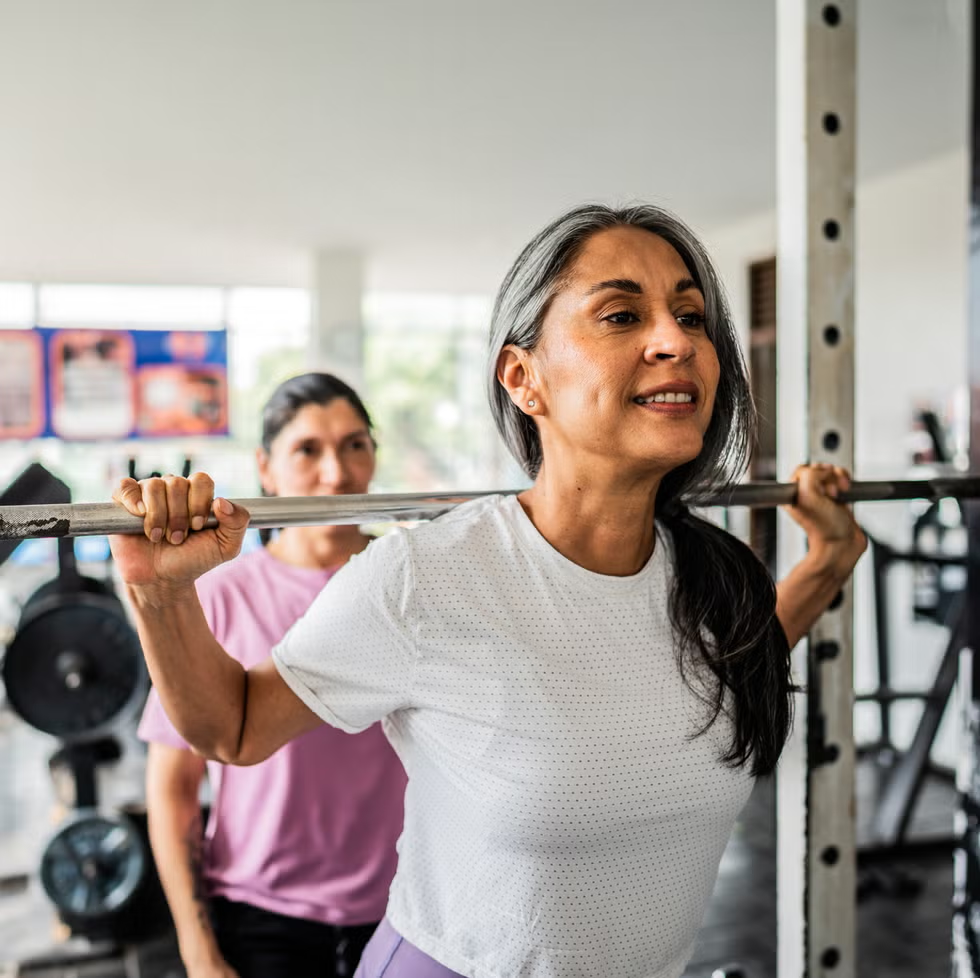
Grip strength test demonstrating longevity marker in menopausal women

For women in perimenopause and menopause, grip strength and longevity are deeply connected. And yet, it’s rarely talked about outside of research circles. That’s a missed opportunity because grip strength reflects far more than hand muscles. It’s a window into your overall muscle health, nervous system function, metabolic resilience, and independence as you age.

Let’s break down what the science says, why grip strength matters more after 45, and exactly how to train it in a realistic, joint-friendly way.

Grip Strength and Longevity: What the Research Actually Shows

Grip strength isn’t just a fitness flex. It’s one of the most consistent physical predictors of all-cause mortality, meaning death from any cause.

Study 1: The PURE Study (The Lancet, 2015)

A landmark global study led by Leong et al. followed over 140,000 adults across 17 countries. Researchers found that grip strength was a stronger predictor of mortality than systolic blood pressure.

Infographic illustrating grip strength as a biomarker, featuring icons and text linking grip strength to various health aspects such as cognitive function, mental health, disease prevention, and more.

For every 5 kg decrease in grip strength, participants had:

  • Higher risk of all-cause mortality
  • Higher risk of cardiovascular death
  • Higher risk of non-cardiovascular death

Grip strength predicted outcomes regardless of age, socioeconomic status, or geographic location.

Study 2: British Medical Journal (BMJ, 2010)

A longitudinal study by Cooper et al. showed that lower grip strength in midlife was associated with:

  • Increased risk of premature death
  • Greater likelihood of disability later in life
  • Reduced functional independence

Grip strength wasn’t just reflecting current health. It was forecasting future health.

Bottom line: Grip strength is not about hands. It’s about how well your entire system is aging.

Why Grip Strength Declines During Perimenopause and Menopause

If you’ve noticed jars getting harder to open or carrying groceries feeling heavier than it used to, that’s not in your head.

Several menopause-related changes directly affect grip strength:

  • Estrogen decline impacts muscle protein synthesis and tendon elasticity
  • Sarcopenia (muscle loss that occurs with aging) accelerates without intentional resistance training
  • Neuromuscular efficiency declines, meaning the brain-to-muscle connection weakens
  • Joint stiffness and hand pain can discourage loading the hands altogether

Many women stay active through walking, cycling, or yoga, which are all valuable. But without loaded strength work, especially through the hands, grip strength quietly erodes.

What Grip Strength Really Reflects

Grip strength is often described as a “proxy” measure. That’s because it correlates strongly with:

  • Total body strength and muscle quality
  • Bone density, especially in the upper body
  • Nervous system health and coordination
  • Fall risk and fracture risk
  • Ability to perform daily tasks independently

In other words, grip strength isn’t about crushing a stress ball. It’s about whether your body can adapt to life’s demands now and decades from now.

This is exactly why grip work fits so naturally into a midlife power and longevity approach to training.

How to Train Grip Strength Without Overcomplicating It

Here’s the good news. You don’t need a separate “hand workout” or endless gadgets.

Grip strength improves best when you:

  • Load the hands progressively
  • Use multi-joint, functional movements
  • Train consistently, not excessively

Frequency: 2 to 4 times per week
Duration: Often just a few minutes at the end of a workout
Progression: Increase load, time under tension, or complexity gradually

If joint pain is present, grip training can be scaled. Neutral grips, towel holds, and shorter carry distances all count.

Best Grip Strength Exercises for Peri and Menopausal Women

These movements build grip strength while also supporting full-body strength and bone health.

A person holding a kettlebell with one hand, wearing a pink workout shirt and black leggings, against a green background.

Farmer Carries

Hold heavy dumbbells or kettlebells and walk with control.
This is one of the most powerful longevity exercises available.

Suitcase Carries

Hold weight on one side only.
Improves grip, core stability, and hip strength simultaneously.

Dead Hangs or Supported Hangs

Use a pull-up bar or rings.
You can keep feet on the floor or use a box for support.

Dumbbell or Kettlebell Holds

Lift the weight and simply hold it for time.
Simple. Effective. Surprisingly challenging.

Towel or Fat Grip Variations

Wrap a towel around a handle or use thick grips to increase demand without heavier weight.

If your current program doesn’t include loaded carries or sustained holds, this is an easy place to level up.

Tools to Train Grip Strength at Home

You don’t need a full gym to improve grip strength. A few strategic tools go a long way.

Grip strength training tools for women over 45

Popular options include:

If you’re building a setup on a budget, many of these pair perfectly with a home gym under $500 and can live in a corner without taking over your space.

Affiliate disclaimer: This post may contain affiliate links. If you purchase through these links, I may earn a small commission at no extra cost to you. I only recommend tools I believe genuinely support strength and longevity.

How Grip Strength Fits Into a Longevity-Focused Program

Grip work alone won’t carry the whole load.

The biggest gains in grip strength and longevity come when it’s combined with:

  • Compound lifts
  • Progressive overload
  • Adequate recovery and stress management

Overtraining without recovery can stall progress, especially during menopause. If strength feels harder to maintain lately, balancing effort and rest matters more than ever. This is where smarter programming, not more volume, makes the difference.

How to Track Grip Strength Over Time

You don’t need lab equipment to stay aware of changes.

Simple ways to monitor progress:

  • Track carry weight and time
  • Notice improvements in daily tasks
  • Use a hand dynamometer if available

Trends matter more than single numbers. The goal isn’t perfection. It’s preservation and progress.

Strong Hands, Strong Future

Grip strength may seem small, but it tells a big story.

It reflects how well your muscles respond to training, how resilient your nervous system is, and how prepared your body is for the decades ahead. For women navigating perimenopause and menopause, focusing on grip strength and longevity is a powerful shift from chasing aesthetics to building capacity.

Strong hands support a strong life. And that’s a metric worth training for.

If you’re ready to train with longevity in mind, explore strength programs designed specifically for this phase of life inside Midlife Power + Longevity.

join the tfc community!

subscribe to be best friends 🤍

Weekly wellness tips & mom support, straight to your inbox 💌

Categories
Menopause & Perimenopause

HRT and Muscle Growth After 40: What Science Says in 2026

If you are in your 40s or 50s and noticing that building muscle feels harder than it used to, you are not imagining it. For many women, perimenopause and postmenopause mark a real physiological shift. Strength that once came easily now requires more intention. Recovery takes longer. Body composition changes despite consistent workouts. This is where the conversation around HRT and muscle becomes important.

Hormone Replacement Therapy is not a shortcut, a performance enhancer, or a replacement for training. But science shows it can meaningfully influence how your body responds to resistance training, protein intake, and recovery during midlife. Understanding that intersection can help you train smarter and protect your long-term health.

This article breaks down what the research says in 2026, in plain language, so you can make informed decisions alongside your doctor and your coach.

The Role of Estrogen in the Body

Estrogen is often discussed only in terms of hot flashes or menstrual changes, but its influence is much broader. It plays a critical role in how women maintain muscle, bone, and connective tissue.

Infographic illustrating the role of estrogen in the body, featuring a silhouette of a woman with arrows pointing to aspects such as muscle protein synthesis, bone remodeling, insulin sensitivity, and connective tissue health, labeled as a whole-body regulator.

From a muscle perspective, estrogen helps regulate muscle protein synthesis, the process your body uses to repair and rebuild muscle fibers after strength training. It also supports muscle quality by influencing mitochondrial function and insulin sensitivity, which affects how efficiently your muscles use fuel.

Estrogen is also protective for bone. It helps balance bone breakdown and bone formation, keeping bone density more stable across adulthood. This is why bone loss accelerates rapidly after menopause when estrogen levels decline.

When estrogen is present in healthy ranges, muscle and bone tend to respond more favorably to training stress. When it declines, those same inputs produce smaller returns.

What Happens When Estrogen Levels Decline

During perimenopause and postmenopause, estrogen levels fluctuate and then fall. This creates a cascade of changes that directly affect body composition and strength.

Graph illustrating the decline of estrogen levels over time, showing a corresponding decrease in muscle mass and bone density, increased anabolic resistance, and higher risk of injury.

One of the most important shifts is anabolic resistance. This means the body becomes less responsive to the muscle-building signals from resistance training and protein intake. You can be doing “everything right” and still see slower progress.

Lower estrogen is also associated with:

  • Reduced muscle mass and strength over time
  • Increased fat storage, particularly around the abdomen
  • Faster bone density loss
  • Slower recovery between workouts
  • Greater injury risk due to changes in connective tissue elasticity

Without intervention, women can lose up to 8 percent of muscle mass per decade after menopause. This loss is not cosmetic. Muscle plays a central role in metabolic health, balance, independence, and longevity.

Other Hormones That Matter for Muscle and Bone

Estrogen does not work alone. Several other hormones influence how well women maintain strength as they age.

Testosterone, present in smaller amounts in women than men, contributes to muscle strength, neuromuscular efficiency, and bone density. Levels naturally decline with age.

Growth hormone supports tissue repair and muscle recovery. Its secretion decreases with age and is influenced by sleep, stress, and training intensity.

Progesterone helps regulate the nervous system and supports tissue health. While it does not directly build muscle, it influences recovery and training tolerance.

Together, these hormones shape how well your body adapts to resistance training. When multiple hormones decline simultaneously, muscle maintenance becomes more challenging without strategic support.

What Is HRT?

Hormone Replacement Therapy refers to the medical use of estrogen, and sometimes progesterone and testosterone, to support women during perimenopause and postmenopause. It is prescribed and monitored by a qualified healthcare provider.

HRT is designed to replace some of the hormones your body is no longer producing in sufficient amounts. Its primary uses include symptom relief, bone protection, and improved quality of life.

From a fitness perspective, HRT does not build muscle on its own. What it can do is improve the environment in which muscle growth and maintenance occur. By supporting hormone levels, HRT may enhance your body’s ability to respond to strength training and nutrition.

HRT is not for everyone, and it is not a decision to make lightly. But for many women, it can be a valuable part of a comprehensive midlife health strategy.

HRT and Muscle Protein Synthesis: What the Science Says

Research over the past decade has increasingly focused on how estrogen affects muscle protein synthesis in postmenopausal women.

Flowchart illustrating the relationship between Hormone Replacement Therapy (HRT) and muscle protein synthesis, detailing steps from resistance training stimulus to protein intake, hormonal environment, and improved signal strength.

Studies suggest that estrogen replacement can partially restore the muscle’s sensitivity to resistance training and protein intake. In simple terms, muscle tissue becomes better at “listening” to the signals you give it through lifting weights and eating protein.

Estrogen appears to influence satellite cells, which are involved in muscle repair and growth. It also affects inflammation and oxidative stress, both of which impact recovery.

Importantly, the research shows that HRT is most effective when combined with resistance training. Hormones alone do not create muscle. Training provides the stimulus, and hormones help determine how strongly the body responds.

This reinforces a key message for midlife women: HRT may support muscle preservation, but strength training remains non-negotiable.

Why Protein Intake Matters More After 40

Protein is the raw material for muscle repair. As women age, their protein needs increase due to anabolic resistance.

Many peri and postmenopausal women simply do not consume enough protein to support muscle maintenance, especially if they are active. When combined with hormonal changes, low protein intake accelerates muscle loss.

Image illustrating protein-rich meal suggestions for breakfast, lunch, and dinner, emphasizing the importance of consistent protein intake for muscle maintenance and satiety.

Most research suggests that women in midlife benefit from higher protein intakes than the standard minimum recommendations, distributed evenly across meals. Prioritizing high-quality protein at breakfast and lunch is especially important.

For practical ideas that fit real life, you can explore The Best High-Protein Snacks on Amazon for Busy Moms and Health-Minded Eaters, which highlights convenient options that support muscle without adding stress to your day.

Protein, resistance training, and hormonal support work best as a system, not in isolation.

How to Build Muscle After 40

The American College of Sports Medicine recommends resistance training at least three times per week at moderate intensity for about 30 minutes for general health and maintenance.

That baseline is excellent for preserving function, but it is often not enough to build new muscle, especially during peri and postmenopause.

To increase muscle mass, you need progressive overload. That means intentionally increasing one or more of the following:

  • Load
  • Time under tension
  • Training intensity
  • Training frequency
  • Or a strategic combination of these variables

Progress does not require extreme workouts. It requires thoughtful programming, sufficient recovery, and consistency. This is where many women struggle when training alone without guidance.

If a follow-along training program designed for women experiencing perimenopause or menopause or expert one-on-one coaching feels like something that would be supportive for you right now, check out my ready-to-start programs or book a free consultation to see how I can help you with your fitness and nutrition goals today!

Why Muscle Is Critical for Midlife and Beyond

Muscle is more than a cosmetic goal. It is an active metabolic tissue that influences nearly every system in the body.

Adequate muscle mass supports:

  • Stable blood sugar regulation
  • Higher resting metabolic rate
  • Stronger bones through mechanical loading
  • Better balance and fall prevention
  • Joint stability and pain reduction
  • Independence as you age

Women with higher muscle mass tend to experience healthier aging trajectories, fewer injuries, and greater confidence in daily movement.

In many ways, muscle is one of the most powerful anti-aging tools available.

Integrating HRT, Nutrition, and Strength Training

A Venn diagram titled 'The Strong Midlife Formula' illustrating the intersection of hormones, nutrition, and strength training for healthy aging and strength after 40. Key focus areas include hormone balance, nutritional protein and fuel, and progressive overload in strength training.

The most effective approach to midlife strength is integrated, not extreme.

HRT can support the hormonal environment. Protein provides the building blocks. Progressive resistance training delivers the stimulus. Coaching and community provide accountability and sustainability.

When these elements work together, women are far more likely to maintain strength, bone density, and confidence through midlife and beyond.

Ready to Train With Support?

If you are navigating perimenopause or postmenopause and want a structured, science-informed approach to building strength, Strongest Season Yet was designed specifically for you.

This virtual group strength class focuses on progressive resistance training, recovery, and real-life sustainability for peri and postmenopausal women.

You can also browse and shop strength programs that align with your goals or join the Fitty 500 Mile Challenge if accountability and consistency are what you need most right now.

Your strongest years are not behind you. They are simply being redefined.

References

Hansen, M. et al. Effects of estrogen on muscle protein synthesis in postmenopausal women. Journal of Applied Physiology.

Collins, B. C. et al. The role of sex hormones in skeletal muscle adaptation. Endocrine Reviews.

join the tfc community!

subscribe to be best friends 🤍

Weekly wellness tips & mom support, straight to your inbox 💌

Categories
Menopause & Perimenopause

Menopause and Joint Pain: The Estrogen Connection

If your knees ache when you stand up, your hips feel stiff in the morning, or your hands just feel… sore for no obvious reason, you’re not alone.

And no, this isn’t simply “getting older.”

For many women in perimenopause and menopause, joint pain shows up quietly and persistently. It’s often brushed off as old injuries, arthritis, or wear and tear. But there’s a powerful and often overlooked factor behind that achy, stiff feeling: declining estrogen.

Let’s talk about what’s really happening inside your body, and more importantly, what you can do to feel stronger, more comfortable, and more supported during this transition.

Estrogen Decline During Perimenopause and Menopause

Estrogen does far more than regulate your menstrual cycle.

During perimenopause, estrogen levels begin to fluctuate unpredictably. Over time, as you move into menopause, overall estrogen levels decline significantly. This hormonal shift doesn’t just affect hot flashes or sleep. It impacts nearly every system in the body, including your musculoskeletal system.

That’s why joint discomfort often appears alongside other changes like:

  • Increased stiffness
  • Slower recovery after workouts
  • Loss of strength or muscle tone
  • A general sense of feeling “creaky” or inflamed

For many women, joint pain is one of the earliest physical signs that hormones are changing.

How Declining Estrogen Affects Joints, Cartilage, and Bones

Estrogen plays a protective role in joint and bone health.

Joint Health and Cartilage

Estrogen helps regulate inflammation and supports the health of cartilage, the cushioning tissue that allows joints to move smoothly. When estrogen levels decline, cartilage can become less resilient, and inflammatory markers may increase. This can lead to joint stiffness, tenderness, and that familiar achy feeling, even without a clear injury (Straub, 2007).

Bone Density

Estrogen also plays a major role in maintaining bone mineral density. As estrogen decreases, bone breakdown can begin to outpace bone formation, increasing the risk of bone loss and fragility over time (Guadalupe-Grau et al., 2009).

This combination of less joint cushioning and weaker structural support can make everyday movements feel uncomfortable, even if you’ve always been active.

If you’ve ever thought, “Why do my joints hurt when I didn’t change anything?”, hormones may be the missing piece.

Why It Feels Like Aging or Injury (But Often Isn’t)

Hormone-related joint pain tends to show up in common areas like:

  • Knees
  • Hips
  • Lower back
  • Hands and fingers
  • Shoulders

Because these areas are also prone to injury or arthritis, many women assume the pain is mechanical. But when discomfort appears without trauma, worsens during hormonal transitions, or fluctuates day to day, estrogen is often part of the picture.

The good news? This type of joint pain is highly responsive to strength training.

Muscle: Your Secret Weapon for Joint Pain Relief

Building and maintaining muscle is one of the most effective, science-backed ways to reduce joint pain during menopause.

Exercise as a Natural Pain Reliever

Movement stimulates the release of endorphins, your body’s natural pain-relieving hormones. Regular exercise has been shown to reduce pain perception and improve joint comfort, even in populations experiencing chronic discomfort (Koltyn, 2000).

Stronger Muscles, Less Joint Stress

Muscles act like shock absorbers. When they’re strong, they take pressure off your joints during daily activities like walking, squatting, lifting, and climbing stairs. Less joint stress often means less pain.

Resistance Training Supports Bone Health

Strength training doesn’t just build muscle. It also sends signals to your bones to maintain or increase density. This is especially important during menopause, when bone loss accelerates (Guadalupe-Grau et al., 2009).

If joint pain has been holding you back from movement, strength training is often the solution, not the problem.

How to Build Muscle to Support Joint Health

Resistance Training at Home (3+ Days Per Week)

You don’t need a gym to get stronger. Consistent, well-designed home-based resistance training can dramatically improve joint comfort and confidence.

Focus on:

  • Lower body strength for hips, knees, and ankles
  • Core strength for spinal support and stability
  • Upper body strength for shoulders and hands

Bodyweight exercises, dumbbells, resistance bands, or kettlebells all work when programmed correctly.

Want comfortable joints again?
Explore our strength programs created specifically for this phase of life.
These programs are designed to support joint health, hormone changes, and real-life energy levels during perimenopause and menopause.

Protein and Nutrition for Muscle Support

Muscle doesn’t grow without adequate fuel, and protein intake becomes especially important during menopause.

Protein helps:

  • Repair and rebuild muscle tissue
  • Support bone health
  • Improve recovery between workouts

If you’re unsure how much protein your body actually needs, start with clarity.

Use our free calorie calculator to estimate your daily needs.
For personalized support, you can also upgrade to our $0.99 macro distribution, which includes protein targets tailored for muscle building and joint support.

Small adjustments in nutrition can make a big difference in how your body feels.

What This Means for You

Joint pain during menopause is common, but it isn’t something you have to accept as inevitable.

When you understand the estrogen connection, everything changes. Strength training becomes a tool for relief. Protein becomes part of joint care. And movement becomes empowering again, instead of intimidating.

If you’re ready for guidance and support:

You deserve to feel strong, capable, and comfortable in this season of life!


References

Straub, R. H. (2007). The complex role of estrogens in inflammation. Nature Reviews Rheumatology, 3(3), 154–164.

Guadalupe-Grau, A., Fuentes, T., Guerra, B., & Calbet, J. A. L. (2009). Exercise and bone mass in adults. Sports Medicine, 39(6), 439–468.

Koltyn, K. F. (2000). Analgesia following exercise: A review. Sports Medicine, 29(2), 85–98.

join the tfc community!

subscribe to be best friends 🤍

Weekly wellness tips & mom support, straight to your inbox 💌