
Pregnancy is a season of transformation – your body is working harder than ever, and staying active can help you feel stronger, healthier, and more connected throughout the journey. Movement during pregnancy isn’t about pushing your limits; it’s about supporting your well-being, preparing for postpartum recovery, and embracing the joy that comes from staying active.
One of the most engaging ways to keep moving is by turning fitness into a game; pregnancy challenges. These fun, upbeat activities help you stay motivated while strengthening connections with your partner, friends, or other moms-to-be.
Why Movement Matters During Pregnancy
Staying active while pregnant offers both physical and emotional benefitsL
- Improved circulation and reduced aches and pains – Movement helps with common discomforts like swollen ankles, back pain, and stiffness.
- Boosted emotional well-being – Gentle activity lowers stress, improves mood, and helps reduce pregnancy-related anxiety.
- Postpartum readiness – A consistent fitness routine during pregnancy creates a smoother recovery and helps rebuild strength after delivery.
(If you’re curious about specific exercises and safety tips, check out my post Safe Exercises for Each Trimester of Pregnancy and The Importance of Core Strength During Pregnancy.)
Fun Pregnancy Challenge Ideas
Here are some creative, approachable ways to add movement to your pregnancy:
1. Daily Walks Challenge
Set a goal for daily steps or distance – tailor it to your fitness level! Unsure where to start:
- Just starting out: 5,000 – 6,000 steps (2 – 3 miles)
- Turn up the challenge: 7,000 – 8,000 steps (3.5 – 4 miles)
- Bring the heat: 9,000 – 10,000+ steps (4 – 5+ miles)
Invite your partner or a friend to join you for accountability. Share your progress on social media and tag me @the_fitnesscult with #thefitnesscult so I can cheer you on!
2. Prenatal Yoga Challenge
Yoga is wonderful for flexibility, relaxation, and core stability. Try a 30-day yoga challenge, featuring one prenatal-friendly pose each day. This not only eases tension but also creates a calming daily ritual.
(I recently wrote about how yoga and gentle exercise support pregnancy in my post The Benefits of Prenatal Yoga for Moms-to-Be – it’s a great place to start if you’re new to yoga!)
3. Partner Dance Challenge
Dancing with your partner is a fun way to bond and stay active! Experiment with different styles – salsa, ballroom, or even just swaying in your living room. Take a class together, go to a dance club or live music event, or create a playlist of songs that make you smile and get your groove on together a few times a week.
4. Fitness Bingo
Make movement fun by completing a prenatal fitness bingo card. Include activities like stretching, light strength moves, or a walk. Need ideas? Download my free pregnancy fitness bingo card here and see how many squares you can check off in a month!
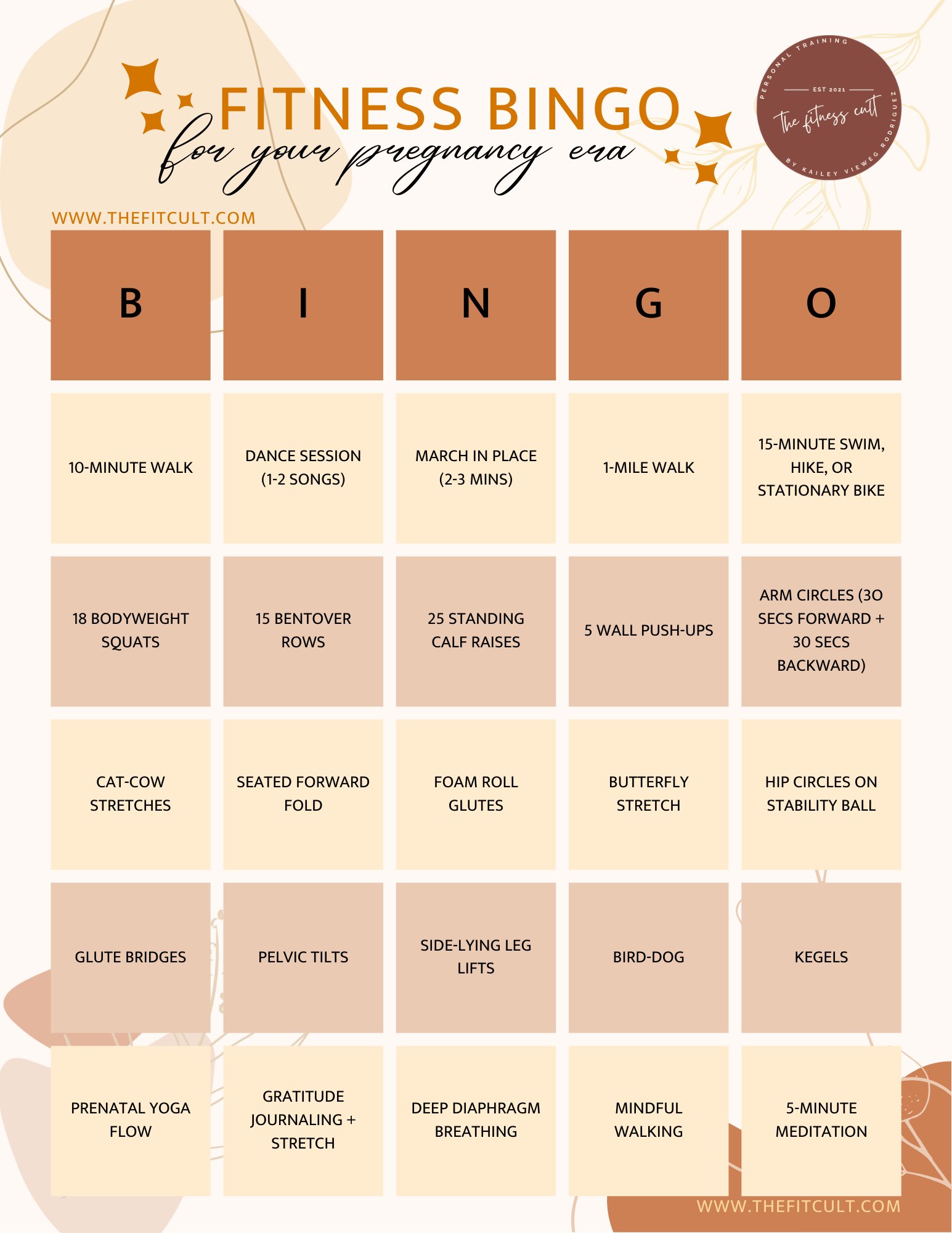
Want to take it up a notch? For just $3.99, you can join the Prenatal Fitness Bingo Challenge and unlock a premium version of the card with extra activities, 3 prenatal workouts, and a guided journal, plus a special prize from me when you complete it! It’s a fun way to stay motivated, hold yourself accountable, and celebrate your progress along the way.
5. Crafting a Prenatal Routine
Challenge yourself to build a daily wellness routine that blends movement, rest, and creativity. Use a journal (here is my favorite fitness journal!), app, or calendar to track consistency – because small, steady steps add up to big changes over time.
Building Connections Through Movement
Movement is even more meaningful when it’s shared. Involving your partner, friends, or kids in these challenges adds accountability and joy. Community support is essential during pregnancy, which is why I host programs like:
- Mommy & Me Fitness Classes – gentle, fun workouts designed for postpartum moms and their babies.
- Coffee Runs – stroller-friendly runs/walks that end at a local coffee shop (a perfect mix of fitness and connection!).
Safety Considerations
Every pregnancy is unique. Here are a few reminders to keep movement safe:
- Listen to your body—rest when you need it.
- Modify intensity and exercises depending on trimester and fitness level.
- Stay hydrated and avoid overheating.
- Always check in with your healthcare provider before starting or adjusting your routine.
(If you’re unsure where to start, my post on safe pregnancy exercises offers a detailed breakdown.)
Wrapping It Up
Pregnancy is the perfect time to create habits that support both your health and happiness. Fun challenges like walking goals, yoga practices, dance nights, fitness bingo, and building daily routines can make movement something you look forward to.
Which challenge will you try first? Share your ideas and experiences in the comments—I’d love to hear what’s helping you stay active and connected!
If you’re ready to take the next step in your pregnancy fitness journey, I’d love to support you. Explore my training services, subscribe to the blog for more tips, or send me a message—I’ll help you create a safe, fun, and sustainable plan tailored to your needs!
Leave a Reply