Categories
Prenatal Fitness tfc Community

Fun Pregnancy Challenges: Encouraging Movement and Connection

Pregnancy is a season of transformation – your body is working harder than ever, and staying active can help you feel stronger, healthier, and more connected throughout the journey. Movement during pregnancy isn’t about pushing your limits; it’s about supporting your well-being, preparing for postpartum recovery, and embracing the joy that comes from staying active.

One of the most engaging ways to keep moving is by turning fitness into a game; pregnancy challenges. These fun, upbeat activities help you stay motivated while strengthening connections with your partner, friends, or other moms-to-be.

Why Movement Matters During Pregnancy

Staying active while pregnant offers both physical and emotional benefitsL

  • Improved circulation and reduced aches and pains – Movement helps with common discomforts like swollen ankles, back pain, and stiffness.
  • Boosted emotional well-being – Gentle activity lowers stress, improves mood, and helps reduce pregnancy-related anxiety.
  • Postpartum readiness – A consistent fitness routine during pregnancy creates a smoother recovery and helps rebuild strength after delivery.

(If you’re curious about specific exercises and safety tips, check out my post Safe Exercises for Each Trimester of Pregnancy and The Importance of Core Strength During Pregnancy.)

Fun Pregnancy Challenge Ideas

Here are some creative, approachable ways to add movement to your pregnancy:

1. Daily Walks Challenge

Set a goal for daily steps or distance – tailor it to your fitness level! Unsure where to start:

  • Just starting out: 5,000 – 6,000 steps (2 – 3 miles)
  • Turn up the challenge: 7,000 – 8,000 steps (3.5 – 4 miles)
  • Bring the heat: 9,000 – 10,000+ steps (4 – 5+ miles)

Invite your partner or a friend to join you for accountability. Share your progress on social media and tag me @the_fitnesscult with #thefitnesscult so I can cheer you on!

2. Prenatal Yoga Challenge

Yoga is wonderful for flexibility, relaxation, and core stability. Try a 30-day yoga challenge, featuring one prenatal-friendly pose each day. This not only eases tension but also creates a calming daily ritual.

(I recently wrote about how yoga and gentle exercise support pregnancy in my post The Benefits of Prenatal Yoga for Moms-to-Be – it’s a great place to start if you’re new to yoga!)

3. Partner Dance Challenge

Dancing with your partner is a fun way to bond and stay active! Experiment with different styles – salsa, ballroom, or even just swaying in your living room. Take a class together, go to a dance club or live music event, or create a playlist of songs that make you smile and get your groove on together a few times a week.

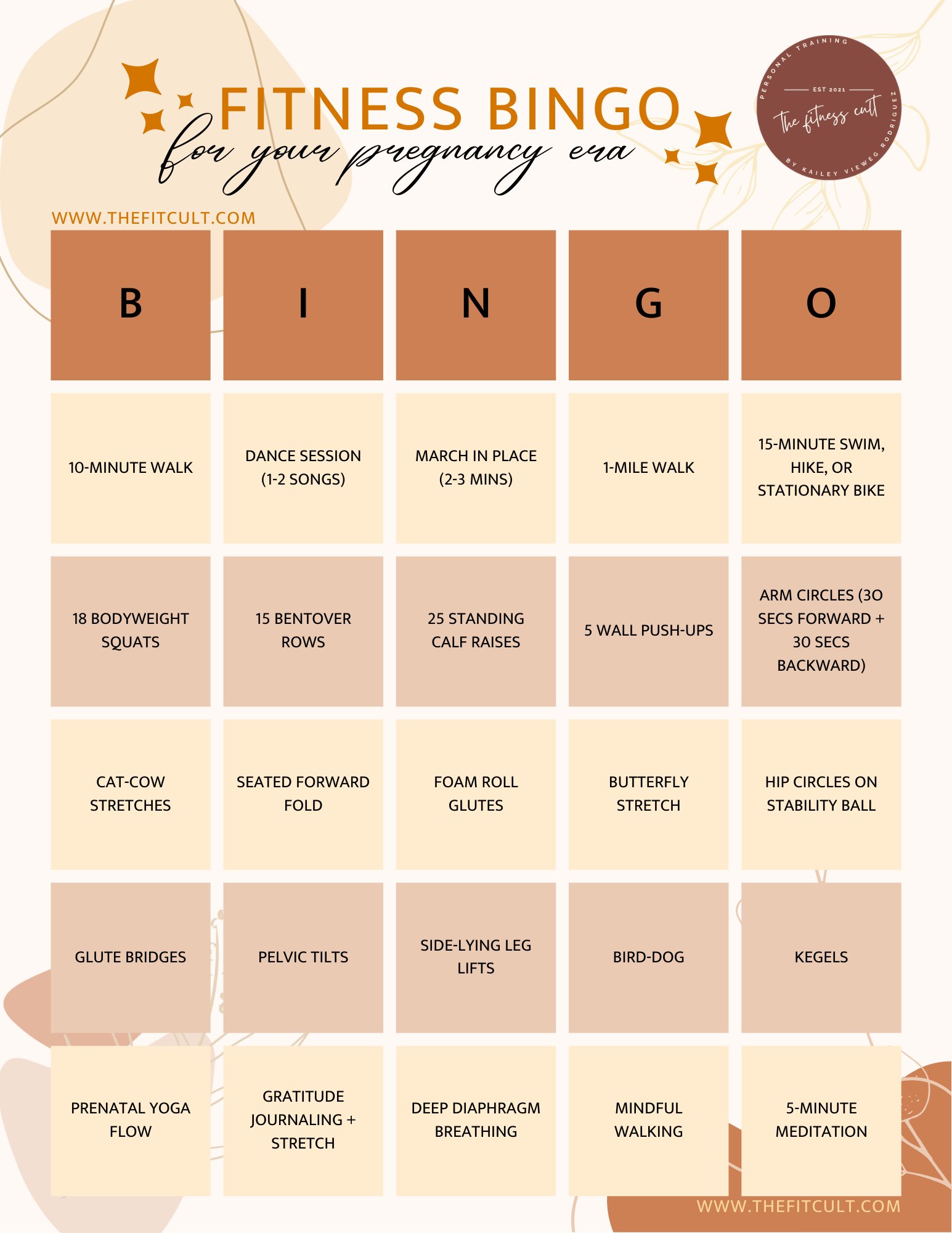
4. Fitness Bingo

Make movement fun by completing a prenatal fitness bingo card. Include activities like stretching, light strength moves, or a walk. Need ideas? Download my free pregnancy fitness bingo card here and see how many squares you can check off in a month!

Want to take it up a notch? For just $3.99, you can join the Prenatal Fitness Bingo Challenge and unlock a premium version of the card with extra activities, 3 prenatal workouts, and a guided journal, plus a special prize from me when you complete it! It’s a fun way to stay motivated, hold yourself accountable, and celebrate your progress along the way.

5. Crafting a Prenatal Routine

Challenge yourself to build a daily wellness routine that blends movement, rest, and creativity. Use a journal (here is my favorite fitness journal!), app, or calendar to track consistency – because small, steady steps add up to big changes over time.

Building Connections Through Movement

Movement is even more meaningful when it’s shared. Involving your partner, friends, or kids in these challenges adds accountability and joy. Community support is essential during pregnancy, which is why I host programs like:

  • Mommy & Me Fitness Classes – gentle, fun workouts designed for postpartum moms and their babies.
  • Coffee Runs – stroller-friendly runs/walks that end at a local coffee shop (a perfect mix of fitness and connection!).

Safety Considerations

Every pregnancy is unique. Here are a few reminders to keep movement safe:

  • Listen to your body—rest when you need it.
  • Modify intensity and exercises depending on trimester and fitness level.
  • Stay hydrated and avoid overheating.
  • Always check in with your healthcare provider before starting or adjusting your routine.

(If you’re unsure where to start, my post on safe pregnancy exercises offers a detailed breakdown.)

Wrapping It Up

Pregnancy is the perfect time to create habits that support both your health and happiness. Fun challenges like walking goals, yoga practices, dance nights, fitness bingo, and building daily routines can make movement something you look forward to.

Which challenge will you try first? Share your ideas and experiences in the comments—I’d love to hear what’s helping you stay active and connected!

If you’re ready to take the next step in your pregnancy fitness journey, I’d love to support you. Explore my training services, subscribe to the blog for more tips, or send me a message—I’ll help you create a safe, fun, and sustainable plan tailored to your needs!

Leave a Reply

Categories
Prenatal Fitness

How to Avoid Common Injuries While Exercising During Pregnancy

Pregnancy is an exciting, life-changing time – and it’s also a season where your body is working overtime. Staying active during pregnancy has incredible benefits; improved maternal health, support for your baby’s growth and development, reduced risk of complications during labor, and a smoother postpartum recovery.

But with all the physical changes happening, exercise can feel a little intimidating. Many moms worry about getting hurt, and with good reason – your body is more vulnerable to certain injuries and everything can feel more scary when you are carrying your baby!

The good news? With the right approach, you can enjoy the benefits of movement while minimizing risks. This post will walk you through the most common injuries during pregnancy, why they happen, and how to prevent them so you can feel confident and safe in your workouts.

Understanding Your Body Changes

Your body is adapting beautifully to grow and support new life, but these changes impact how you move and exercise.

  • Hormonal shifts: Relaxin and progesterone increase laxity in your muscles, ligaments, and connective tissue. This makes your joints feel looser – helpful for labor, but it can make you more prone to strains if you over-stretch or move too suddenly.
  • Weight gain and balance: As your bump grows, your center of gravity shifts forward, putting extra pressure on your joints and increasing your risk of falls.
  • Joint changes: Hips, knees, and lower back often feel more sensitive and less stable as pregnancy progresses.

These shifts don’t mean you should stop exercising – they just mean you need to be mindful of how you move to ensure you are supported.

Common Injuries During Pregnancy

The most frequent injuries and discomforts mamas-to-be experience while exercising include:

  • Back pain and pelvic pain (from postural changes and added strain on the spine)
  • Joint pain and strains (especially knees, hips, and ankles)
  • Muscle strains (from over-stretching or pushing too hard)
  • Falls or trips (due to a changing center of gravity and balance)

These injuries typically come from overextending joints, ignoring body signals, or participating in high-risk activities. Research has shown that while exercise during pregnancy is safe for most people, about 25-30% of injuries are related to slips, falls, or improper technique – making prevention key.

Pre-Exercise Considerations

Before you jump into any workout, it’s important to:

  1. Check with your healthcare provider to make sure exercise is safe for your pregnancy
  2. Assess your fitness level – what were you doing before pregnancy? Use that as a starting point for what’s safe to continue (with modifications as needed). For help here, you’ll love my post on How to Choose the Right Prenatal Exercise.
  3. Adapt to your trimester – your body feels different each stage of pregnancy. And if goal-setting motivates you, check out How to Set Realistic Fitness Goals During Pregnancy to keep your expectations balanced and encouraging.

Safe Exercise Guidelines

Choosing the right kinds of activities makes a big difference:

  • Best choices: Low-impact workouts like walking, swimming, stationary cycling, prenatal yoga, and modified strength training. These support strength and mobility without stressing joints.
  • Avoid: Contact sports, workouts with a high risk of falling (like skiing or horseback riding), and very high-intensity training that spikes your heart rate beyond a comfortable level.
  • Listen to your body: If you feel pain, dizziness, unusual fatigue, or cramping – stop. Discomfort is your body’s way of signaling it needs rest or modification. And if fatigue is something you’re struggling with, my post on Coping with Pregnancy Fatigue: Tips for Busy Moms will help you manage energy without guilt.

Warm-Up and Cool Down

Think of warming up as your own personal injury prevention insurance:

  • Warm-up: Start with 5-10 minutes of light walking, arm circles, or dynamic stretches to gently increase blood flow.
  • Cool down: Slow your pace, add gentle stretches, and focus on deep breathing to help your body recover and reduce stiffness.

Proper Technique and Equipment

Form matters more than ever during pregnancy!

  • Use good technique: Move with control and avoid locking joints or jerking movements. For extra support here, check out my post on The Importance of Core Strength During Pregnancy. Strong core muscles give your body stability and protect against unnecessary strain (as well as assisting in labor and delivery and promoting faster postpartum recovery!).
  • Footwear: Supportive shoes with good cushioning and a wide-enough toe box protect joints from unnecessary stress and promote better balance.
  • Modify movements: For example, swap out your regular squats and deadlifts with sumo stance positions to accommodate your growing belly, or move your push-ups from the floor to a wall or bench for incline push-ups.

Staying Hydrated and Nourished

Exercise during pregnancy isn’t just about moving – it’s about fueling your body, too.

  • Hydration: Sip water before, during, and after exercise to prevent overheating or dehydration.
  • Nutrition: Balanced meals with plenty of protein, healthy fats, and complex carbs will give you steady energy without spiking your blood sugar.
  • Timing: Avoid working out right after a heavy meal; instead, aim for a light snack 30-60 minutes before your exercise.

Pelvic Floor Health: Your Hidden Support System

One area that often gets overlooked during pregnancy fitness is the pelvic floor. These muscles support your internal organs such as your bladder, uterus, and bowels, and they play a critical role during labor and postpartum recovery.

When you exercise, focusing on proper breathing and gentle pelvic floor engagement can help prevent leaks, reduce back pain, and lower your risk of prolapse later on. Think of it as training the “foundation” of your core.

When to Not Exercise: Red-Flag Symptoms

While exercising is safe for most pregnancies, there are certain warning signs that mean it’s time to stop immediately and call your healthcare provider. These include:

  • Vaginal bleeding
  • Severe cramping or abdominal pain
  • Sudden dizziness or faintness
  • Shortness of breath before starting exercise
  • Chest pain or pounding heartbeat
  • Fluid leakage
  • Sudden swelling in hands, ankle, or face

These symptoms don’t necessarily mean something is automatically wrong – but they are still red flags to stop and check in with your doctor or medical team.

The Mind-Body Connection

Exercise isn’t just physical – it’s mental. Moving your body helps regulate hormones, reduce anxiety, and boost your mood, which is so important during pregnancy. Even a short walk or gentle mini-yoga sesh can help you feel more grounded, less stressed, and more connected to your changing body.

Conclusion

Pregnancy is not a time to give up exercise, just a time to move smarter. By understanding how your body is changing, choosing safe activities, supporting your pelvic floor, and listening to your body’s signals, you can greatly reduce your risk of injury while still reaping all the benefits of staying active!

Every mama’s journey looks different, and that’s the beauty of it. The key is honoring your body while giving yourself the gift of movement.

👉 Your turn: Have you found a favorite safe workout during pregnancy, or do you have tips for other moms-to-be? Share them in the comments—I’d love to hear from you!

💡 And if you’re ready for guidance tailored to you, I’d love to help. I offer personalized prenatal and postpartum coaching that supports your body through every stage of motherhood. Contact me today to start building your strong, safe, and sustainable fitness journey.

Leave a Reply

Categories
Prenatal Fitness

The Best Sports and Activities for Pregnant Women

Pregnancy is such an exciting and transformative time — but it can also come with its fair share of physical changes and challenges. Staying active during these months isn’t just safe for many expecting mothers — it’s incredibly beneficial for both mom and baby.

From boosting mood to easing backaches, the right kinds of exercise can help you feel stronger, sleep better, and even prepare your body for labor. But before we dive in, let’s be clear: every pregnancy is unique. Always talk with your healthcare provider before starting or changing any exercise routine.

Now, let’s explore why movement matters so much during pregnancy, how to do it safely, and the best activities to try during these special nine months.

Benefits of Exercise During Pregnancy

Physical Benefits

Your body is working overtime right now, and exercise can be one of your best tools for keeping it feeling its best. Staying active can help:

  • Improve stamina and endurance
  • Reduce common discomforts like back pain, constipation, and swelling
  • Improve posture and balance as your body changes
  • Promote better sleep (because you’ll need all you can get!)

Emotional Benefits

Hormones may have your emotions on a bit of a roller coaster, but regular movement can help even things out. Exercise releases feel-good endorphins that can:

  • Reduce stress and anxiety
  • Improve overall mood
  • Boost confidence as you watch yourself stay strong and capable

Benefits for Labor and Delivery

Check out specific exercises that may help during labor!

Think of exercise as part of your “labor prep.” Women who stay active often experience:

  • Shorter labor times
  • Fewer complications
  • Faster postpartum recovery

Safety Considerations

Before you lace up your sneakers or unroll your yoga mat, let’s talk about safety:

  • Consult Your Doctor or Midwife: They’ll help you know which exercises are safe for your unique situation.
  • General Guidelines: Aim for moderate activity where you can still carry on a conversation without gasping for air. Stay hydrated, avoid overheating, and listen to your body.
  • Know When to Stop: If you experience vaginal bleeding, dizziness, shortness of breath, chest pain, contractions, or fluid leakage — stop immediately and contact your provider.

Recommended Sports and Activities

Here are some of the best ways to keep moving while pregnant:

1. Walking

An easy, low-impact option you can do almost anywhere. It boosts circulation, supports cardiovascular health, and requires no special equipment.
Tip: Wear supportive shoes and avoid uneven terrain to reduce tripping hazards.

Read more: Incorporating Walking into Your Daily Routine While Pregnant

2. Swimming

Being in the water takes pressure off your joints and supports your growing belly.
Best strokes: Breaststroke and backstroke tend to be most comfortable. Avoid overly strenuous lap sessions.

3. Prenatal Yoga

Yoga supports flexibility, posture, and relaxation — all while teaching you breathing techniques you might use during labor.
Tip: Choose a prenatal class so poses are safe and adapted for your stage of pregnancy.

4. Pilates

Strengthens deep core muscles, improves posture, and supports stability.
Modification: Skip moves that have you lying flat on your back for extended periods after your first trimester.

5. Low-Impact Aerobics

A fun way to keep your heart pumping without pounding your joints. Think dance-based classes, light step routines, or water aerobics.

6. Cycling

Stationary bikes are safest since there’s no risk of falling. Outdoor cycling can be enjoyable early in pregnancy if you’re experienced, but balance changes can make it risky later on.

7. Strength Training

Maintaining muscle tone helps with posture, stamina, and postpartum recovery.
Tip: Use lighter weights with more repetitions, and avoid holding your breath during lifts.

Activities to Avoid

While pregnancy isn’t a time to push for new athletic records, it’s also not a time for risky activities. Skip:

  • High-impact or high-intensity sports (like competitive running, basketball, or CrossFit without modifications)
  • Activities with a high risk of falling (skiing, horseback riding, rock climbing)
  • Contact sports with a risk of being hit in the abdomen (soccer, martial arts, hockey)

Tips for Staying Motivated

  • Set Realistic Goals: Focus on how you feel, not on hitting specific performance numbers.
  • Find a Workout Buddy: Join a prenatal fitness class or walk with another expecting mom.
  • Mix in Relaxation: Try gentle stretching or guided meditation alongside your workouts.
  • Track Your Progress: Use an app to record workouts and celebrate small wins.

In Summary

Staying active during pregnancy can make your journey more comfortable, boost your mood, and prepare your body for one of life’s biggest events. The key is choosing safe, enjoyable activities and listening to your body’s cues along the way.

Your pregnancy fitness plan doesn’t have to be complicated — just consistent, gentle, and joyful.

💌 Ready to Stay Strong & Energized Through Pregnancy?
I’d love to help you find a movement routine that works for your body and your schedule.

Leave a Reply

Categories
Prenatal Fitness

Incorporating Walking into Your Daily Routine While Pregnant

Pregnancy is a beautiful journey filled with excitement, anticipation, and a host of changes, both physically and emotionally. One of the key aspects of maintaining a healthy and happy pregnancy is staying active, and there’s no simpler way to do that than through walking. Not only is walking a safe and effective form of exercise, but it also offers a myriad of benefits for your physical and mental well-being. Let’s explore the benefits of walking during pregnancy, provide tips for getting started, discuss how to incorporate it into your daily routine, and highlight important safety considerations.

Benefits of Walking During Pregnancy

Physical Health Benefits  

Walking is an excellent cardiovascular workout that can help improve your heart health and overall fitness levels, which is vital during pregnancy. It can assist in managing weight gain—a common concern for many expectant mothers—while also helping to strengthen your muscles and joints. As your body changes, maintaining strength and flexibility can ease some of the physical discomforts that come with pregnancy.

Mental Health Benefits  

Let’s not forget about your mental well-being. Walking has been shown to reduce stress and anxiety, thanks to the release of endorphins, those lovely feel-good hormones. A simple walk can enhance your mood and overall sense of well-being and help improve your quality of sleep. Additionally, walking provides a great excuse to get outside and enjoy some fresh air!

Join us on our next Coffee Run!

Social Benefits

Walking doesn’t have to be a solo activity. It provides an excellent opportunity to connect with other expecting mothers or supportive friends and family members. Whether it’s a casual stroll or a more vigorous walk, sharing your experiences with others can foster deeper connections and create a sense of community.

Getting Started with Walking

Before you lace up your shoes and hit the pavement, it’s crucial to consult your healthcare provider. They can provide personalized advice based on your health and pregnancy. Once you have the green light, the next step is gearing up! Invest in a good pair of comfortable, supportive shoes, and wear breathable clothing to stay cool. It’s also important to ensure you have a supportive, yet breathable, sports bra to support your growing and changing body. Here’s my favorite nursing sports bra that I wore throughout pregnancy and postpartum from Kindred Bravely!

Learn more about

SMART Goal setting

while pregnant!

Setting realistic goals is key to making walking a regular part of your routine. Start with short, easy walks and gradually build up your duration and intensity. It’s all about listening to your body and progressing at your own pace.

Tips for Incorporating Walking into Your Daily Routine

Creating a walking schedule can help you make this activity a part of your day. Think about when you feel most energized—maybe it’s in the morning before your day gets busy, during your lunch break, or in the evening after dinner.

Integrating walking into your daily activities can make it feel effortless. Consider walking to work, taking a stroll to the store instead of driving, or opting for the stairs instead of the elevator. If you have short breaks during the day, use that time for a quick walk.

To make your walks more enjoyable, consider listening to your favorite music or engaging podcasts or audiobooks. Walking also provides a great time to practice mindfulness – check out our post on Mindfulness during pregnancy and mindful walking tips. You can also invite friends or family to join you—there’s something special about sharing this time together, making it a more enriching experience.

Safety Considerations

As with any form of exercise, it’s important to listen to your body. Be mindful of any signs of fatigue or discomfort, and don’t hesitate to cut a walk short if needed. Staying hydrated is also vital, so make sure to drink plenty of water before, during, and after your walks.

Moreover, know when it’s best to avoid walking. For instance, during extreme weather conditions or if you’re not feeling well, it might be wise to stay indoors and rest. Your well-being—and that of your baby—is the top priority.

Walking is not just a simple activity; it’s a powerful tool that can enhance your pregnancy journey. By incorporating walking into your daily routine, you’re setting the stage for better physical health, improved mental well-being, and meaningful connections.

So why not give it a try? Start small, enjoy the fresh air, and embrace the wonderful benefits that walking can bring. We’d love to hear about your walking experiences! Share your tips or stories in the comments below. Together, let’s inspire each other to prioritize our health and make the most of this extraordinary time. Happy walking!

Leave a Reply

Categories
Prenatal Fitness

How to Choose the Right Prenatal Exercise

Pregnancy is an exciting journey filled with changes, both physically and emotionally. As your body adapts to nurture new life, staying active with the right prenatal exercises can enhance your well-being and prepare you for childbirth. However, choosing the right exercises can feel overwhelming with so much information out there. Let’s break it down to help you find what works best for you!

Understand Your Body’s Needs

First and foremost, it’s important to acknowledge how your body is feeling during different stages of pregnancy. Each trimester comes with its own set of physical changes and challenges. Consequently, your exercise routine might need to evolve as your pregnancy progresses. Consult with your healthcare provider to discuss any specific concerns or limitations you should keep in mind.

Curious about the changes your body goes through during pregnancy? Check out our post Understanding Your Body: Changes to Expect During Pregnancy!

Prioritize Safety

The safety of both you and your baby is paramount. Opt for exercises that minimize the risk of injury. Low-impact activities such as walking, swimming, and prenatal yoga can be excellent choices. Listen to your body and avoid exercises that feel uncomfortable or strained. This is not the time to set any new personal records!

Disclaimer: This article is intended for informational purposes only and should not be considered a substitute for professional medical advice. Always consult with a healthcare professional before starting any new exercise routine, particularly during pregnancy, to ensure it is safe and appropriate for your individual circumstances.

Focus on Core Strength

A strong core can be beneficial during and after pregnancy. Consider including exercises that target your abdominal muscles without putting too much pressure on your back, such as pelvic tilts and seated leg lifts. Strengthening your core can help support your growing belly and prepare you for childbirth. Find more information on keeping your core strong, as well as specific exercises tailored for pregnancy in The Importance of Core Strength During Pregnancy.

Consider Your Fitness Level

Looking for a prenatal fitness trainer? Contact us for a free consultation for in-person or virtual training!

Your previous experience with exercise will also guide your choices. If you were active before pregnancy, you might be able to continue many of your regular activities with some modifications. If you’re new to exercise, start slowly and don’t push your boundaries too far. There are plenty of prenatal classes designed specifically for varying fitness levels!

Join a Prenatal Class

Local fitness centers and online platforms often offer prenatal exercise classes. These are advantageous not just for the exercise, but also for socializing with other expecting moms. Trainers who specialize in prenatal fitness can guide you on safe practices and modifications tailored to your needs.

Want to try out a Mommy & Me Class in the Inland Empire, CA?

Incorporate Flexibility Work

Including flexibility work in your routine can be particularly beneficial during pregnancy. Gentle stretching can relieve tension and help with the aches and pains that may arise as your body changes. Prenatal yoga is a fantastic way to build flexibility and strength while also focusing on relaxation techniques.

Choosing the right prenatal exercise shouldn’t be a daunting task. By understanding your body’s needs, focusing on safety, and selecting activities that you enjoy, you can create a balanced routine that supports your pregnancy journey. Remember, staying active is not just about fitness; it’s about nurturing your mental health and preparing your body for the exciting moments ahead!

We’d love to hear about your experiences or any questions you may have! Feel free to comment below or subscribe for more helpful tips. Happy exercising!

Leave a Reply

Categories
Prenatal Fitness

The Connection Between Mental Health and Physical Activity During Pregnancy

Pregnancy is an extraordinary time filled with excitement and anticipation, but it can also bring a wave of emotional ups and downs. You might feel like you’re on an emotional rollercoaster, and that’s perfectly normal! As you navigate this life-changing journey, it’s important to understand the connection between mental health and physical activity. Trust us, it’s a relationship worth exploring!

The Importance of Mental Health During Pregnancy

Mental health during pregnancy is essential, not just for you but also for your growing baby. Many women experience mood swings, anxiety, or even depression thanks to all those hormonal changes. In fact, prenatal depression can affect your well-being and poses risks for your baby. Maintaining a healthy mental state is vital for a smooth pregnancy, so let’s dive into how physical activity can help!

How Physical Activity Can Improve Mental Health

Endorphin Relase: First off, let’s talk about those magical little things called endorphins. When you exercise, your body releases these wonderful hormones that help improve your mood. Think of them as your body’s natural happy pills! Even a brisk walk or a short dance party in your living room can kickstart that endorphin rush, making you feel lighter and more at ease.

Stress Reduction: Feeling stressed? Join the club! Pregnancy can be a time of increased stress, especially if you’re juggling work, baby planning, and all the unexpected surprises that come with it. Physical activity serves as a fantastic stress-buster. When you get your heart pumping, your body lowers cortisol levels (that pesky stress hormone). Bye-bye stress, and hello calm!

Improved Sleep Quality: Now, let’s chat about sleep—or, rather, the lack thereof! Many expecting mothers find it difficult to get a good night’s rest. This can feed into feelings of anxiety and irritability, creating a cycle that’s hard to break. But here’s some good news: regular exercise can improve your sleep quality. Whether it’s a yoga session or a simple evening stroll, moving your body can help you fall asleep faster and enjoy deeper sleep.

Boosted Self-Esteem: Here’s another perk of staying active during pregnancy: improved self-esteem. As your body changes, it’s natural to experience some body image struggles. Engaging in regular physical activity can instill a sense of empowerment. It’s all about celebrating what your body is capable of, rather than focusing solely on appearance. You’re growing a human, after all!

Social Connection: Social connections are incredibly important during pregnancy, and exercise can create wonderful opportunities for you to meet other expectant moms. Think about joining a prenatal yoga class or forming a walking group. Not only will you get the benefits of physical activity, but you’ll also find camaraderie and support. Sharing your experiences with others can lighten the load and give you a sense of community, which is key when you’re feeling overwhelmed.

Recommended Activities

So, what kind of activities are generally safe and beneficial during pregnancy? Always check with your healthcare provider before starting any new exercise routine, but here are some fun options:

– Walking: This is a low-impact exercise that’s easy to fit into your daily routine. Plus, it’s a great way to soak in some fresh air.

– Swimming: Glide through the water for a full-body workout that takes the pressure off your joints. It’s refreshing and oh-so-fun!

– Prenatal Yoga: Not only does yoga focus on flexibility and breathing, but it also encourages relaxation and mindfulness, making it a perfect fit for expectant moms.

– Strength Training: Strength training (with proper modifications) can help maintain muscle tone and support your overall fitness—just be sure to listen to your body.

Check out more on these pregnancy-safe workouts:

In a nutshell, the link between mental health and physical activity during pregnancy is one that can pave the way for a happier, healthier experience. By nurturing both your physical and emotional well-being, you prepare yourself not only for the challenges of pregnancy but also for the beautiful journey of motherhood that lies ahead.

Embrace this extraordinary time with movement and positivity. You’re not just keeping your body active; you’re also taking care of your mind and spirit. Remember, you’ve got this, and your little one is lucky to have you leading the way!

Leave a Reply

Categories
Prenatal Fitness

How to Set Realistic Fitness Goals During Pregnancy

Hey there, mama-to-be! Congratulations on this amazing journey you’re on! While you’re busy nesting and dreaming of tiny shoes, let’s take a moment to talk about something super important — maintaining your fitness during pregnancy. Grab a cozy seat and a snack (you’re allowed to indulge!), and let’s dive into why staying active is a great idea and how you can do it safely and enjoyably!

Why Fitness Matters During Pregnancy

First off, let’s chat about why keeping fit while pregnant is essential. Exercise can be a game-changer, helping to:

– Reduce those pesky pregnancy-related pains — say goodbye to chronic discomfort!

– Lower your risk of gestational diabetes and hypertension — nobody wants extra complications, right?

– Boost your health and immune system — better outcomes for both you and baby.

– Decrease the chances of birth defects and delivery complications — let’s keep this journey smooth!

– Enhance postpartum recovery — because you’ll want to get back to feeling like your wonderful self as quickly as possible!

And hey, setting realistic fitness goals can do wonders for your mental health, too! Achieving those targets will leave you feeling accomplished and keep you motivated to balance activity and rest as your body changes.

Understanding Your Body Changes

Pregnancy is a wild adventure, and your body is going through an incredible transformation! Here’s a quick rundown of what to expect:

– Your growing baby (and uterus) is shifting your center of gravity, so balance will become a little tricky.

– Increased blood volume might make you feel breathless at times. Deep breaths, mama!

– Space for your thoracic organs is reducing — a little reminder that you’re growing an entire human!

– Check out our prior post Understanding Your Body: Changes to Expect During Pregnancy for more details!

With all these changes, you might experience common discomforts like nausea, swelling, and the dreaded fatigue. Remember to listen to your body — it knows best! Now isn’t the time for new personal records; just focus on feeling good.

Setting SMART Goals

Ever heard of SMART goals? They’re all about being Specific, Measurable, Achievable, Relevant, and Time-bound. Sure, it sounds fancy, but it can really help you map out your fitness journey!

For instance, you might aim for:

– A set distance or time for walking each week.

– Trying out different prenatal classes to keep things fresh.

Want more tips? Check out our prior post Changing the Way You Goal-Set through SMART Goals for extra inspiration!

Finding Activities You Enjoy

Let’s be real — if you dread your workout, it’s way too easy to skip it. So, let’s find activities you actually love! Consider these fun options:

– Walking: Get those comfy shoes on and explore your neighborhood!

– Swimming: A fantastic, low-impact option

– Prenatal yoga: Perfect for relaxation and flexibility

– Strengthening exercises: Building muscle is super beneficial!

Spice up your routine by mixing it up! Aim for 2-3 days of cardio and 2-3 days of strength training each week. And don’t forget to check out our post on Safe Exercises for Each Trimester of Pregnancy for tailored advice.

Creating a Balanced Routine

As your body evolves through pregnancy, it’s essential to adapt your exercise routine. Think about incorporating a variety of activities:

– Cardiovascular exercises: Get that heart pumping!

– Strength training: To keep those muscles strong.

– Flexibility routines: Yoga and stretching help maintain your range of motion.

And don’t underestimate the power of rest! Active recovery days can be delightful; think gentle yoga or a relaxing stroll. Shorter workouts might be beneficial, especially if you’re feeling nauseous or fatigued early on. Just remember to ease up on activities that challenge your balance as your bump grows!

Staying Motivated and Accountable

Want to keep that motivation high? Here are a few tips:

– Track your progress: Celebrate milestones, like walking a mile in 20 minutes. Yes, you can do it!

– Support systems: Friends, family, or prenatal groups can make a world of difference.

– Celebrate win after win: Non-scale victories are just as important!

Prioritizing Mental Health

Physical activity is a fantastic way to boost your mental well-being during pregnancy! Embrace mindfulness and relaxation techniques — if you’re curious about this, check out our post on Mindfulness and Meditation Techniques for Expecting Moms.

And remember, if you ever feel overwhelmed, don’t hesitate to seek help. The National Maternal Mental Health Hotline is available 24/7 at 1-833-TLC-MAMA — they’re here to support you!

Final Thoughts

In conclusion, setting realistic fitness goals during pregnancy is essential, but it’s all about enjoying the journey! Embrace every little victory, stay flexible with your plans, and don’t hesitate to share your own fitness experiences or questions below. We’re all in this together, and your unique story makes our community stronger!

Happy exercising, and here’s to a healthy, joyful pregnancy!

Leave a Reply

Categories
Prenatal Fitness

Preparing for Labor: Exercises That May Help

You may have heard the old wives’ tales warning you to stay away from any physical activity or strenuous exercise while pregnant; however, studies and data today shows there is a multitude of benefits from exercising throughout pregnancy that can be enjoyed by both mama and baby!

I like to say that pregnancy and labor and delivery are strenuous activities in and of themselves, and should be prepared for as such. The pregnant woman will expend roughly 2.2 times her resting metabolic rate (how many calories your body typically uses within a day for your height, weight, age, gender, and lifestyle) every day of pregnancy – growing a whole human is hard work! For perspective, running a marathon typically expends around 2.2 times one’s resting metabolic rate. In other words, pregnancy requires the energy it takes to run a marathon, every day, for about 280 days (give or take!).

Among the many benefits of leading an active pregnancy, exercising throughout your pregnancy can help prepare your heart, lungs, and muscles for labor and delivery. Strengthening exercises that target the core, pelvic floor, legs, hips, and glutes can assist the body during contractions and pushing in delivery, while maintaining cardiovascular fitness through aerobic activity helps keep the heart and lungs at proper functioning and health to handle the physical demands of labor. Additionally, practices such as yoga and meditation teach breathing techniques and visualization methods that can be very helpful in reducing labor pains and shortening overall labor time.

Disclaimer: Before starting any new exercise routine during pregnancy, it is crucial to consult with your healthcare provider or medical care team. This post is intended for informational purposes only and should not be considered a substitute for professional medical advice, diagnosis, or treatment. Always seek the advice of your physician or other qualified health provider with any questions you may have regarding a medical condition or exercise during pregnancy. Your health and the health of your baby are of utmost importance.

Understanding Labor and Its Demands

First off, let’s break it down to the basics. Labor is not just a walk in the park (though a good walk won’t hurt!). It involves several stages, starting from those early contractions to delivery. Each stage brings its own set of physical challenges, which is why preparation is so important.

Building stamina and strength can make a world of difference. Incorporating exercises into your routine can help you handle the demands of labor. So, let’s strap on those workout shoes and get moving!

Key Exercises to Prepare for Labor

Here are some key exercises that can help you get that body ready for labor:

Pelvic Floor Exercises

Ah, the pelvic floor — a powerhouse we often forget about! Strengthening these muscles can aid in labor and recovery post-delivery. The star of the show here is the Kegel exercise. Just think of it as doing a workout for your vagina! To do this, simply tense and release those muscles as if you’re trying to stop the flow of urine. Also, check out our post 5 Pelvic Floor Exercises That Are Not Kegels for more workouts to target and strengthen the pelvic floor!

Squats

Let’s get squatting! Believe it or not, squats can help you find the best positions during labor. Whether you’re looking for an upright position or simply want to make your body more comfortable during contractions, squats are your friends. Remember to keep your feet shoulder-width apart, lower your body as if sitting in a chair, and rise back up. Feel free to try sumo squats or wall squats for a bit of variety!

Walking

Don’t underestimate the power of a good stroll! Walking is excellent for maintaining mobility and helps with circulation, which is vital during labor. Try to incorporate daily walking into your routine – aim for 20-30 minutes a day. Plus, it gives you a great excuse to get out of the house and enjoy the fresh air.

Yoga and Stretching

Flexibility for the win! Yoga and stretching can promote relaxation and keep those muscles loose and ready for action. Consider practicing poses like Cat-Cow, Cobbler’s Pose, and Child’s Pose. Pair these with some focused breathing, and you’ll be prepping your body and mind for a stress-free labor experience. For a deeper dive, give The Benefits of Prenatal Yoga for Moms-to-Be a read!

Core Strengthening

Having a strong core can work wonders during labor, helping support your body and giving you stamina. Think of exercises like modified plank holds or seated leg lifts. Not too strenuous but oh-so-effective! We’ve listed some great core exercises that are pregnancy-safe in our post The Importance of Core Strength During Pregnancy!

Breathing Techniques for Labor

Now that we’ve worked those muscles, let’s turn to breathing techniques. Controlled breathing can help you manage pain and stay centered. Practice inhaling deeply through your nose and exhaling through your mouth. Breathe in for a count of four, hold for four, then exhale for a count of six. This rhythmic breathing can be a game changer when contractions hit.

Mental Preparation and Visualization

Labor is as much a mental marathon as it is a physical one. The power of positive thinking can lighten the load. Visualizations can help too — picture yourself in a calm, serene space as you prepare for birth.

Meditation is also a fantastic tool. Even spending 10 minutes each day focusing on your breath or journaling your thoughts can build a sense of readiness. Consider creating a birth plan that outlines your wishes and preferences for the big day; it’s a great way to mentally prepare!

New to meditation? Check out our tips & tricks in Mindfulness and Meditation Techniques for Expecting Moms!

Listening to Your Body

As much as we love a good workout, your body will be your best guide. Pay attention to what it’s telling you. Rest when you need to, modify exercises that feel uncomfortable, and don’t hesitate to reach out for help if something doesn’t feel right.

Taking the time to prepare for labor is not only beneficial, but it can also be an enjoyable journey! Recap: embracing exercises, honing breathing techniques, keeping your mind clear with visuals, and listening to your own body will help you tackle labor head-on.

So, mix it up, have some fun, and create a balanced routine that nurtures your physical, mental, and emotional self. If you have experiences or tips to share about preparing for labor — or any questions at all — please comment below. We’re all in this together, and your journey matters! What are you most concerned about with preparing for labor? Share in the comments below!

Happy prepping, and here’s to a smooth and powerful labor experience! 🎉

Leave a Reply

Categories
Prenatal Fitness

The Benefits of Swimming for Expecting Moms

Staying active throughout your pregnancy is the first gift you can give your baby! Babies born of active pregnancies are leaner, healthier, and more intelligent for their entire lives. But when your joints are aching with the extra weight your growing baby is putting on your body, you may not always feel up to an evening stroll on your already swollen feet. So how can you keep your activity level up?

Swimming has officially entered the chat. Swimming is a fantastic low-impact workout; it can function as both an aerobic activity and a resistance training exercise, and it’s gentle on the joints! Plus, floating in water allows you to enjoy a weightless feeling as a temporary reprieve from the pressure of your expanding belly bump.

Disclaimer: Before starting any new exercise routine during pregnancy, it is crucial to consult with your healthcare provider or medical care team. This post is intended for informational purposes only and should not be considered a substitute for professional medical advice, diagnosis, or treatment. Always seek the advice of your physician or other qualified health provider with any questions you may have regarding a medical condition or exercise during pregnancy. Your health and the health of your baby are of utmost importance.

Physical Benefits of Swimming for Pregnant Women

Swimming is a fantastic exercise for pregnant women, primarily because it’s low-impact and gentle on the joints. As a low-impact activity, it reduces strain on your body, which can help alleviate common pregnancy-related pains like back pain and hip discomfort. Plus, being in the water provides a unique sense of support, making you feel lighter!

Swimming can also help enhance blood flow and significantly decrease swelling in your legs and ankles. With all the changes your body goes through during pregnancy, reducing edema can make a big difference in how you feel overall. And let’s not forget about muscle strengthening! Regular swimming sessions can tone your muscles and help build core strength and stability, which are super important as your belly grows.

Mental and Emotional Benefits

Swimming can be a wonderful stress-reliever. There’s just something about being in the water that creates a natural calming effect. It can feel like a mini-escape, allowing for some mindfulness and relaxation during what can be a hectic time.

Plus, swimming can really boost your mood. The endorphins released during physical activity can help combat those pesky pregnancy-related anxieties. Plus, finishing a swim makes you feel accomplished and empowered—what’s not to love about that?

Preparing for Labor and Delivery

Swimming also has practical benefits when it comes to preparing for labor and delivery. It can enhance your lung capacity and breathing techniques, which are super helpful during childbirth. The controlled breathing you practice in the water helps build stamina that will come in handy when the big day arrives.

Strengthening your core and pelvic floor is another benefit of swimming that many expectant moms overlook. These areas are crucial during childbirth, and incorporating specific techniques while you swim can be a great way to prep for labor. So, dive in and enjoy all these fantastic benefits!

So, if you’re an expecting mama looking for a fun and effective way to stay active, give swimming a shot! It’s the perfect blend of relaxation and exercise that can make you feel amazing, both physically and mentally. Plus, you’ll be prepping your body for labor while enjoying some well-deserved float time. Dive in and have fun—your body and baby will thank you! What’s your favorite way to stay active while pregnant? Have you tried swimming, and how did you feel about it? Let’s us know in the comments!

Leave a Reply