Categories
Menopause & Perimenopause Postpartum Strength

Build Glute Strength for Women: Better Movement and Longevity

One of the most overlooked things in a fitness routine is glute strength for women; and it’s costing more than just aesthetics!

Your glutes aren’t just there to look good. They are the foundation of how your body moves, stabilizes, and stays pain-free through every stage of life; whether you’re recovering postpartum, navigating hormonal shifts in midlife, or simply trying to feel strong and capable again in any season.

When glute strength is missing, your body compensates. And that’s when pain, instability, and injury start to creep in. Let’s change that!

Why Glute Strength for Women Matters More Than You Think

Your glutes are the largest and most powerful muscle group in your body. They control:

An anatomical illustration of the hip region highlighting the Gluteus Medius, Gluteus Minimus, Gluteus Maximus, and Piriformis muscles.
  • Hip movement
  • Pelvic alignment
  • Spinal support
  • Walking, running, lifting, and even standing!

But here’s where it gets even more important…

For women in postpartum recovery and perimenopause/menopause, your body is already navigating hormonal shifts, changes in muscle mass, and increased joint vulnerability.

Without strong glutes, everything above and below the hips becomes less stable. And that’s where the problem begins.

How Muscle Helps Prevent Chronic Pain

Muscle isn’t just about strength, it’s about protection.

When your glutes are strong, they:

  • Absorb impact during movement
  • Reduce stress on joints
  • Improve movement efficiency
  • Prevent overcompensation patterns

Think of muscle as your body’s built-in shock absorber.

Why Weak Glutes Lead to Pain

When glutes aren’t doing their job, other areas step in; areas that are not designed for it, which can lead to other problems.

An infographic titled 'The Pain Chain: How Weak Glutes Lead to Joint Pain' illustrating the connection between weak glutes, knee pain, and back pain. It shows how weak glutes cause a lack of stability and support, leading to joint strain and misalignment in the knees, which ultimately results in low back stress and tension.

That often shows up as:

  • Low back pain (your spine takes over stabilization)
  • Knee pain (poor tracking and alignment)
  • Hip tightness (overworked stabilizers)

This is why so women stretch constantly but still feel tight. The issue isn’t just about lack of mobility, it’s also needing more strength.

Glute Strength and Joint Stability Go Hand in hand

Let’s simplify something important:

  • Mobility means your body’s ability to move
  • Stability means your body’s ability to control that movement

Your glutes are one of the body’s primary stabilizers. For women, this is of particular importance during major life transitions.

Postpartum

  • Ligaments are more lax
  • Core and pelvic floor are rebuilding
  • Stability is temporarily reduced

Glutes help re-establish pelvic and hip control.

Perimenopause & Menopause

  • Estrogen declines
  • Joint tissues become less resilient
  • Risk of aches and injury increases

Muscle becomes your primary source of joint support.

If stability is missing, your body feels it everywhere.

The Role of Muscle Mass in Pain-Free Aging

Starting in your 30s and accelerating into your 40s and beyond, women naturally lose muscle mass.

That loss can lead to:

  • Decreased balance
  • Reduced strength
  • Higher injury risk
  • More chronic pain

This is exactly why strength training for long-term health is so powerful. If you’ve read The Truth About Metabolism for Women: Muscle vs Cardio, you already know that muscle is one of the most important drivers of metabolism and resilience.

But here’s the bigger picture: Muscle isn’t just about metabolism. It’s about independence, confidence, and quality of life.

3 Essential Exercises to Build Glute Strength for Women

You don’t need a complicated routine. You just need the right movements done consistently.

Here are three foundational exercises that deliver real results.

1. Squats for Foundational Glute Strength

Squats train your body to move efficiently in everyday life.

Why they work:

exercises for glute strength for women
  • Target glutes, quads, and core
  • Reinforce proper movement patterns
  • Build full lower-body strength

Form cues:

  • Sit back into your hips
  • Keep chest lifted
  • Drive through your heels

Progression:

  • Bodyweight > Dumbbell or Goblet Squat > Front or Back Squats

2. Glute Bridges or Hip Thrusts for Activation

If your glutes feel “hard to activate,” start here.

glute strength exercises for women at home

Why they work:

  • Isolate the glutes
  • Build mind-muscle connection
  • Low impact on joints

Best for:

  • Postpartum recovery
  • Beginners
  • Anyone rebuilding strength

Form cues:

  • Push through heels
  • Squeeze glutes at the top
  • Avoid arching your lower back

3. Single-Leg Exercises for Stability and Balance

This is where strength turns into real-life function.

Options include:
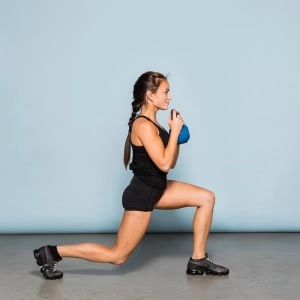
glute strength for women at home exercises
  • Split squats
  • Bulgarian split squats
  • Lunges

Why they matter:

  • Improve balance
  • Correct muscle imbalances
  • Build hip stability

Single-leg work is one of the most effective ways to prevent injury and build true strength.

How to Start Safely Building Glute Strength for Women

You don’t need to overhaul your entire routine. Start simple:

  • Train glutes 2-3 times per week
  • Focus on form first, then load
  • Prioritize consistency over intensity

If you’re postpartum, layering this with core and pelvic floor stability work is key to rebuilding from the inside out.

glute strength exercises for women at home

The Bigger Picture: Strength is Your Insurance Policy

It’s easy to focus on short-term goals like weight loss or aesthetics. But when it comes to glute strength for women, what you’re really building is something bigger:

  • The ability to move without pain
  • The confidence to trust your body
  • The strength to age well

Strong glutes don’t just change how you look. They change how your body feels and functions, for life.

Ready to Build Strong, Pain-Free Glutes?

As a personal trainer, I often see the same pattern with women I’ve coached. They were stretching constantly, doing cardio consistently, and trying to stay active. But they were still dealing with tight hips, achy backs, and weakness they couldn’t quite fix.

The missing piece? Structured glute strength.

That’s exactly why I created my Glute Goddess Glow-Up Program; a 6-week plan designed to help you:

  • Build real glute strength with the convenience of at-home or gym-friendly workouts
  • Improve stability and movement
  • Feel stronger, more supported, and more confident.

If you’re ready to start, you can enter your email below to get 15% off the program!

Because feeling strong in your body shouldn’t feel complicated.

Ready to build that booty? 🍑

Enter your email address to receive your 15% off coupon and start your strength program today!

We don’t spam! Read our privacy policy for more info.

join the tfc community!

subscribe to be best friends 🤍

Weekly wellness tips & mom support, straight to your inbox 💌

Categories
Menopause & Perimenopause Nutrition & Fuel

The Truth About Creatine for Women After 40

If you hear “creatine” and picture 22-year-old bodybuilders in tank tops, you’re not alone. For years, creatine has been marketed almost exclusively to men chasing bigger biceps. But here’s what the research now makes clear: Creatine for women, especially women over 40, is not about getting bulky. It’s about protecting muscle, supporting brain health, and potentially strengthening bones during one of the most hormonally demanding transitions of your life.

If you’re navigating perimenopause or menopause and wondering whether creatine belongs in your routine, let’s break it down clearly, honestly, and without hype.

What Is Creatine (And Why Have We Ignored It?)

Creatine is a naturally occurring compound stored primarily in your muscles. It plays a key role in producing ATP, the energy currency your cells use for quick, powerful movements.

You already:

  • Make creatine in your liver and kidneys
  • Get small amounts from red meat and fish

Supplementing simply increases the available creatine stored in your muscles and brain.

So why has creatine been overlooked for women?

Because most early marketing, and much early research, focused on young male athletes. Meanwhile, women entering perimenopause were told to focus on walking more and eating less.

That advice is incomplete at best. After 40, your physiology changes. And so should your strategy.

How Creatine for Women Supports Muscle and Training Performance

One of the most significant changes during perimenopause and menopause is accelerated muscle loss (sarcopenia).

Infographic titled 'How Does Creatine Work?' illustrating the process of energy production in the body, featuring four key points: A.T.P. as the energy source, energy used during workouts, A.D.P. as a by-product, and how creatine supplementation helps regenerate energy.

Declining estrogen contributes to:

  • Reduced muscle protein synthesis
  • Lower recovery capacity
  • Increased fat storage
  • Decreased strength and power

And muscle isn’t just aesthetic.

Muscle is:

  • A metabolic organ
  • A blood sugar regulator
  • A fall-prevention tool
  • A longevity predictor

(If you haven’t read my post on grip strength as a longevity marker in Grip Strength: A Powerful Predictor of Women’s Lifespan, that’s a powerful companion to this conversation.)

Does Creatine Help Women Build Muscle?

Yes, when combined with resistance training.

Research consistently shows creatine:

  • Improves strength output
  • Increases training volume
  • Enhances power production
  • Supports lean mass retention

That matters after 40 because:

More strength → better workouts
Better workouts → better muscle retention
Better muscle retention → better metabolic health

Creatine doesn’t build muscle by itself. It enhances your ability to train effectively. It helps you squeeze more adaptation out of the work you’re already doing.

Age-related muscle loss in women during menopause

And if you’re already prioritizing strength training, it may give you a meaningful edge.

(You can also explore how hormones affect muscle retention in HRT and Muscle Growth After 40: What Science Says for additional context.)

Creatine for Women and Brain Health

This is where things get especially interesting.

The brain is an energy-demanding organ. It uses ATP just like your muscles do. Emerging research suggests that creatine may support:

  • Cognitive resilience
  • Mental fatigue resistance
  • Memory performance
  • Mood stability

For women in perimenopause experiencing:

  • Brain fog
  • Mental fatigue
  • Reduced sharpness
  • Mood variability

Creatine’s role in brain energy metabolism is a promising area of study.

Important note: Research here is still evolving. While early findings are encouraging, creatine is not a treatment for cognitive disorders. But supporting cellular energy in the brain during hormonal fluctuation is a compelling area of longevity science.

Creatine and Bone Density: What We Actually Know

Creatine is not a calcium supplement. It doesn’t directly increase bone density.

However, here’s where it becomes relevant: Bone responds to load.

If creatine helps you:

  • Lift heavier
  • Train harder
  • Maintain muscle mass

Then indirectly, you’re increasing the mechanical stimulus that supports bone strength.

Some studies suggest that creatine combined with resistance training may enhance bone health markers more than training alone, but this area needs more research.

The real takeaway? Creatine amplifies strength training. Strength training protects bone. That’s the chain reaction that matters.

Will Creatine Make Me Bulky or Cause Weight Gain?

Let’s clear this up. Creatine may cause:

  • A small increase in water retention inside muscle cells

This is intracellular water, not bloating under the skin.

You may see:

  • 1–3 pounds of scale increase initially

This is not fat gain.

Creatine does not:

  • Cause fat gain
  • Make women bulky
  • Create masculine features

Building significant muscle requires years of progressive overload and calorie surplus. Creatine simply supports performance, not extreme hypertrophy.

Who Should Not Take Creatine?

Creatine is well-studied and considered safe for most healthy individuals. However, it may not be appropriate if you:

  • Have kidney disease or impaired renal function
  • Are on medications affecting kidney health
  • Are pregnant or breastfeeding (insufficient long-term data)
  • Have been advised by your physician to avoid creatine

If you have any medical conditions or take prescription medications, talk to your healthcare provider before starting.

Creatine is optional, not mandatory. Your foundation should always be:

  • Strength training
  • Adequate protein intake
  • Sleep
  • Recovery

(And yes, respecting recovery matters! See How to Balance Exercise and Rest to Avoid Burnout and Support Long Term Fitness if that’s your current focus.)

How to Take Creatine Safely

If you decide to try creatine for women over 40, here’s what matters:

Type

  • Creatine monohydrate is the gold standard
  • Extensively studied
  • Affordable
  • Effective

Dose

  • 3–5 grams daily
  • No loading phase required

Timing

  • Timing is not critical
  • Consistency matters more than when you take it

Hydration

  • Stay adequately hydrated
  • Especially if increasing training intensity

The product I personally recommend is: Nutricost Creatine Monohydrate Micronized Powder. It’s simple, micronized for easier mixing, and contains no unnecessary additives.

👉 You can find it here: https://amzn.to/4kCa7sX

As an Amazon Associate, I earn from qualifying purchases at no extra cost to you.

Is Creatine Right for You in Menopause?

Common myths about creatine supplementation in women

Ask yourself:

  • Am I strength training at least 2–3 times per week?
  • Am I eating enough protein to support muscle?
  • Am I prioritizing recovery and sleep?
  • Do I want to support muscle and cognitive resilience long term?

If the answer is yes to most of these, creatine may be a beneficial addition.

If not, build the foundation first! Supplements amplify strategy. They don’t replace it.

If you’re unsure whether you’re eating enough protein, check out our FREE Calorie Calculator to determine your calorie needs based on age, weight, height, activity level, and goals. Once you have your calorie goal, dial in even more with the $0.99 upgrade and get your personalized macronutrient distribution to know exactly how much protein, carbohydrates, and fat you should be eating.

Muscle Is a Longevity Organ

One of the biggest mindset shifts I want women over 40 to embrace is this:

Muscle is not vanity. It is insurance.

It protects:

  • Your metabolism
  • Your bones
  • Your balance
  • Your independence

We’ve been conditioned to shrink as we age.

But strength is protective.

Creatine for women isn’t about chasing aesthetics. It’s about supporting your ability to stay powerful, capable, and metabolically resilient through menopause and beyond.

Optional? Yes.

Beneficial? For many women, absolutely.

FAQ: Creatine for Women

Is creatine safe for women over 40?

For healthy individuals without kidney disease, creatine monohydrate is widely considered safe when taken at recommended doses.

Does creatine cause bloating?

Some women experience mild water retention inside muscle cells initially, but this is not fat gain.

How long does creatine take to work?

Muscle stores saturate within 2–4 weeks with daily use. Performance benefits may be noticed within that timeframe.

Can creatine help brain fog in menopause?

Research is ongoing, but early evidence suggests potential support for cognitive energy metabolism.

Final Thoughts

Creatine for women after 40 is no longer a fringe conversation.

It’s part of a larger shift toward:

  • Strength as medicine
  • Muscle as longevity
  • Training as a long-term investment

You don’t need every supplement on the shelf.

But if you’re lifting, fueling well, and thinking long-term, then creatine may be worth considering.

Medical Disclaimer

I am an ACE Certified Fitness Nutrition Specialist. I am not a physician or registered dietitian. This content is for educational purposes only and should not be considered medical advice. Always consult your healthcare provider before beginning any supplement, especially if you have underlying health conditions or are taking medications.

join the tfc community!

subscribe to be best friends 🤍

Weekly wellness tips & mom support, straight to your inbox 💌