

For a long time, women have been taught to measure their health through the scale, clothing size, body fat percentage, or how many calories they can burn in a workout. But if we want to have a serious conversation about longevity for women, there is another metric worth paying attention to: muscle.
Muscle is important; not because you need to look more toned or because women should be chasing a certain physique or shape. And definitely not because having more muscle makes you immune to illness or aging. Muscle is important because it is one of the body’s most valuable forms of physical reserve.
The strength you build today can help support the life you want to live tomorrow. It can help you carry your toddler without feeling lie your back is going to file a formal complaint later. It can support healthy movement as your body changes through pregnancy, postpartum, perimenopause and menopause. It can help preserve physical function as you age.
That is why I like to think of muscle like a biological currency. You build it, you maintain it, and you draw on it throughout life.

Why Muscle Matters for Longevity for Women
When we talk about longevity for women, we’re not talking about how long you can live, but how well you will be able to live as you age.
Will you be able to do things independently like get up from the floor or get your own groceries? How will it feel in your body when you enjoy life through activities like traveling or playing with your kids or grandkids? Can you move confidently and recover well after a difficult season?
That is where muscle and strength become incredibly valuable.
Skeletal muscle is not simply tissue that changes the appearance of your arms, legs, or glutes. It plays an active role in movement and metabolism. Muscle is a major site of glucose uptake and storage, and muscle contractions can stimulate glucose transport through pathways that are distinct from insulin.
This does not mean that more muscle automatically guarantees perfect metabolic health. Your health is influenced by genetics, sleep, nutrition, cardiovascular fitness, stress, medical conditions, and many other factors.
However, muscle gives you capacity. Think of it as your body’s reserve account. The stronger and more physically capable you are, the less demanding many everyday tasks begin to feel compared with your maximum capacity.
Muscle Is a Metabolic Resource, Not Just a Cosmetic Feature
Your muscles are constantly involved in helping your body manage energy. After you eat, skeletal muscle is one of the main places where glucose can be taken up and stored. During physical activity, working muscles also use glucose as fuel. This is one reason muscle tissue matters when we talk about metabolic flexibility and insulin sensitivity.
That does not mean muscle mass should become another number other obsess over You don’t need to constantly scan your body composition or panic over a small change in lean mass.
Instead, think bigger. A body with healthy, well-trained muscles has a greater capacity to perform physical work. Maintaining muscle and strength can support the metabolic and functional demands of everyday life. For women, that becomes especially meaningful during major body transitions.
What is Sarcopenia and Why Should Woman Care Before Old Age?
Sarcopenia is a medical condition marking the gradual loss of muscle, strength, and function as people age. Although sarcopenia is commonly associated with a normal part of older adulthood, muscle changes occur across the lifespan.
The revised European consensus emphasizes that low muscle strength is a key characteristic and that the changes contributing to sarcopenia can accumulate over time. This is not to say that sarcopenia may suddenly strike at 25; rather, it’s to recognize the importance of muscle and the ability we each have to do something about the potential loss of muscle as we age.

The overall message is to start building and protecting your physical muscle reserve before you desperately need it.
Sarcopenia Prevention in Your 30s Starts with Building a Buffer
Your 30s can be an excellent time to establish a consistent strength training habit, not because this is the marker of becoming old or because you will lose all your muscle is you miss a couple workouts. Your 30s, 40s, and beyond are simply opportunities to build strength that may serve you during future periods of physical stress, including aging.
Life is rarely perfectly consistent. You may go through changes like pregnancy, postpartum recovery, a demanding job, disrupted sleep patterns, or illness or injury. You’ll experience the hormonal changes of perimenopause and menopause, and perhaps the emotional changes of caring for family members. Seasons will arise where exercise simply has to take a back seat.
Building a solid foundation of muscle and strength can provide more physical reserve when life gets complicated. That is your muscle buffer.
How Muscle Supports Longevity for Women Every Day
The benefits of strength are not limited to some distant version of your 70-something self.
You can use and enjoy your muscle buffer today!
Strength Helps You Handle the Physical Demands of Motherhood
Motherhood can be surprisingly physical. And when we talk about longevity for women, we are not just talking about what happens decades from now. We are talking about having the strength and physical capacity to handle the demands of your life today.
All in a crazy day of mothering, you lift a baby from the crib, carry a car seat, push a stroller. Your baby grows into an even heavier toddler who still wants to be lifted, you get down on the floor to play, then stand back up (sometimes over and over and over again – that’s the whole game!). You carry groceries, chase down kids, hold their backpacks and sports gear, and bend down to pick up toys.
While these movements may not be a formal workout, they are still physical demands that your body has to meet! Strength training can improve your capacity for those demands.
That doesn’t mean strong women never experience pain or injury. Pain and injury are complex, and no workout program can guarantee protection from either. What strength can do is help increase your physical capacity. When you are stronger, many everyday tasks may represent a smaller percentage of what your body is capable of doing without straining.
This is one reason I love the concept of functional fitness. Your workouts can help prepare you for the movements you actually perform in real life. Read more about How Functional Fitness Helps You Stay Strong for Life.

Strength Training Can Support Joint Health and Movement Confidence
Your muscles help create, control, and absorb movement.
When you squat down to pick up your child, your hips, knees, ankles, and surrounding muscles all have to coordinate the movement. When you carry something heavy, your muscles have to produce force and stabilize your body.
Strength training can help improve your ability to produce and control force. That is different from saying strength training prevents every injury. Developing strength can increase your capacity to tolerate and perform the movements that life asks you to do.
For many women, that can also build confidence. You start trusting your body again. You stop thinking, “I hope I can handle that,” because you know you have trained for hard things!
Strength Training for Longevity for Women Also Supports Bone Health
Muscles and bones do not work in isolation.
When muscles contract against resistance, they create mechanical forces that bones respond to. That is one reason resistance and weight-bearing exercise are important considerations for long-term bone health.
Research has found that resistance training can positively influence bone mineral density in postmenopausal women, although results can vary depending on the training program, skeletal site, participant characteristics, and study design. Recent systematic reviews and meta-analyses suggest beneficial effects, while also showing that there is no single “perfect” training formula for every woman.
This matters because bone health becomes an increasingly important part of longevity for women, particularly through and after menopause.
The goal is not to wait until you are worried about your bones.
The goal is to build a long-term relationship with strength training that supports your body across decades.
For a deeper look at this topic, check out Strength Training for Stronger Bones for Women and Lifting Heavy for Women for Bone Density.
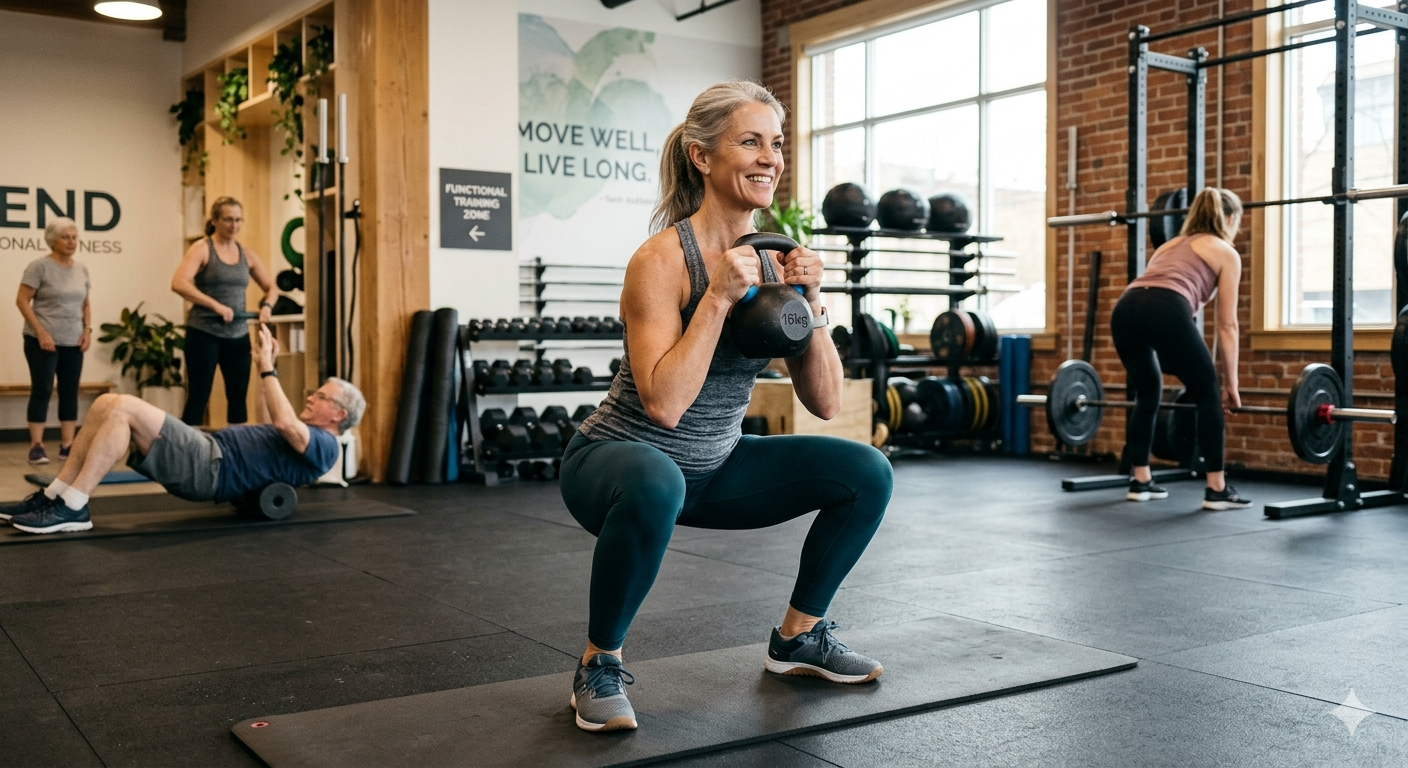
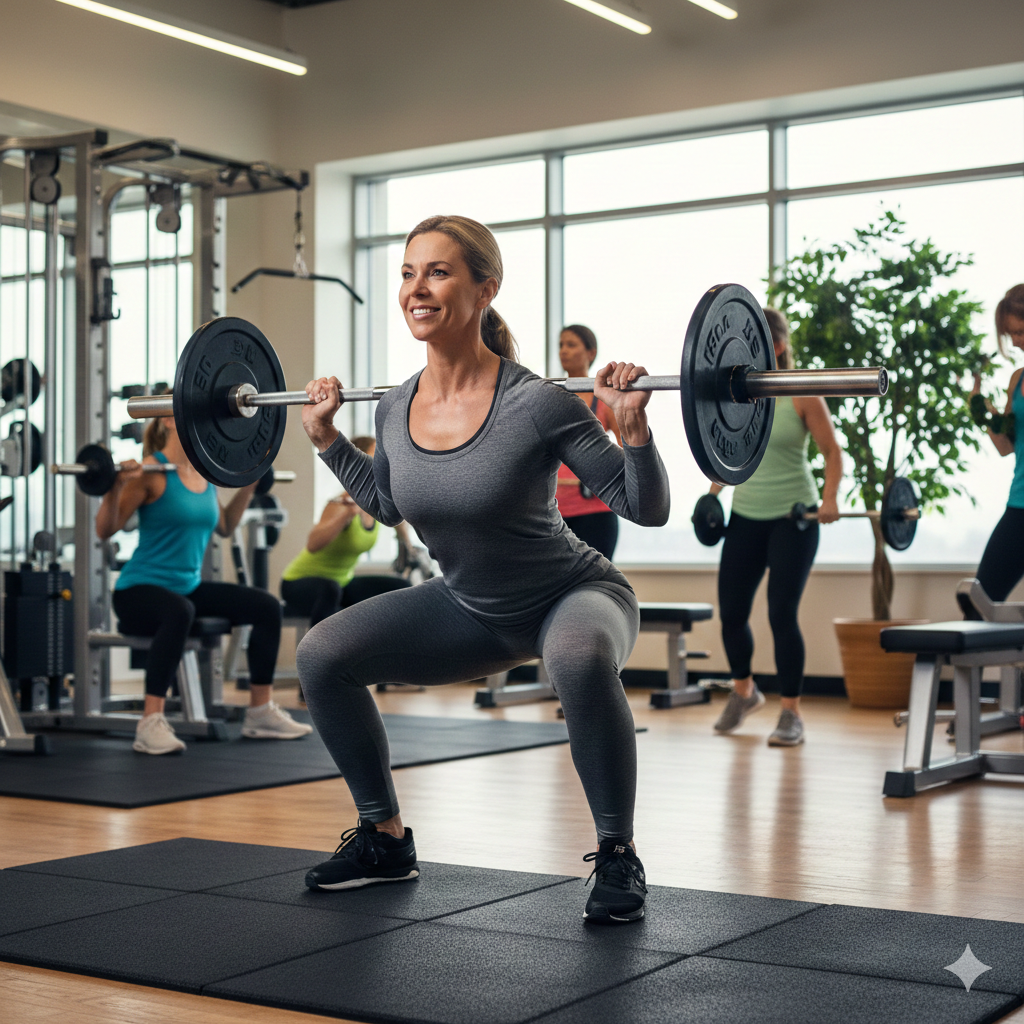
Longevity for Women Through Major Life Transitions
Major transitions can disrupt even the best fitness routine. That is normal.
Your training does not need to look identical throughout your life to be effective.
Pregnancy and Postpartum Can Change Your Strength Routine
Pregnancy and postpartum can bring major changes to sleep, energy, recovery, movement, and available time.
Some women continue training consistently. Others need to significantly modify their routine. Some take a longer break from structured exercise than expected. Both are okay!

Postpartum strength training is not about proving that you “bounced back.” It is about gradually rebuilding capacity in a way that makes sense for your body and your recovery.
Your previous strength may not disappear forever because you took time away from the gym. You can rebuild. The key is to meet your body where it is now instead of punishing it for not being where it used to be.
Perimenopause and Menopause Make Muscle More Important, Not Less
Perimenopause and menopause can also change how women experience their bodies.
Changes in hormones, sleep, body composition, recovery, and daily energy can make old fitness strategies feel less effective or sustainable. This is not a reason to give up on strength training. If anything, it is a reason to become more intentional about it. That makes strength training an important part of longevity for women, particularly as the goal shifts from simply exercising to maintaining muscle, strength, and physical function through midlife and beyond.
Resistance training can improve muscular strength and physical fitness in postmenopausal women, and evidence also supports its role in maintaining functional capacity. However, the certainty of evidence varies depending on the specific outcome being studied, so it is important not to oversell strength training as a cure-all.
For longevity for women, the goal is not to fight your changing body. It is to continue giving that body a reason to stay strong!
Nutrition matters too. Protein needs can also support muscle maintenance and recovery, especially when you are trying to maintain muscle through demanding life transitions. Read more in Menopause Nutrition: 5 Foods for Better Metabolism.
How Much Strength Training Do You Need for Longevity for Women?
You do not need to live in the gym to build a meaningful muscle buffer.
For general health, the World Health Organization recommends that adults perform muscle-strengthening activities involving all major muscle groups on two or more days each week.
For many women, two to three strength-focused sessions per week can be a practical place to start.
What matters most is that your training is consistent and gradually progresses over time.
A useful strength routine typically includes:
- Exercises that challenge major muscle groups
- Enough effort to create a training stimulus
- A gradual increase in challenge
- Adequate recovery
- A routine you can actually maintain
The exact program should depend on your experience, goals, schedule, injuries, pregnancy or postpartum status, and overall health.
Progressive Strength Training Matters More Than Random Workouts
Doing random exercises can feel like a workout. But progressive training has a purpose.
Over time, you might increase:

- The amount of weight you use
- Your repetitions
- Your number of sets
- Your range of motion
- The difficulty of an exercise
- Your ability to control and perform the movement
This is often called progressive overload. You do not have to increase something every single workout. Progress is not always linear.
But your body needs an ongoing reason to adapt.
That is why a structured 6 week progressive strength program can be so helpful. Instead of constantly wondering what to do next, you follow a progression designed to help you build on what you have already done.
If you want guidance rather than another collection of random workouts, browse The Fitness Cult programs and check out the 6-Week Reset Button Program.
What Longevity for Women Really Looks Like
There is a huge difference between caring about muscle and obsessing over muscle. You do not need to chase extreme muscularity or lift your absolute maximum weight. You do not need to spend hours training every day.
And you do not need to abandon cardio, walking, mobility, or the activities you genuinely enjoy. The goal is to build enough strength and muscle to support the life you want to live.
For some women, that might mean lifting heavier. For another woman, it might mean doing her first unassisted push-up. For someone else, it could mean feeling strong enough to carry her growing child without avoiding it because her back always hurts.
Your strongest body does not have to look a certain way. It just needs to be capable of doing more of what matters to you.
Build Your Strength Before You “Need” It
This is the part of longevity for women that I think deserves more attention.
You do not wait until you are completely exhausted to start valuing sleep.
You do not wait until you are severely dehydrated to decide water matters.
So why wait until strength becomes harder to regain before you start building it?
Muscle is not a guarantee of a long life.
Strength training is not an insurance policy that prevents every disease, injury, or consequence of aging. But building muscle and strength is one of the most practical ways to invest in your future physical capacity.
Research has found associations between muscle-strengthening activity and lower risks of several major health outcomes, while greater muscular strength is also associated with lower mortality risk in observational research. These findings are associations, not guarantees of cause and effect, but they reinforce the idea that muscular strength is an important marker of health.
Your muscles can support your metabolism. They can help you move with more confidence. They can support the physical demands of motherhood. They can contribute to your long-term bone and functional health.
Most importantly, they can give you more capacity to handle whatever life asks your body to do.
That is why muscle is the new currency. You are not building it just for today. You are investing in the body you want to rely on for decades.
Ready to Build Your Muscle Buffer?
If you are ready to stop piecing together random workouts and start following a more intentional plan, explore The Fitness Cult Programs page.
The 6-Week Reset Button Program is a great next step if you want a structured approach to rebuilding consistency and progressing your strength without overcomplicating your fitness routine.
You do not need a perfect starting point. You just need a starting point that you can build from.
Get a Free Workout Guide for Your Current Season
Pregnant? Postpartum? Entering perimenopause? Already in menopause?
Your body is not static, and your workouts do not always need to be either.
Subscribe to The Fitness Cult and receive a free workout guide tailored to your current hormonal or life transition.
Whether you are preparing your body for motherhood, rebuilding after baby, or navigating midlife changes, you can build strength that supports the season you are in right now.
Frequently Asked Questions About Muscle and Longevity
Is muscle mass really linked to longevity for women?
Muscle mass, strength, and physical function are all associated with important health outcomes, but they are not interchangeable. Research suggests that muscular strength and muscle-strengthening activity are associated with lower mortality risk and better health outcomes. However, having more muscle does not guarantee a longer life because longevity is influenced by many factors.
Can I prevent sarcopenia with strength training?
Strength training is one of the most important strategies for building and maintaining muscle and strength across the lifespan. Nutrition, protein intake, overall physical activity, illness, and other health factors also play a role. Sarcopenia itself is a clinical condition involving muscle strength, muscle quantity or quality, and in more severe cases, physical performance.
Am I too young to worry about muscle loss in my 30s?
No. Your 30s are not too early to care about strength, but there is also no reason to approach the topic with fear. Building muscle and strength in your 30s can simply be part of a long-term strategy for maintaining physical capacity as you age.
How many days a week should women strength train for longevity?
The World Health Organization recommends muscle-strengthening activities involving all major muscle groups on two or more days each week. For many women, two to three sessions per week can be a practical starting point, but the best routine depends on your goals, experience, recovery, and health status.
join the tfc community!
subscribe to be best friends 🤍
Weekly wellness tips & mom support, straight to your inbox 💌
Medical Disclaimer
This article is for educational purposes only and is not intended to replace individualized medical, physical therapy, or fitness advice. Exercise recommendations should be adapted to your health history, injuries, pregnancy or postpartum recovery, symptoms, medications, and current fitness level. Consult an appropriate healthcare professional before beginning or significantly changing an exercise program, especially if you have a medical condition, are pregnant, are newly postpartum, or have been advised to limit physical activity.
References
- Cruz-Jentoft, A. J., et al. (2019). Sarcopenia: Revised European consensus on definition and diagnosis. Age and Ageing. Read the study on PubMed
- Momma, H., Kawakami, R., Honda, T., & Sawada, S. S. (2022). Muscle-strengthening activities are associated with lower risk and mortality in major non-communicable diseases: A systematic review and meta-analysis of cohort studies.British Journal of Sports Medicine. Read the study on PubMed
- Shailendra, P., Baldock, K. L., Li, L. S. K., Bennie, J. A., & Boyle, T. (2022). Resistance Training and Mortality Risk: A Systematic Review and Meta-Analysis. American Journal of Preventive Medicine. Read the study on PubMed
- Núñez-Cortés, R., et al. (2022). Handgrip strength measurement protocols for all-cause and cause-specific mortality outcomes in more than 3 million participants: A systematic review and meta-regression analysis. Clinical Nutrition. Read the study on PubMed
- Richter, E. A., & colleagues. (2025). A comprehensive view of muscle glucose uptake: regulation by insulin, contractile activity, and exercise. Physiological Reviews. Read the review on PubMed
- Zhao, F., et al. (2025). Optimal resistance training parameters for improving bone mineral density in postmenopausal women: A systematic review and meta-analysis. Journal of Orthopaedic Surgery and Research. Read the study on PubMed
- González-Gálvez, N., Moreno-Torres, J. M., & Vaquero-Cristóbal, R. (2024). Resistance training effects on healthy postmenopausal women: A systematic review with meta-analysis. Climacteric. Read the study on PubMed
- World Health Organization. (2020). WHO Guidelines on Physical Activity and Sedentary Behaviour. View the WHO guidelines