Categories
Menopause & Perimenopause Postpartum Strength

The Truth About Metabolism for Women: Muscle vs Cardio

If you’ve ever felt like your metabolism is slowing down, no matter how much cardio you add, you’re not imagining it. But here’s the truth about metabolism for women that we aren’t told:

Your metabolism isn’t “broken.” It’s under-muscled.

This is of particular concern between ages 30-60, when your body is going through major hormonal changes (pregnancy and postpartum for some women, and the inescapable perimenopause and menopause for all of us) that directly impact how your metabolism functions.

The solution is not to keep adding more cardio or trying to slash your caloric intake even further. It’s more muscle.

Why Your Metabolism Isn’t “Broken” (But It Has Changed)

When women talk about struggling metabolism, what they’re often experiencing is:

  • Gradual loss of lean muscle mass
  • Hormonal shifts affecting energy use
  • Increased fat storage efficiency (especially around the abdomen)
  • Decreased recovery capacity

These changes can start as early as your 30s and accelerate during perimenopause and menopause. In fact, your metabolism begins slowing down in your mid-20s.

Muscle mass naturally declines with age (a process called sarcopenia), and since muscle plays a major role in metabolism, this creates a ripple effect:

  • Less muscle = lower daily calorie burn
  • Lower calorie burn = easier fat gain

So while it may feel like your metabolism is failing you, it’s actually adapting to a different internal environment.

Muscle Is Metabolically Expensive (Here’s What That Means)

One of the most important concepts to understand about metabolism for women is that muscle is metabolically expensive tissue.

That means it requires more energy (calories) just to exist, even when you’re not doing anything.

Compared to fat tissue; muscle actively uses energy, while fat primarily stores energy.

how muscle increases metabolism in women

So the more muscle you have, the more calories your body burns at rest (this is your resting metabolic rate, or RMR).

Even small increases in muscle mass can meaningfully impact your daily energy expenditure over time.

Muscle vs Fat: The Efficiency Difference That Changes Everything

Your body is always trying to be efficient, and adapting to its environment to become continually more efficient.

Fat tissue is incredibly efficient at storing energy (calories). Muscle tissue is intentionally inefficient, as it burns energy to maintain itself.

muscle vs fat comparison and impact on metabolism for women

Here’s the shift most women need to make to reduce their body’s fat stores:

Stop only trying to burn more calories with added activity, and start focusing on building a body that uses more calories just to exist.

That’s exactly what muscle does! Instead of adding on more workouts, you start intentionally building a metabolism that works for you 24/7.

What Strength Training Actually Does to Your Body Composition

Strength training doesn’t only tone your body, it also fundamentally changes how your body is built.

Here’s what happens in your body when you start prioritizing muscle:

  • You preserve lean tissue during fat loss
  • You improve your muscle-to-fat ratio
  • You create a firmer, stronger look (without needing to lose extreme weight)

This is why the scale can feel misleading. Two women can weigh the same, but if one has higher muscle mass, she will look leaner, tighter, and more defined. If one has lower muscle mass, she will feel softer and less supported.

In other words, muscle is what gives your body shape.

Why More Cardio Isn’t the Answer

Cardio isn’t bad; in fact, it’s totally necessary for maintaining your heart and lung health! But relying on it as your primary strategy for fat loss can backfire, especially for women in this age range. Here’s why:

cardio vs strength training fat loss comparison

1. Your Body Adapts Quickly

The more cardio you do, the more efficient your body becomes at it; which means you’ll burn fewer calories over time for the same effort.

2. It Can Increase Hunger

Long or frequent cardio sessions can spike your appetite, making it harder to stay in a caloric deficit.

3. It Can Elevate Stress Hormones

Chronic cardio without enough recovery can increase cortisol levels in the body, which is linked to fat storage (especially around the abdomen).

4. It Doesn’t Preserve Muscle Mass

Without resistance training, your body may break down muscle tissue along with fat.

If you’ve been doing “all the right things” and still not seeing results, this is often why.

For a deeper dive into how cardio fits into your routine for fat loss, read The Truth About Zone 2 Cardio.

Muscle Is More Than Metabolism for Women (This is the Real Win)

While metabolism gets the spotlight, the benefits of building muscle go far beyond calorie burn.

benefits of muscle for women health and longevity

Joint Protection and Injury Prevention

Muscle stabilizes your joints and helps distribute load more evenly, reducing wear and tear over time.

Bone Density and Hormonal Health

Strength training stimulates bone growth, which is critical as estrogen levels decline.

If you want to protect your long-term health, this is non-negotiable! To learn more about the importance of bone health, check out Lifting Heavy for Women: Strong Bones at Any Age.

Immune System Support

Muscle acts as a metabolic reserve during stress, illness, or recovery, helping your body bounce back faster.

Balance, Coordination, and Proprioception

As we age, maintaining balance becomes increasingly important. Muscle improves:

  • Stability
  • Coordination
  • Fall prevention

This is especially important in pregnancy, midlife, and beyond.

Muscle and Longevity: The Missing Link Women Aren’t Told About

Here’s where this conversation gets even more important. Building muscle isn’t just about optimizing fat stores or how you look; it’s about how long and how well you live.

Research consistently shows that strength and muscle mass are associated with:

  • Lower risk of chronic disease
  • Better functional independence
  • Increased lifespan

One of the simplest predictors is grip strength, which is strongly linked to longevity and overall health outcomes in women.

If you haven’t read it yet, take a look at Grip Strength: A Powerful Predictor of Women’s Lifespan.

What This Means for Your Workout Routine

If your goal is to improve metabolism for women in this phase of life, your workouts should reflect that.

Prioritize Strength Training

  • Aim for 2-4 sessions per weke
  • Focus on full-body, functional movements and core integration
  • Progressively increase resistance over time

Use Cardio Strategically

  • Walking, intervals, or conditioning sessions
  • Incorporate to support heart health, not replace strength training

Think Long-Term

Muscle isn’t built overnight, but it’s one of the most powerful long-term investments you can make in your body!

The Bottom Line: Build Muscle to Build a Better Metabolism

If you’ve been stuck in the cycle of doing more cardio, eating less, and still not seeing results, this is your pivot point.

Your metabolism doesn’t need punishment, it needs support.

And that support comes from building muscle!

Ready to Train Smarter (Not Harder)?

If you’re ready to stop guessing and start building a body that actually supports your metabolism:

Browse programs designed to help women build muscle, improve metabolism, and feel strong through every stage of life!

join the tfc community!

subscribe to be best friends 🤍

Weekly wellness tips & mom support, straight to your inbox 💌

Categories
Menopause & Perimenopause Postpartum Strength

Expert Spring Refresh for Hormones, Health and Fitness

Spring is not just a mindset shift, it’s a biological one. A true spring refresh for hormones begins long before you clean out your pantry or change your workout plan. It starts with light, movement, fresh air, and the way your nervous system responds to longer days.

Whether you’re postpartum and rebuilding, or navigating perimenopause and menopause, your hormones are deeply influenced by your environment. And one of the simplest, most powerful tools available to you right now?

Stepping outside.

Let’s talk about why outdoor movement works and how to use this season as your reset.

Why Spring Changes Your Hormones

As daylight increases, your body shifts in measurable ways.

  • Cortisol rhythm becomes more regulated
  • Melatonin production adjusts
  • Serotonin increases with light exposure
  • Vitamin D production improves
  • Circadian rhythm stabilizes

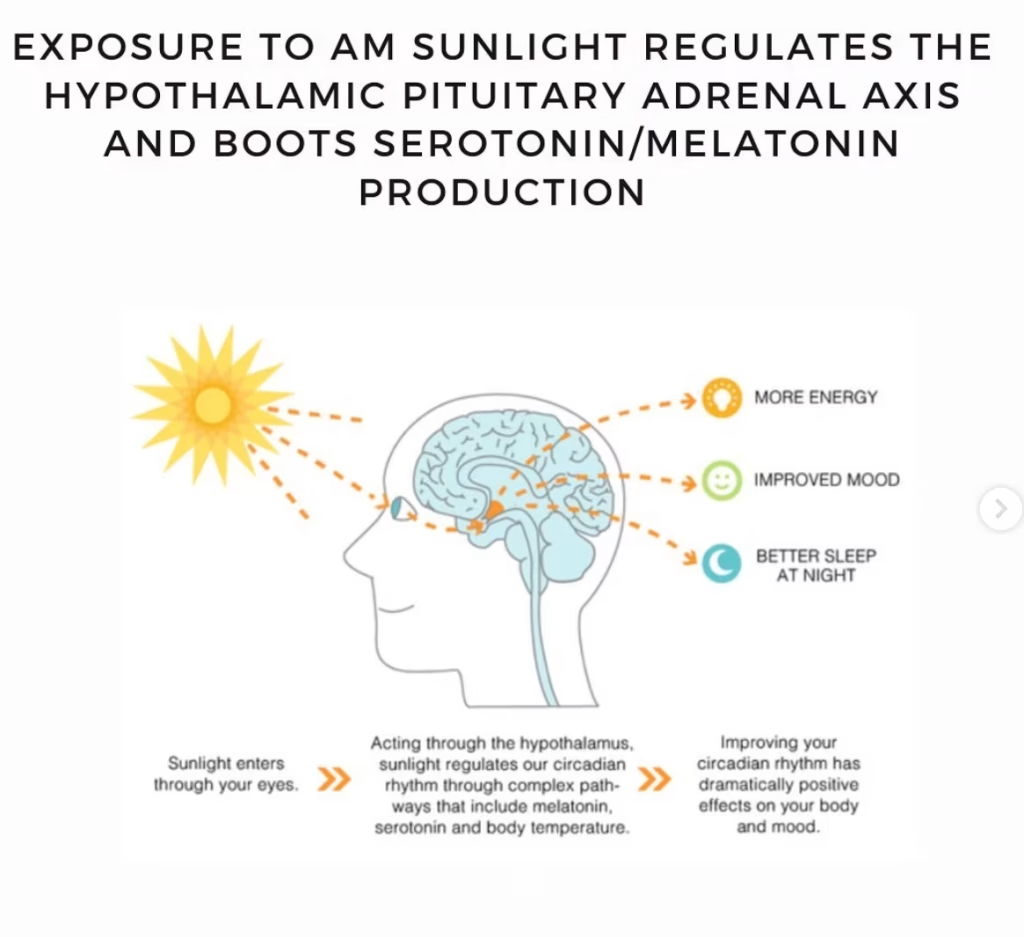
Your brain uses light as data. When morning sunlight hits your eyes, it signals the suprachiasmatic nucleus (your master clock) to coordinate hormone release throughout the day.

How outdoor light exposure regulates cortisol and melatonin

In simple terms:
More natural light = better hormone timing.

That matters in postpartum recovery.
That matters in perimenopause.
That matters at every age.

Spring offers a built-in opportunity to support this shift naturally.

How Outdoor Movement Supports a Spring Refresh for Hormones

Movement amplifies the benefits of seasonal light changes. When you combine light + muscle contraction + fresh air, the hormonal impact compounds.

1. It Regulates Cortisol Instead of Spiking It

Cortisol isn’t bad. It’s necessary.

But in both postpartum and midlife, women often experience cortisol dysregulation:

  • Postpartum: sleep disruption + nervous system overload
  • Perimenopause: increased stress sensitivity + fluctuating estrogen

Gentle outdoor movement in the morning helps anchor cortisol to its natural rhythm. A 10–20 minute walk in natural light can:

  • Lower baseline stress levels
  • Improve energy later in the day
  • Reduce that wired-but-tired feeling

If sleep has been a struggle, this pairs beautifully with strategies discussed in Using Lifts for Better Sleep in Menopause.

2. It Improves Insulin Sensitivity

Blood sugar stability is foundational for hormone health.

Outdoor walking, especially after meals, improves glucose uptake without requiring high intensity training.

For midlife women in particular, this is important. Insulin resistance increases as estrogen declines. Strategic aerobic work like zone 2 cardio can be a game changer.

If you want a deeper dive, read The Truth About Zone 2 Cardio in Menopause.

If you are postpartum, this also plays a role in energy stability and mood regulation too.

Simple. Sustainable. Effective.

3. It Supports Estrogen and Muscle Health

Muscle is endocrine tissue. That means it actively communicates with your hormones.

Strength work outdoors, whether bodyweight circuits at the park, resistance bands in the backyard, or hill walks, helps:

  • Preserve lean mass
  • Support bone density
  • Improve metabolic flexibility

This becomes especially critical during perimenopause when bone density shifts begin. For a deeper understanding, see Lifting Heavy for Women: Strong Bones at Any Age.

Postpartum women benefit too, especially as muscle rebuilding supports recovery and joint stability.

4. It Boosts Mood-Stabilizing Neurochemicals

Sunlight increases serotonin. Movement increases dopamine.

Together, they create clarity.

For postpartum moms navigating identity shifts or sleep deprivation, outdoor movement can:

  • Reduce anxiety
  • Improve mood regulation
  • Increase sense of capability

For midlife women experiencing brain fog or emotional volatility, the effect is just as powerful.

This is not about chasing endorphins. It’s about building stability.

Postpartum and Midlife: Different Seasons, Same Biology

Your circumstances may differ. Your hormone patterns may differ. But the foundational needs are surprisingly similar.

Postpartum and menopause hormone comparison chart

If You’re Postpartum

Your priorities are:

  • Nervous system calming
  • Gradual strength rebuilding
  • Pelvic floor integrity

Start with stroller walks. Add gentle core engagement. Respect healing timelines.

If you need structure, explore A Safe, Simple Guide to Postpartum Core Strength.

This is not the season for extremes. It’s the season for rebuilding your base.

If You’re in Perimenopause or Menopause

Your priorities are:

  • Preserving muscle
  • Managing joint stiffness
  • Supporting metabolic health
  • Regulating sleep

You may notice:

  • Higher stress response
  • Slower recovery
  • Increased abdominal weight gain

Pair outdoor movement with smart nutrition strategies from Menopause Nutrition: 5 Foods for Better Metabolism.

Spring is the perfect time to re-establish consistency before summer chaos hits.

5 Simple Ways to Start Your Spring Refresh for Hormones

You do not need a complete overhaul.

A woman walking with her stroller outdoors in the morning light for spring refresh for hormones

You need realistic consistency.

1. Morning Light Walk (10 Minutes Minimum)

Before screens. Before email. Just light + movement.

2. Post-Meal Walks

Especially dinner. Even 8–10 minutes helps blood sugar regulation.

3. Outdoor Strength Circuit (2–3x Weekly)

Bench step-ups. Incline push-ups. Walking lunges. Resistance band rows.

4. Weekend Long Walk

Not for calories. For nervous system decompression.

5. Sunset Wind-Down

Evening light exposure supports melatonin production later that night.

Small shifts add up to big progress.

Is Outdoor Exercise Better Than Indoor?

Indoor training absolutely works.

But outdoor movement also provides:

  • Natural light exposure
  • Visual distance (reduces mental fatigue)
  • Ground reaction variability
  • Nervous system recalibration

It’s not about replacing the gym. It’s about leveraging biology.

If you’re pregnant and wondering about safety outdoors, reference Safe Outdoor Workouts During Pregnancy: What You Need to Know for practical guidelines.

FAQ: Spring Refresh for Hormones

How long does it take to see hormone changes from exercise?

Cortisol rhythm improvements can begin within 1–2 weeks of consistent morning light exposure. That means you’ll start getting better sleep right away! Metabolic improvements typically take 4–8 weeks of consistent movement. This is where you’ll start to feel more balanced energy and can see fat loss occur.

Is walking enough to balance hormones?

Walking supports cortisol and insulin regulation. However, adding resistance training enhances long-term metabolic and bone health.

What time of day is best?

Morning light exposure has the strongest circadian effect. That said, any outdoor movement is beneficial.

What if I’m exhausted?

Start smaller than you think. Five minutes outside is better than none!

The Bigger Picture

Pregnancy and menopause are not problems to fix. They are biological transitions to navigate strategically.

Spring reminds us that reset does not require punishment.
It requires alignment.

Your body already knows how to adapt.
It just needs consistent signals.

Light.
Movement.
Recovery.

That’s your foundation.

Ready to Build Your Personalized Reset?

If you’re ready to move beyond random workouts and into strategic programming built around your hormonal phase, browse my programs and find the right fit for your season of life.

Whether you’re rebuilding postpartum strength or preserving muscle in midlife, there is a path forward that honors your body, not fights it.

Consistency beats intensity.
Alignment beats extremes.

And spring is the perfect place to begin!

join the tfc community!

subscribe to be best friends 🤍

Weekly wellness tips & mom support, straight to your inbox 💌
Categories
Menopause & Perimenopause Postpartum Strength

15-Minute Functional HIIT Workout for When You’re Short on Time

If you’ve ever skipped a workout because you didn’t have a full hour, this is for you. A 15-minute functional HIIT session can absolutely move the needle for your strength, your metabolism, and your mindset. You do not need perfect conditions. You do not need uninterrupted silence. You do not need a full gym.

You just need 15 focused minutes.

I always like to say:

A little bit of anything is still more than a whole lotta nothing.

Let’s dismantle the all-or-nothing thinking and build something sustainable instead!

motivational quote for busy women fitness

The “All or Nothing” Trap That’s Keeping You Stuck

Busy seasons amplify extremes.

  • “If I can’t do the full workout, what’s the point?”
  • “I already missed Monday, so I’ll start next week.”
  • “I need 45 minutes or it doesn’t count.”

This mindset especially hits during major body transitions:

  • Postpartum when sleep is unpredictable
  • Perimenopause when energy fluctuates
  • Menopause when recovery feels different

You don’t need more time. You need momentum.

If you’ve read my post on how to fit fitness into a busy schedule, you already know consistency beats intensity over the long run. And if goal-setting has tripped you up before, this connects directly to setting realistic fitness goals when you’re short on time.

Short workouts remove friction. And friction is what kills consistency!

overcoming all or nothing fitness mindset

Why 15-Minute Functional HIIT Actually Works

A properly structured 15-minute functional HIIT session can:

  • Stimulate muscle retention and growth
  • Support insulin sensitivity
  • Elevate heart rate efficiently
  • Preserve lean mass during hormonal shifts
  • Improve real-life strength patterns

This isn’t random cardio! Functional HIIT focuses on foundational movement patterns:

  • Hinge
  • Squat
  • Push
  • Pull
  • Carry

For postpartum women, that means rebuilding strength safely and efficiently.

For midlife women, that means protecting muscle and metabolism, something steady-state work alone (like discussed in Zone 2 cardio in menopause) doesn’t fully address.

Intentional structure is what sets the functional HIIT apart from random cardio, builds strength, and improves your cardio capacity.

The Structure of a 15-Minute Power Hour

15-minute functional HIIT workout structure for busy women

Safety PSA: the warm-up is not optional.

Step 1: 90-Second Minimum Bodyweight Warm-Up

Before adding weights, you must increase blood flow and prepare joints.

Examples:

  • Bodyweight squats
  • Arm circles + shoulder rolls
  • Glute bridges
  • Marching in place
  • Standing hip openers

This primes your nervous system and protects your pelvic floor and joints.

Step 2: 3 Movement Blocks (4 Minutes Each)

  • 40 seconds work
  • 20 seconds rest
  • 30–60 seconds reset between exercises

That gives you:

  • 12 minutes of structured effort
  • 90 seconds warm-up
  • Quick transition time

Total: 15 minutes.

Done with intention, that’s powerful.

3 Sample Functional Movements for Your HIIT

These hit major muscle groups without complicated choreography.

1. Dumbbell or Kettlebell Deadlift

A young woman in a blue jacket and gray shorts performs a deadlift with a barbell, set against a bright pink background.

Pattern: Hinge
Targets: Glutes, hamstrings, core

Why it matters:

  • Builds posterior chain strength
  • Supports low back resilience
  • Transfers to real life lifting (kids, groceries, laundry baskets)

Postpartum tip: Exhale on exertion to support core and pelvic floor.
Midlife tip: Go heavier than you think (but still safely!) to stimulate muscle retention.

2. Elevated Push-Up or Dumbbell Floor Press

A woman performing a modified push-up on an exercise mat using a couch for support.

Pattern: Push
Targets: Chest, shoulders, triceps, core

Why it matters:

  • Maintains upper body strength
  • Supports bone density
  • Builds functional pressing power

Modify by:

  • Using a countertop or bench
  • Dropping to knees
  • Using dumbbells on the floor

Strength training in short bursts builds resilience without requiring long sessions.

3. Alternating Reverse Lunge

A woman performing a reverse lunge for a quick 15-minute Functional HIIT workout at home

Pattern: Squat / Unilateral
Targets: Glutes, quads, balance

Why it matters:

  • Trains stability
  • Protects knees better than forward lunges
  • Strengthens single-leg control

For joint sensitivity:

  • Shorten your range
  • Use bodyweight
  • Hold light dumbbells at your sides

Want This Structured and Done for You?

If you want a plug-and-play version of this workout, timer format, progression ideas, and printable layout, download my free 15-Minute Functional HIIT by entering your email here!

It’s designed for real life. Minimal equipment. Maximum impact.

Postpartum and Midlife: Different Seasons, Same Strategy

Postpartum women often need:

  • Time-efficient rebuilding
  • Core-conscious programming
  • Energy-respectful structure

Midlife women often need:

  • Muscle preservation
  • Metabolic stimulation
  • Efficient strength stimulus

The common denominator?

Efficiency.

Both seasons benefit from short, focused strength bursts that respect recovery. This is the same philosophy I teach when we talk about how to balance exercise and rest to support long term fitness. You don’t have to burn yourself out to get results!

You Don’t Need an Hour. You Need Momentum.

Let’s redefine success.

Success isn’t:

  • Perfect attendance
  • Hour-long workouts
  • Exhaustion

Success is:

  • Showing up
  • Training foundational movements
  • Repeating the behavior tomorrow

If motivation dips, revisit strategies from how to stay motivated when you don’t feel like working out.

Identity shifts happen through repetition. Tell yourself:

“I move my body.”
“I don’t skip because it’s short.”
“I train even when it’s busy.”

That is powerful, because you are powerful!

Equipment: Keep It Simple

You do not need a complicated setup.

One or two dumbbells are enough.

If you’re building your space, you can absolutely build your home gym without overcomplicating it. Simplicity drives adherence.

Ready for More Structure?

If this approach resonates with you:

Grab the Free Guide

Download the 15-Minute Functional HIIT Workout and get instant access to a structured routine you can repeat weekly.

Explore My Programs

Browse my programs for at-home workouts designed specifically for:

  • Postpartum recovery
  • Perimenopause and menopause strength
  • Busy women who need realistic structure

They’re built around efficiency, functional strength, and long-term sustainability.

Because mastering your body’s biggest transitions doesn’t require perfection.

It requires consistency.

And 15 minutes absolutely counts!

join the tfc community!

subscribe to be best friends 🤍

Weekly wellness tips & mom support, straight to your inbox 💌

Categories
Menopause & Perimenopause Postpartum Strength

Lifting Heavy for Women: Strong Bones at Any Age

You probably have insurance for your car. Your home. Your health. But what about your bones? Lifting heavy for women is one of the most powerful ways to protect your skeleton through pregnancy, postpartum, perimenopause, and beyond. And yet, most women are never told that strength training is not just about muscle tone, it’s about long-term structural health.

If you want to master your body’s biggest transitions, this is where we start.

Why Bone Loss Happens in Women

Bone loss is not random. It’s biological. And it accelerates during the exact seasons women are navigating the most change.

The Estrogen Shift

Estrogen plays a protective role in bone remodeling. When estrogen declines:

  • Bone breakdown increases
  • Bone building slows
  • Net bone density decreases

This becomes more pronounced during perimenopause and menopause. If you want a deeper dive into hormone-driven muscle changes, read HRT and Muscle Growth After 40: What Science Says.

But here’s the part many women miss:

Postpartum women experience hormonal shifts too. During breastfeeding, temporary changes in estrogen can increase bone turnover. Most women recover bone density later, but only if the stimulus for rebuilding exists. That stimulus is load.

Sarcopenia: The Muscle Loss No One Warned You About

Starting in your 30s, we gradually lose muscle mass; a process called sarcopenia. Without intervention, it accelerates with age.

Muscle and bone are not separate systems. They are mechanically and metabolically connected.

  • Stronger muscles pull harder on bone.
  • That pulling force stimulates bone formation.
  • Less muscle = less stimulus = weaker bones.

And muscle strength itself predicts longevity. As discussed in Grip Strength: A Powerful Predictor of Women’s Lifespan, grip strength is strongly associated with long-term health outcomes.

The takeaway? If you are not actively building muscle, you are passively losing it, and your bones feel that.

What the CDC and ACSM Actually Recommend

Both the CDC and the American College of Sports Medicine recommend:

  • Strength training at least 2 days per week
  • Training all major muscle groups
  • Using moderate to vigorous intensity

The phrase “moderate intensity” is where most women get misled.

Three-pound dumbbells are not moderate intensity. If you finish a set and feel like you could easily repeat it 10 more times, that is not enough stimulus to build or maintain bone density.

Which brings us to the real question.

How Heavy Lifting Increases Bone Density

Bone responds to stress. This principle is often referred to as Wolff’s Law: bone adapts to the loads placed upon it.

lifting heavy for women increases bone density through mechanical load
Image from Melio Guide

When you lift heavy:

  • Mechanical tension increases
  • Muscle pulls on bone under load
  • Osteoblast activity (bone-building cells) increases
  • Bone mineral density improves over time

Walking is excellent for cardiovascular health. Light weights are great for motor control and endurance. But lifting heavy for women creates the type of mechanical stress that signals your body: We need to reinforce this structure.

No load means no signal. This is why strength training must include progressive overload, or gradually increasing resistance over time.

And yes, this matters at every age.

How Heavy Is “Heavy”?

Let’s make this simple and practical!

rep ranges for lifting heavy for women

Heavy Without a Spotter:

  • You can complete 6–8 reps
  • The last 1–2 reps feel very challenging
  • You could not do 3–4 more reps

Near-Max Effort (With a Spotter):

  • 2–4 reps
  • Requires strong technique and safety measures
  • Used for strength peaks or testing

If you can perform 12+ reps easily, the weight is not heavy enough to stimulate bone adaptation.

Examples of foundational lifts:

  • Squats
  • Deadlifts
  • Overhead presses
  • Bench presses
  • Rows
  • Loaded carries

Heavy is relative. A postpartum mom lifting 25 lb dumbbells with proper intensity may be training heavier than someone casually moving 100 lb with poor effort.

Intensity matters more than ego.

If you’re pregnant and unsure how to approach loading safely, review Strength Training During Pregnancy: What You Need to Know.

Why Lifting Changes Body Composition Better Than Cardio Alone

Cardio burns calories. Strength training changes your physiology.

When you build muscle:

cardio vs lifting heavy for women body composition changes
  • Resting metabolic rate increases
  • Insulin sensitivity improves
  • Lean mass is preserved during fat loss
  • Fat loss becomes more sustainable

Cardio absolutely has a place. In fact, Zone 2 training can be powerful for metabolic health (read The Truth About Zone 2 Cardio in Menopause).

But cardio alone does not preserve muscle mass long term.

If your goal is:

  • Stronger bones
  • Leaner physique
  • Better metabolism
  • Long-term independence

Then lifting heavy must be part of your weekly routine.

Frequently Asked Questions

Will lifting heavy make me bulky?

A resounding “NO.”

“Bulking” requires:

  • A sustained calorie surplus
  • High training volume
  • Intentional hypertrophy programming
  • Months to years of dedicated effort

You will not accidentally wake up looking like a bodybuilder.

What most women experience instead:

  • Firmer muscle tone
  • Better posture
  • Smaller waistline
  • Increased strength
  • More confidence

Muscle makes you look athletic, not oversized.

Is it safe postpartum?

With medical clearance and smart progression, yes.

Start with:

  • Core control
  • Pelvic floor integration
  • Gradual loading

Then progressively build toward heavier compound lifts.

If you need foundational support first, check out Adapting Your Fitness Routine for the Postpartum Phase.

Is it too late to start in menopause?

Absolutely not.

Bone is living tissue. It continues remodeling throughout your life. While peak bone mass is built earlier, adaptation is still possible later.

The key is consistent stimulus.

And remember, estrogen decline increases urgency, not impossibility.

What if I only have dumbbells at home?

You can build serious strength with:

  • Adjustable dumbbells
  • Resistance bands
  • A bench
  • A barbell setup (if available)

If you’re building out your space, check out Build Your Home Gym for Under $500.

You don’t need a commercial gym. You need progressive overload.

Your Bone Insurance Policy Starts Now

Think about the woman you want to be at 65.

  • Getting up off the floor easily
  • Traveling without fear of fracture
  • Playing with grandkids and pets
  • Lifting heavy suitcases
  • Living independently

That future version of you is built in the present.

Lifting heavy for women is not about aesthetics. It’s about structural resilience.

It is your insurance policy against:

  • Osteopenia
  • Osteoporosis
  • Sarcopenia
  • Frailty

And it doubles as one of the best body recomposition tools available!

Ready to Start Lifting Heavy?

If you’re ready to build strength with intention:

👉 Browse my strength programs to find the right fit for your season of life.

Want something fully customized to your equipment, schedule, and goals?

👉 Book your free consultation call and let’s design a program that helps you lift heavy safely and confidently with what you already have access to.

Your bones are listening. Let’s give them a reason to grow stronger!

join the tfc community!

subscribe to be best friends 🤍

Weekly wellness tips & mom support, straight to your inbox 💌

Categories
Menopause & Perimenopause Postpartum Strength Prenatal Fitness

Core & Pelvic Floor Strength for a Strong Foundation

If you have ever been told to “just do more abs” but still struggle with leaking, coning, back pain, or a core that feels disconnected, you are not broken. You have simply been given outdated advice. For women navigating pregnancy, postpartum recovery, perimenopause, or menopause, core strength is not about six pack muscles or endless crunches. It is about pelvic floor strength, pressure management, and training the core as an integrated system.

This is where the core and pelvic floor connection matters most!

The Core Is More Than Your Abs

When most people hear “core,” they picture the front of the body. But the core is actually a three dimensional support system, often described as a canister.

Core canister model including diaphragm, abs, and pelvic floor

This system includes:

  • The diaphragm at the top
  • The deep abdominal muscles at the front and sides
  • The spinal stabilizers at the back
  • The pelvic floor as the base or floor

If the floor of the system is weak, uncoordinated, or overstrained, the entire structure becomes less stable. No amount of crunches can fix that.

What Is the Pelvic Floor?

The pelvic floor is a group of muscles and connective tissues that sit at the bottom of the pelvis. These muscles support your bladder, bowel, and uterus, while also playing a critical role in breathing, posture, and movement.

Pelvic floor anatomy showing its role in core support

A healthy pelvic floor is not just strong. It is responsive, meaning it can contract, relax, and coordinate with the rest of the core when you move.

This is why pelvic floor strength is about function, not squeezing all day long.

Understanding Pelvic Floor Dysfunction

Pelvic floor dysfunction, often shortened to PFD, occurs when the pelvic floor muscles cannot properly contract, relax, or coordinate.

Common signs include:

  • Leaking urine with exercise, coughing, or sneezing
  • Feeling heaviness or pressure in the pelvis
  • Low back or hip pain that does not resolve
  • Difficulty engaging the core without bearing down

Many women normalize these symptoms, especially after childbirth or during menopause. While these symptoms are common, they are not a normal part of being female or aging that has to be accepted.

Training abs without addressing pelvic floor health often worsens these symptoms.

What Is Diastasis Recti?

Diastasis recti, or DR, refers to a widening of the connective tissue between the left and right sides of the abdominal muscles. It is common during pregnancy, but it is not exclusive to postpartum women.

Hormonal shifts, changes in tissue elasticity, and poor pressure management can contribute to DR well into midlife.

If you want a deeper explanation, I break this down step by step in What Is Diastasis Recti? A Guide for Moms to Understand and Heal, including why crunch based workouts are rarely the solution.

The key takeaway is this: DR is not just about abdominal separation. It is about how the core system handles load and pressure, which directly involves the pelvic floor.

How Pregnancy, Postpartum, and Menopause Change the Pelvic Floor

During Pregnancy

As the baby grows, the pelvic floor must support increased load while coordinating with changing breathing patterns and posture. This is why intentional core work during pregnancy matters. I dive deeper into this in The Importance of Core Strength During Pregnancy.

Postpartum

After birth, the pelvic floor and nervous system need time to recalibrate. Jumping back into high intensity core work without rebuilding coordination can delay healing.

During Menopause

Declining estrogen affects muscle tone and connective tissue integrity. This can lead to changes in pelvic floor strength, increased leaking, and a feeling of instability, even in women who never had symptoms before.

Across all three phases, the solution is not avoiding strength training. It is training smarter.

The Pelvic Floor Is the Foundation of Core Strength

Think of your pelvic floor as the floor of your house. If the foundation is unstable, adding more weight on top only creates more stress.

Traditional ab workouts focus on intensity and fatigue. Functional core training focuses on:

  • Breath coordination
  • Pressure control
  • Stability during movement

This is why planks and crunches alone often fail women in transitional phases of life.

3 Functional Exercises for Core and Pelvic Floor Strength

These exercises train the core and pelvic floor together, not in isolation.

1. Dead Bug

The dead bug teaches core engagement while maintaining a neutral spine and controlled breathing.

Why it works:

  • Reinforces coordination between breath, abs, and pelvic floor
  • Builds strength without excessive pressure
  • Ideal for pregnancy, postpartum, and menopause when scaled appropriately

Focus on slow, controlled movement and exhaling with effort.

2. Glute Bridge

The glutes and pelvic floor work together more than most people realize.

Glute bridge exercise for functional core and pelvic floor strength

Why it works:

  • Strengthens the posterior chain
  • Encourages pelvic floor engagement through hip extension
  • Supports better pressure distribution during daily movements

Avoid thrusting or arching the back. Think long spine and steady breath.

3. Forearm Plank or Modified Plank

Planks can be helpful when done correctly and modified as needed.

A traditional plank versus a modified plank for core and pelvic floor strength in pregnancy, postpartum, and menopause.

Why it works:

  • Trains full core integration
  • Builds endurance without repetitive flexion
  • Encourages awareness of pelvic floor engagement under load

If you feel pressure, coning, or leaking, modify to knees or an elevated surface.

For more pelvic floor friendly movements beyond kegels, check out 5 Pelvic Floor Exercises That Are Not Kegels.

Strength Without Fear

One of the biggest myths in women’s fitness is that pelvic floor issues mean you should stop training your core.

In reality, the goal is to:

  • Reduce unnecessary pressure
  • Improve coordination
  • Progress intentionally

Your body is capable of strength at every stage when training respects how it changes.

Ready to Rebuild Your Foundation?

If you are done guessing and want a clear, progressive approach to pelvic floor strength and core training, Core & Restore: No-Leak Physique was designed for exactly this phase of life.

This program focuses on rebuilding strength from the inside out so you can move confidently, lift heavier, and feel supported without fear of leaking or injury.

Your core deserves more than outdated ab routines. It deserves a strong foundation.

join the tfc community!

subscribe to be best friends 🤍

Weekly wellness tips & mom support, straight to your inbox 💌

Categories
Menopause & Perimenopause Nutrition & Fuel

Menopause Nutrition: 5 Foods for Better Metabolism

If your metabolism feels different lately, you’re not imagining it. During perimenopause and menopause, shifting estrogen levels influence insulin sensitivity, muscle mass, fat distribution, and even hunger cues. That’s why menopause nutrition isn’t about eating less, it’s about eating strategically.

Instead of chasing restriction, we focus on something more powerful:

  • Preserving muscle
  • Supporting blood sugar balance
  • Improving metabolic flexibility
  • Reducing inflammation

Today I’m sharing five nutrient-dense pantry staples that support better metabolism during menopause, plus how to use them in real life.

What Is Menopause Nutrition?

Menopause nutrition focuses on supporting hormonal shifts, preserving lean muscle, and improving metabolic health during midlife.

As estrogen declines, we tend to see:

  • Increased insulin resistance
  • Greater visceral fat storage
  • Reduced muscle mass
  • Changes in hunger and satiety signals

Crash dieting can actually worsen these issues. Instead, we want to build meals around:

  • Fiber
  • Protein
  • Healthy fats
  • Phytonutrients

This approach improves your body’s ability to switch between glucose and fat for fuel; a concept known as metabolic flexibility.

Why Fiber Matters More During Menopause

how fiber supports metabolism in menopause

Fiber is one of the most underrated tools in menopause nutrition.

Here’s what it does:

  • Slows digestion and stabilizes blood sugar
  • Improves fullness and hunger regulation
  • Supports gut health
  • Assists in estrogen metabolism through the microbiome

Many women fall short of the recommended 21–25 grams per day.

If you’re unsure where you stand, I highly recommend tracking your intake for a few days. My post on Improve Your Nutrition Habits by Keeping a Simple 3-Day Food Log walks you through how to do this without obsessing.

Why Protein Is Non-Negotiable After 40

During menopause, muscle preservation becomes critical.

Muscle:

  • Improves insulin sensitivity
  • Increases resting metabolic rate
  • Supports strength and bone density
  • Helps regulate blood sugar

Protein intake often needs to increase slightly during midlife to support these changes.

Instead of loading it all at dinner, aim to distribute protein evenly across meals.

If you need simple swaps, check out Easy High-Protein Nutrition Swaps, or for a deeper look at muscle preservation after 40, see HRT and Muscle growth After 40: What Science Says.

Healthy Fats Support Hormones and Satiety

Fat is not the enemy.

In menopause nutrition, healthy fats:

  • Improve satiety
  • Support fat-soluble vitamin absorption
  • Help regulate inflammation
  • Support metabolic flexibility

Omega-3 fats in particular may help counter low-grade inflammation that increases during menopause.

Pairing healthy fats with protein and fiber also improves blood sugar response.

If you want to understand how your body uses fat more efficiently, my article on The Truth About Zone 2 Cardio in Menopause explains how movement and nutrition work together.

5 Nutrient-Dense Pantry Staples for Better Menopause Nutrition

A collection of healthy ingredients including a bowl of chia seeds, a bottle of olive oil, a bag of mixed berries, a sack of lentils, and a bowl of flour with a measuring scoop.

Below are five simple, versatile foods I recommend keeping on hand.

As an Amazon Associate, I earn from qualifying purchases. This comes at no additional cost to you.

1️⃣ Chia Seeds

Why they work:

  • ~10g fiber per 2 tablespoons
  • Plant-based omega-3 fats
  • Help stabilize blood sugar
  • Support digestion

How to use them:

  • Stir into Greek yogurt
  • Add to oatmeal
  • Blend into smoothies
  • Make overnight chia pudding

They’re tiny but metabolically powerful!

My recommendation: Viva naturals Organic Chia Seeds

2️⃣ High-Quality Whey Protein or Collagen

Protein is foundational in menopause nutrition.

Why it works:

  • Preserves lean muscle
  • Improves satiety
  • Supports recovery from strength training
  • Easy way to hit protein goals

How to use it:

  • Blend into smoothies
  • Stir into oatmeal
  • Add to pancake batter
  • Mix into Greek yogurt

This is one of the simplest ways to increase protein without increasing calories dramatically.

My recommendation: Transform HQ Meal Replacement Shake Powder

3️⃣ Extra Virgin Olive Oil

A true metabolic staple.

Why it works:

  • Rich in monounsaturated fats
  • Supports cardiovascular health
  • Anti-inflammatory compounds
  • Enhances satiety

How to use it:

  • Drizzle over roasted vegetables
  • Use in salad dressings
  • Finish soups with a splash
  • Sauté greens gently

Quality matters! Look for cold-pressed, extra virgin varieties.

4️⃣ Lentils or Low-Sodium Beans

Fiber + protein in one affordable package.

Why they work:

  • Improve blood sugar stability
  • Support gut health
  • Provide plant-based protein
  • Extremely budget friendly

How to use them:

  • Add to soups
  • Toss into salads
  • Blend into taco meat
  • Mix into grain bowls

This is one of the easiest ways to increase fiber without feeling restricted.

5️⃣ Frozen Berries

Menopause nutrition isn’t about cutting fruit.

Why they work:

  • Rich in phytonutrients
  • High in fiber
  • Lower glycemic than many fruits
  • Anti-inflammatory benefits

How to use them:

  • Top protein oatmeal
  • Add to yogurt bowls
  • Blend into smoothies
  • Warm and spoon over cottage cheese

They satisfy a sweet craving while supporting metabolic health.

How to Build a Menopause-Friendly Metabolic Plate

metabolic flexibility plate for women over 40 seeking menopause nutrition support

Instead of counting and obsessing, try this simple framework:

Anchor with Protein: Palm-sized serving each meal.

Add Fiber: Vegetables, beans, chia, berries.

Include Healthy Fat: Olive oil, nuts, seeds.

Add Color: Phytonutrient-rich foods.

That’s menopause nutrition in action. No extreme rules. Just strategic balance.

Want to Know Your Exact Macro Targets?

If you want clarity on your personal calorie and macro needs:

👉 Use my FREE calorie calculator!

You can also upgrade for just $0.99 to receive a personalized macro distribution based on your goals; because having the right data removes guesswork.

Need Personalized Support?

If you’re navigating menopause weight changes, muscle loss, or stubborn fat gain, let’s talk.

Book a free nutrition consultation and we’ll map out a realistic strategy for your metabolism, lifestyle, and goals.

You don’t need another diet. You need a plan built for your current physiology.

FAQ: Menopause Nutrition

What is menopause nutrition?

Menopause nutrition focuses on supporting hormonal shifts, preserving muscle, improving insulin sensitivity, and maintaining metabolic health through strategic intake of protein, fiber, and healthy fats.

Does fiber help menopause weight gain?

Fiber improves blood sugar stability and hunger regulation, which can reduce overeating and support metabolic balance.

How much protein do women need after 40?

Many women benefit from evenly distributing protein throughout the day to support muscle preservation and metabolic health.

Are healthy fats good during menopause?

Yes. Healthy fats support hormone function, satiety, and inflammation regulation when consumed in balanced amounts.

Final Takeaway

Menopause changes your metabolism — but it doesn’t break it.

With the right menopause nutrition strategy, you can:

  • Preserve muscle
  • Improve blood sugar stability
  • Reduce inflammation
  • Support long-term metabolic flexibility

Start with your pantry. Build strategically. Stay consistent.

And if you’re ready for a personalized roadmap, I’m here to help.

Medical Disclaimer

This article is for educational purposes only and is not medical advice. Always consult your healthcare provider before making significant dietary changes, especially if you have a medical condition or are taking medication.

join the tfc community!

subscribe to be best friends 🤍

Weekly wellness tips & mom support, straight to your inbox 💌

Categories
Menopause & Perimenopause

Why Your Pelvic Floor Feels Different After 40 and How to Strengthen It

If you’ve noticed subtle (or not so subtle) midlife pelvic floor changes, you are not imagining it.

Maybe you leak a little when you cough.
Maybe intimacy feels different.
Maybe your core feels weaker even though you’re still working out.

And here’s the part no one talks about enough: Pelvic floor dysfunction is not just a postpartum issue.

Midlife is another major hormonal transition. And just like pregnancy changes tissue, so does perimenopause and menopause. The difference? Fewer women are warned about it.

Let’s break down what’s happening and, more importantly, what you can do about it.

Why We Only Talk About the Pelvic Floor After Baby

A diagram of the pelvic floor, illustrating the importance of pelvic floor strength during pregnancy and postpartum

Culturally, pelvic floor conversations center around childbirth. And yes, pregnancy and delivery do place enormous strain on pelvic tissues. But midlife introduces a different kind of stressor: hormonal change.

If pregnancy is a rapid surge of hormones, perimenopause is a gradual and fluctuating withdrawal. And that shift affects the same tissues.

The truth is, your body is navigating another rebuild phase. And that includes your pelvic floor.

The Role of Estrogen in the Female Body

Estrogen is not just a reproductive hormone. It plays a structural role throughout your body.

Estrogen helps support:

  • Collagen production
  • Connective tissue elasticity
  • Blood flow to pelvic tissues
  • Muscle protein synthesis
  • Nervous system signaling

It is protective. In the pelvis specifically, estrogen supports:

  • Vaginal tissue thickness
  • Urethral support
  • Ligament integrity
  • Muscle tone and coordination

When estrogen levels are stable, tissues tend to be resilient. When they decline, tissues require more intentional loading and support.

(If you want a deeper dive into estrogen’s impact on connective tissue, see Menopause and Joint Pain: The Estrogen Connection for a broader look at how hormones influence structural integrity.)

What Happens to Estrogen in Perimenopause?

Perimenopause can begin in your late 30s or 40s; long before your period officially stops.

A graph illustrating the decline of estrogen levels over time, showing a corresponding decrease in muscle mass and bone density along with increased injury risk and faster bone loss.

It is not a straight decline. It’s a rollercoaster.

Estrogen fluctuates unpredictably before it eventually trends downward. That fluctuation is why symptoms can feel inconsistent:

  • Some months feel normal.
  • Some months feel inflamed, dry, weak, or unstable.

Eventually, estrogen levels settle at a lower baseline after menopause. And that shift directly influences midlife pelvic floor changes.

How Declining Estrogen Affects the Pelvic Floor

Let’s get specific.

Comparison of pelvic floor changes after childbirth and during menopause

Reduced Tissue Elasticity

Lower estrogen reduces collagen production.

That means:

  • Vaginal tissues may thin
  • Connective tissues may feel less elastic
  • Support structures may feel less firm
  • Dryness can increase

This is not “just aging.” It is tissue remodeling in response to hormone shifts.

Decreased Muscle Mass

After 40, women naturally begin to lose muscle mass at a faster rate if they are not strength training. This includes pelvic floor muscle.

When muscle mass decreases:

  • Contraction strength decreases
  • Endurance decreases
  • Reaction time slows
  • Pressure control weakens

This is why learning about core and pelvic floor coordination matters. Your deep core system is designed to function as a team. (For a deeper look at this synergy, revisit The Core & Floor Connection: Why Traditional Abs Are Outdated for Women 30-60.)

Impact on Core Strength and Pressure Management

Your pelvic floor is part of your pressure management system.

It works with:

  • Diaphragm
  • Deep abdominals
  • Glutes
  • Spinal stabilizers

If the pelvic floor weakens or loses elasticity, managing intra-abdominal pressure becomes harder.

That’s when you may notice:

  • Leaking with jumping
  • Leaking with heavy lifts
  • Feeling of heaviness
  • Difficulty “connecting” to your core

This is not a failure. It is a sign your tissues need strategic strength work.

Signs Your Pelvic Floor Needs Support

Midlife pelvic floor changes can show up as:

  • Urinary leakage
  • Pelvic pressure or heaviness
  • Pain with intimacy
  • Constipation
  • Lower back instability
  • Difficulty stopping urine mid-stream
  • A sense that your core feels disconnected

These are not things you have to “just live with.” They are feedback.

How to Train the Pelvic Floor in Midlife

First: Kegels alone are not enough.

Isolated contractions have their place, but the pelvic floor does not function in isolation in real life.

It works during:

  • Squatting
  • Lifting
  • Carrying
  • Walking
  • Breathing
  • Rotating

Strength training provides the mechanical load needed to stimulate tissue adaptation.

If estrogen is declining, your strategy must increase intentional loading.

That means:

  • Coordinated breath
  • Progressive resistance
  • Glute engagement
  • Core integration

If you need additional movement ideas beyond traditional Kegels, revisit 5 Pelvic Floor Exercises That Are Not Kegels for supportive variations.

3 Foundational Moves to Strengthen the Pelvic Floor

These movements teach pressure control while building real strength.

Glute Bridge with Breath Coordination

Why it works:

  • Activates glutes (key pelvic support muscles)
  • Encourages coordinated exhale during effort
  • Reinforces core connection

Coaching cues:

  • Inhale to prepare
  • Exhale as you lift hips
  • Gently engage pelvic floor as if lifting a blueberry with the vaginal muscles
  • Avoid clenching or bearing down

Deadlift Pattern (Dumbbell or Kettlebell)

Why it works:

  • Builds posterior chain strength
  • Teaches pressure management under load
  • Reinforces spinal stability

Coaching cues:

  • Inhale before hinge
  • Exhale during lift phase
  • Maintain rib cage stacked over pelvis
  • Avoid pushing breath downward

This movement trains the pelvic floor to function during real-life lifting.

Step-Up or Split Squat

Why it works:

  • Builds unilateral hip stability
  • Improves pelvic alignment
  • Challenges balance and deep core activation

Coaching cues:

  • Slow, controlled tempo
  • Exhale on effort
  • Maintain tall posture

These movements help rebuild tissue capacity, not just tone.

Red Flags: When to See a Pelvic Floor Therapist

Strength training is powerful. But some symptoms require evaluation.

See a pelvic floor physical therapist if you experience:

  • Persistent or worsening leakage
  • Pelvic heaviness that increases throughout the day
  • Pain during intimacy
  • Pain with exercise
  • Difficulty emptying bladder or bowels
  • Visible or diagnosed prolapse

Stop exercise immediately if you notice:

  • Sharp pelvic pain
  • Sudden increase in heaviness
  • Bulging sensation
  • New or worsening incontinence

There is no shame in needing support. Therapy and strength training often work best together.

The Big Takeaway: Your Pelvic Floor Is Trainable at Any Age

Midlife pelvic floor changes are common. They are physiological. And they are responsive to strength.

This is not about shrinking; this is about rebuilding.

Just like postpartum, midlife is a transition. And transitions require intentional strategy.

When you:

  • Load your muscles
  • Coordinate breath
  • Train your hips
  • Strengthen your core system

You create resilience. Your pelvic floor is not failing you. It is simply asking to be trained differently.

Medical Disclaimer

This article is for educational purposes only and is not medical advice. If you are experiencing pelvic pain, prolapse symptoms, or persistent incontinence, consult a licensed pelvic floor physical therapist or healthcare provider.

join the tfc community!

subscribe to be best friends 🤍

Weekly wellness tips & mom support, straight to your inbox 💌

Categories
Menopause & Perimenopause Nutrition & Fuel

The Truth About Creatine for Women After 40

If you hear “creatine” and picture 22-year-old bodybuilders in tank tops, you’re not alone. For years, creatine has been marketed almost exclusively to men chasing bigger biceps. But here’s what the research now makes clear: Creatine for women, especially women over 40, is not about getting bulky. It’s about protecting muscle, supporting brain health, and potentially strengthening bones during one of the most hormonally demanding transitions of your life.

If you’re navigating perimenopause or menopause and wondering whether creatine belongs in your routine, let’s break it down clearly, honestly, and without hype.

What Is Creatine (And Why Have We Ignored It?)

Creatine is a naturally occurring compound stored primarily in your muscles. It plays a key role in producing ATP, the energy currency your cells use for quick, powerful movements.

You already:

  • Make creatine in your liver and kidneys
  • Get small amounts from red meat and fish

Supplementing simply increases the available creatine stored in your muscles and brain.

So why has creatine been overlooked for women?

Because most early marketing, and much early research, focused on young male athletes. Meanwhile, women entering perimenopause were told to focus on walking more and eating less.

That advice is incomplete at best. After 40, your physiology changes. And so should your strategy.

How Creatine for Women Supports Muscle and Training Performance

One of the most significant changes during perimenopause and menopause is accelerated muscle loss (sarcopenia).

Infographic titled 'How Does Creatine Work?' illustrating the process of energy production in the body, featuring four key points: A.T.P. as the energy source, energy used during workouts, A.D.P. as a by-product, and how creatine supplementation helps regenerate energy.

Declining estrogen contributes to:

  • Reduced muscle protein synthesis
  • Lower recovery capacity
  • Increased fat storage
  • Decreased strength and power

And muscle isn’t just aesthetic.

Muscle is:

  • A metabolic organ
  • A blood sugar regulator
  • A fall-prevention tool
  • A longevity predictor

(If you haven’t read my post on grip strength as a longevity marker in Grip Strength: A Powerful Predictor of Women’s Lifespan, that’s a powerful companion to this conversation.)

Does Creatine Help Women Build Muscle?

Yes, when combined with resistance training.

Research consistently shows creatine:

  • Improves strength output
  • Increases training volume
  • Enhances power production
  • Supports lean mass retention

That matters after 40 because:

More strength → better workouts
Better workouts → better muscle retention
Better muscle retention → better metabolic health

Creatine doesn’t build muscle by itself. It enhances your ability to train effectively. It helps you squeeze more adaptation out of the work you’re already doing.

Age-related muscle loss in women during menopause

And if you’re already prioritizing strength training, it may give you a meaningful edge.

(You can also explore how hormones affect muscle retention in HRT and Muscle Growth After 40: What Science Says for additional context.)

Creatine for Women and Brain Health

This is where things get especially interesting.

The brain is an energy-demanding organ. It uses ATP just like your muscles do. Emerging research suggests that creatine may support:

  • Cognitive resilience
  • Mental fatigue resistance
  • Memory performance
  • Mood stability

For women in perimenopause experiencing:

  • Brain fog
  • Mental fatigue
  • Reduced sharpness
  • Mood variability

Creatine’s role in brain energy metabolism is a promising area of study.

Important note: Research here is still evolving. While early findings are encouraging, creatine is not a treatment for cognitive disorders. But supporting cellular energy in the brain during hormonal fluctuation is a compelling area of longevity science.

Creatine and Bone Density: What We Actually Know

Creatine is not a calcium supplement. It doesn’t directly increase bone density.

However, here’s where it becomes relevant: Bone responds to load.

If creatine helps you:

  • Lift heavier
  • Train harder
  • Maintain muscle mass

Then indirectly, you’re increasing the mechanical stimulus that supports bone strength.

Some studies suggest that creatine combined with resistance training may enhance bone health markers more than training alone, but this area needs more research.

The real takeaway? Creatine amplifies strength training. Strength training protects bone. That’s the chain reaction that matters.

Will Creatine Make Me Bulky or Cause Weight Gain?

Let’s clear this up. Creatine may cause:

  • A small increase in water retention inside muscle cells

This is intracellular water, not bloating under the skin.

You may see:

  • 1–3 pounds of scale increase initially

This is not fat gain.

Creatine does not:

  • Cause fat gain
  • Make women bulky
  • Create masculine features

Building significant muscle requires years of progressive overload and calorie surplus. Creatine simply supports performance, not extreme hypertrophy.

Who Should Not Take Creatine?

Creatine is well-studied and considered safe for most healthy individuals. However, it may not be appropriate if you:

  • Have kidney disease or impaired renal function
  • Are on medications affecting kidney health
  • Are pregnant or breastfeeding (insufficient long-term data)
  • Have been advised by your physician to avoid creatine

If you have any medical conditions or take prescription medications, talk to your healthcare provider before starting.

Creatine is optional, not mandatory. Your foundation should always be:

  • Strength training
  • Adequate protein intake
  • Sleep
  • Recovery

(And yes, respecting recovery matters! See How to Balance Exercise and Rest to Avoid Burnout and Support Long Term Fitness if that’s your current focus.)

How to Take Creatine Safely

If you decide to try creatine for women over 40, here’s what matters:

Type

  • Creatine monohydrate is the gold standard
  • Extensively studied
  • Affordable
  • Effective

Dose

  • 3–5 grams daily
  • No loading phase required

Timing

  • Timing is not critical
  • Consistency matters more than when you take it

Hydration

  • Stay adequately hydrated
  • Especially if increasing training intensity

The product I personally recommend is: Nutricost Creatine Monohydrate Micronized Powder. It’s simple, micronized for easier mixing, and contains no unnecessary additives.

👉 You can find it here: https://amzn.to/4kCa7sX

As an Amazon Associate, I earn from qualifying purchases at no extra cost to you.

Is Creatine Right for You in Menopause?

Common myths about creatine supplementation in women

Ask yourself:

  • Am I strength training at least 2–3 times per week?
  • Am I eating enough protein to support muscle?
  • Am I prioritizing recovery and sleep?
  • Do I want to support muscle and cognitive resilience long term?

If the answer is yes to most of these, creatine may be a beneficial addition.

If not, build the foundation first! Supplements amplify strategy. They don’t replace it.

If you’re unsure whether you’re eating enough protein, check out our FREE Calorie Calculator to determine your calorie needs based on age, weight, height, activity level, and goals. Once you have your calorie goal, dial in even more with the $0.99 upgrade and get your personalized macronutrient distribution to know exactly how much protein, carbohydrates, and fat you should be eating.

Muscle Is a Longevity Organ

One of the biggest mindset shifts I want women over 40 to embrace is this:

Muscle is not vanity. It is insurance.

It protects:

  • Your metabolism
  • Your bones
  • Your balance
  • Your independence

We’ve been conditioned to shrink as we age.

But strength is protective.

Creatine for women isn’t about chasing aesthetics. It’s about supporting your ability to stay powerful, capable, and metabolically resilient through menopause and beyond.

Optional? Yes.

Beneficial? For many women, absolutely.

FAQ: Creatine for Women

Is creatine safe for women over 40?

For healthy individuals without kidney disease, creatine monohydrate is widely considered safe when taken at recommended doses.

Does creatine cause bloating?

Some women experience mild water retention inside muscle cells initially, but this is not fat gain.

How long does creatine take to work?

Muscle stores saturate within 2–4 weeks with daily use. Performance benefits may be noticed within that timeframe.

Can creatine help brain fog in menopause?

Research is ongoing, but early evidence suggests potential support for cognitive energy metabolism.

Final Thoughts

Creatine for women after 40 is no longer a fringe conversation.

It’s part of a larger shift toward:

  • Strength as medicine
  • Muscle as longevity
  • Training as a long-term investment

You don’t need every supplement on the shelf.

But if you’re lifting, fueling well, and thinking long-term, then creatine may be worth considering.

Medical Disclaimer

I am an ACE Certified Fitness Nutrition Specialist. I am not a physician or registered dietitian. This content is for educational purposes only and should not be considered medical advice. Always consult your healthcare provider before beginning any supplement, especially if you have underlying health conditions or are taking medications.

join the tfc community!

subscribe to be best friends 🤍

Weekly wellness tips & mom support, straight to your inbox 💌

Categories
Menopause & Perimenopause

Using Lifts for Better Sleep in Menopause

Sleep often becomes one of the first things to unravel during perimenopause and menopause. You may fall asleep exhausted but wake at 2 a.m. with your mind racing. Or you might feel wired at night and sluggish in the morning, no matter how early you go to bed.

What’s happening isn’t just “bad sleep habits.” It’s a shift in sleep architecture: the natural pattern of light sleep, deep sleep, and REM sleep; driven by hormonal changes that affect your circadian rhythm and core body temperature.

Here’s the empowering part: movement, especially strength training, can help regulate both. Not by doing more, but by doing the right kind of training at the right time. This is where lifts become a tool for better sleep in menopause, not just stronger muscles.

How Menopause Changes Sleep Architecture

During menopause, fluctuations and declines in estrogen and progesterone affect how your brain regulates sleep and temperature. Estrogen helps stabilize circadian rhythm and supports melatonin production, while progesterone has calming, sleep promoting effects.

sleep architecture perimenopause infographic

As these hormones shift, many women experience:

  • More fragmented sleep
  • Less deep, restorative slow wave sleep
  • Earlier awakenings
  • Increased sensitivity to stress and nighttime temperature changes

Research shows that menopausal changes can disrupt circadian rhythm and core body temperature patterns, which directly impacts sleep quality and sleep timing.

When your internal clock loses clarity, your body struggles to recognize when it’s truly time to wind down.

Movement as a Regulator, Not a Stressor

Exercise is often talked about as a way to “tire yourself out,” but that framing can backfire in midlife.

In menopause, movement works best as a regulatory signal; a way to anchor your internal clock and support nervous system balance.

Exercise acts as a zeitgeber, or time cue, for your circadian rhythm. Consistent movement helps tell your body:

  • When to be alert
  • When to cool down
  • When to prepare for sleep

A large systematic review found that the timing and intensity of exercise can influence circadian rhythm, melatonin release, and core body temperature, all of which shape sleep quality.

This is why when you lift matters just as much as what you lift.

Core Body Temperature, Lifting, and Sleep Onset

Your body naturally lowers its core temperature in the evening to initiate sleep. Menopause can blunt or delay this drop, making it harder to fall and stay asleep.

Strength training temporarily raises core body temperature. When done earlier in the day, the post workout cooldown reinforces the body’s natural nighttime temperature drop, supporting sleep onset later.

When intense training happens too late, however, the temperature spike can linger and interfere with sleep readiness.

This doesn’t mean evening movement is bad. It means intensity and timing need to match your physiology.

Why Strength Training Is Especially Powerful for Sleep in Menopause

Strength training does more than build muscle. It supports sleep through multiple pathways:

morning strength training for better sleep in menopause
  • Improves insulin sensitivity and metabolic stability
  • Reduces joint pain and physical discomfort that disrupt sleep
  • Enhances deep sleep quality over time
  • Helps regulate cortisol when dosed appropriately

If you’ve read The Truth About Zone 2 Cardio in Menopause, you already know that low intensity movement alone isn’t enough to maintain power and resilience as we age. Strength training fills that gap while also supporting sleep when structured intentionally.

This is also why overtraining or random high intensity sessions can backfire. Without recovery, cortisol stays elevated and sleep suffers. How to Balance Exercise and Rest to Avoid Burnout and Support Long Term Fitness explores this balance in more depth.

Timing Your Lifts for Better Sleep in Menopause

Here’s the big takeaway: you don’t need more workouts, you need smarter timing.

For most menopausal women, strength training earlier in the day provides the strongest circadian signal without overstimulating the nervous system at night.

General guidelines:

  • Morning to early afternoon is ideal for heavier lifts
  • Late afternoon works well for moderate strength or mobility focused sessions
  • Evening movement should prioritize calming, low intensity work

Consistency matters more than perfection. Training at roughly the same time of day helps reinforce your internal clock.

A 3 Day Strength Training Ideology for Better Sleep

Rather than prescribing exact workouts, this framework gives you structure without rigidity.

Day 1: Morning Heavy Strength

  • Focus on large compound lifts like deadlifts, squats, presses, or rows
  • Heavier loads with full rest between sets
  • This session creates a strong daytime alertness signal and supports deeper sleep later

Day 2: Midday Moderate Strength

  • Moderate loads, controlled tempo
  • Accessory lifts, unilateral work, and core stability
  • Enough challenge to stimulate adaptation without draining your nervous system

Day 3: Earlier Day Strength Plus Recovery

  • Lighter resistance, slower movement, longer warmups
  • Emphasis on joint friendly ranges of motion
  • Often paired with mobility or gentle conditioning

Walking, light cardio, or mobility work can be layered on non lifting days to support circulation and stress reduction without interfering with sleep.

This approach aligns with the body’s changing needs in menopause and avoids the boom and bust cycle many women fall into.

Movement for Somatic Symptoms That Disrupt Sleep

Sleep in menopause is often interrupted not just by hormones, but by physical symptoms like:

  • Joint stiffness
  • Muscle aches
  • Hot flashes
  • Restlessness

Strategic strength training improves tissue tolerance and joint health, which reduces nighttime discomfort. If joint pain has been a barrier for you, Menopause and Joint Pain: The Estrogen Connection is a helpful companion read.

When movement supports your body instead of fighting it, sleep becomes less fragile.

Strength Training as Sleep Support, Not Punishment

Better sleep in menopause doesn’t come from pushing harder or chasing exhaustion. It comes from working with your physiology.

Strength training, when timed and dosed intentionally, becomes a tool to:

  • Reinforce circadian rhythm
  • Support temperature regulation
  • Improve physical comfort
  • Build confidence in your changing body

If you’re ready to apply these principles in a structured, menopause specific way, explore Your Strongest Season, a strength training program designed to support muscle, metabolism, and recovery during this stage of life.

Better sleep isn’t a mystery you have to solve alone. It’s a system you can support, one lift at a time.

join the tfc community!

subscribe to be best friends 🤍

Weekly wellness tips & mom support, straight to your inbox 💌

Categories
Menopause & Perimenopause

How to Heal Frozen Shoulder During Menopause

If you are in menopause and suddenly cannot lift your arm, sleep on your side, or reach behind your back without sharp pain, you are not imagining things. Frozen shoulder during menopause is real, common, and incredibly frustrating, especially for women who have always stayed active.

The good news is that frozen shoulder is not permanent, and you do not need to choose between total rest or pushing through pain. With the right mix of gentle mobility, smart strength work, and recovery focused tools, healing is possible.

This guide walks you through what frozen shoulder is, why it shows up during menopause, and how to support recovery in a way that respects your changing body.

What Is Frozen Shoulder?

Frozen shoulder, also known as adhesive capsulitis, is a condition where the shoulder joint capsule becomes inflamed, thickened, and restricted. This leads to pain, stiffness, and a significant loss of range of motion.

Frozen shoulder anatomy and capsule inflammation in menopause

It often develops gradually and typically progresses through three stages:

  • Freezing stage: Increasing pain and decreasing mobility
  • Frozen stage: Pain may lessen but stiffness remains
  • Thawing stage: Slow return of movement and function

For many women, frozen shoulder feels disproportionate. Small movements hurt. Sleep is disrupted. Daily tasks become exhausting. This is not weakness or poor fitness. It is a joint that has lost its ability to move freely.

Why Frozen Shoulder Is More Common During Menopause

Frozen shoulder during menopause is closely tied to hormonal shifts, especially declining estrogen.

Estrogen plays a role in:

  • Joint lubrication
  • Collagen elasticity
  • Inflammation regulation
  • Blood flow to connective tissue

As estrogen levels drop, connective tissues can become drier, stiffer, and more reactive. This is the same reason many women experience increased joint pain during menopause. If this connection sounds familiar, you may want to explore Menopause and Joint Pain: The Estrogen Connection, which dives deeper into how hormones affect joint health.

Add in stress, poor sleep, and years of repetitive movement or desk work, and the shoulder becomes a perfect storm for restriction.

How to Gently Mobilize Without Making It Worse

One of the biggest mistakes women make with frozen shoulder is forcing range of motion. Aggressive stretching often increases inflammation and slows healing.

Instead, focus on pain respectful movement.

Guidelines for safe mobility:

Gentle frozen shoulder mobility exercises during menopause
  • Move only within a comfortable range
  • Stop before sharp or pinching pain
  • Use slow, controlled motions
  • Prioritize frequency over intensity

Gentle movements such as pendulum swings, assisted arm raises, and supported rotations can help signal safety to the joint. Think of mobility as nourishment, not punishment.

Consistency matters more than how far you move.

Functional Recovery Tools and Techniques That Actually Help

Healing frozen shoulder during menopause requires supporting the nervous system as much as the joint itself.

Helpful tools include:

Heat
Heat before movement can improve circulation and tissue elasticity, making mobility work feel more accessible.

Breathwork
Slow, nasal breathing helps downshift your nervous system, which reduces protective muscle guarding around the shoulder.

Isometric holds
Gentle muscle activation without joint movement can reduce pain and rebuild confidence.

Home fitness tools for frozen shoulder recovery

Light resistance bands
Used correctly, bands allow you to strengthen without loading the joint aggressively.

This is where balance becomes critical. Too much rest leads to more stiffness. Too much intensity increases inflammation. If this balance feels tricky, revisit How to Balance Exercise and Rest to Avoid Burnout and Support Long Term Fitness for a framework that applies perfectly to injury recovery.

Three Strengthening Moves to Support Healing

Strength work is not the enemy of frozen shoulder. In fact, it is essential for long term recovery. These movements should feel challenging but controlled, never painful.

1. Supported External Rotation

Sit or stand with your elbow supported against your side. Use a light band or small dumbbell. Rotate the forearm outward slowly.

Why it helps:
This strengthens the rotator cuff without compressing the joint.

Regression:
Perform the movement lying down with the arm supported.

2. Chest Supported Row

Using a bench, chair, or incline surface, support your chest and pull light weights or bands back toward your ribs.

Why it helps:
Rows restore shoulder stability and improve posture, reducing strain on the joint.

Regression:
Use a resistance band and reduce range of motion.

3. Carry or Hold Variation

Hold a light weight at your side or in front of your body while maintaining tall posture.

Why it helps:
Carries build joint integrity and reconnect the shoulder to the core.

Regression:
Hold the weight for shorter intervals or use both hands.

What Progress Really Looks Like

Frozen shoulder recovery is not linear. Progress may look like:

  • Sleeping better before moving better
  • Less pain before more range
  • Confidence returning before full strength

This process can take months, but small improvements add up. Your job is not to rush healing but to create the conditions where healing can happen.

When to Seek Extra Support

If pain is severe, worsening, or paired with numbness or unexplained weakness, consult a medical professional. Physical therapy can be incredibly helpful when paired with strength focused programming rather than passive treatment alone.

If you are ready to rebuild strength safely during menopause, structured guidance makes all the difference. Exploring strength programs designed for this phase of life can help you move forward without fear.

Rebuilding Trust in Your Shoulder and Your Body

Frozen shoulder during menopause can feel like betrayal. But this phase of life is not about shrinking or avoiding challenge. It is about learning how your body responds now and working with it instead of against it.

Healing is possible. Strength is still available to you. And your body is capable of more than you have been led to believe.

join the tfc community!

subscribe to be best friends 🤍

Weekly wellness tips & mom support, straight to your inbox 💌