Categories
Menopause & Perimenopause Postpartum Strength

15-Minute Functional HIIT Workout for When You’re Short on Time

If you’ve ever skipped a workout because you didn’t have a full hour, this is for you. A 15-minute functional HIIT session can absolutely move the needle for your strength, your metabolism, and your mindset. You do not need perfect conditions. You do not need uninterrupted silence. You do not need a full gym.

You just need 15 focused minutes.

I always like to say:

A little bit of anything is still more than a whole lotta nothing.

Let’s dismantle the all-or-nothing thinking and build something sustainable instead!

motivational quote for busy women fitness

The “All or Nothing” Trap That’s Keeping You Stuck

Busy seasons amplify extremes.

  • “If I can’t do the full workout, what’s the point?”
  • “I already missed Monday, so I’ll start next week.”
  • “I need 45 minutes or it doesn’t count.”

This mindset especially hits during major body transitions:

  • Postpartum when sleep is unpredictable
  • Perimenopause when energy fluctuates
  • Menopause when recovery feels different

You don’t need more time. You need momentum.

If you’ve read my post on how to fit fitness into a busy schedule, you already know consistency beats intensity over the long run. And if goal-setting has tripped you up before, this connects directly to setting realistic fitness goals when you’re short on time.

Short workouts remove friction. And friction is what kills consistency!

overcoming all or nothing fitness mindset

Why 15-Minute Functional HIIT Actually Works

A properly structured 15-minute functional HIIT session can:

  • Stimulate muscle retention and growth
  • Support insulin sensitivity
  • Elevate heart rate efficiently
  • Preserve lean mass during hormonal shifts
  • Improve real-life strength patterns

This isn’t random cardio! Functional HIIT focuses on foundational movement patterns:

  • Hinge
  • Squat
  • Push
  • Pull
  • Carry

For postpartum women, that means rebuilding strength safely and efficiently.

For midlife women, that means protecting muscle and metabolism, something steady-state work alone (like discussed in Zone 2 cardio in menopause) doesn’t fully address.

Intentional structure is what sets the functional HIIT apart from random cardio, builds strength, and improves your cardio capacity.

The Structure of a 15-Minute Power Hour

15-minute functional HIIT workout structure for busy women

Safety PSA: the warm-up is not optional.

Step 1: 90-Second Minimum Bodyweight Warm-Up

Before adding weights, you must increase blood flow and prepare joints.

Examples:

  • Bodyweight squats
  • Arm circles + shoulder rolls
  • Glute bridges
  • Marching in place
  • Standing hip openers

This primes your nervous system and protects your pelvic floor and joints.

Step 2: 3 Movement Blocks (4 Minutes Each)

  • 40 seconds work
  • 20 seconds rest
  • 30–60 seconds reset between exercises

That gives you:

  • 12 minutes of structured effort
  • 90 seconds warm-up
  • Quick transition time

Total: 15 minutes.

Done with intention, that’s powerful.

3 Sample Functional Movements for Your HIIT

These hit major muscle groups without complicated choreography.

1. Dumbbell or Kettlebell Deadlift

A young woman in a blue jacket and gray shorts performs a deadlift with a barbell, set against a bright pink background.

Pattern: Hinge
Targets: Glutes, hamstrings, core

Why it matters:

  • Builds posterior chain strength
  • Supports low back resilience
  • Transfers to real life lifting (kids, groceries, laundry baskets)

Postpartum tip: Exhale on exertion to support core and pelvic floor.
Midlife tip: Go heavier than you think (but still safely!) to stimulate muscle retention.

2. Elevated Push-Up or Dumbbell Floor Press

A woman performing a modified push-up on an exercise mat using a couch for support.

Pattern: Push
Targets: Chest, shoulders, triceps, core

Why it matters:

  • Maintains upper body strength
  • Supports bone density
  • Builds functional pressing power

Modify by:

  • Using a countertop or bench
  • Dropping to knees
  • Using dumbbells on the floor

Strength training in short bursts builds resilience without requiring long sessions.

3. Alternating Reverse Lunge
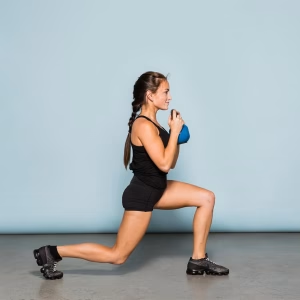
A woman performing a reverse lunge for a quick 15-minute Functional HIIT workout at home

Pattern: Squat / Unilateral
Targets: Glutes, quads, balance

Why it matters:

  • Trains stability
  • Protects knees better than forward lunges
  • Strengthens single-leg control

For joint sensitivity:

  • Shorten your range
  • Use bodyweight
  • Hold light dumbbells at your sides

Want This Structured and Done for You?

If you want a plug-and-play version of this workout, timer format, progression ideas, and printable layout, download my free 15-Minute Functional HIIT by entering your email here!

It’s designed for real life. Minimal equipment. Maximum impact.

Postpartum and Midlife: Different Seasons, Same Strategy

Postpartum women often need:

  • Time-efficient rebuilding
  • Core-conscious programming
  • Energy-respectful structure

Midlife women often need:

  • Muscle preservation
  • Metabolic stimulation
  • Efficient strength stimulus

The common denominator?

Efficiency.

Both seasons benefit from short, focused strength bursts that respect recovery. This is the same philosophy I teach when we talk about how to balance exercise and rest to support long term fitness. You don’t have to burn yourself out to get results!

You Don’t Need an Hour. You Need Momentum.

Let’s redefine success.

Success isn’t:

  • Perfect attendance
  • Hour-long workouts
  • Exhaustion

Success is:

  • Showing up
  • Training foundational movements
  • Repeating the behavior tomorrow

If motivation dips, revisit strategies from how to stay motivated when you don’t feel like working out.

Identity shifts happen through repetition. Tell yourself:

“I move my body.”
“I don’t skip because it’s short.”
“I train even when it’s busy.”

That is powerful, because you are powerful!

Equipment: Keep It Simple

You do not need a complicated setup.

One or two dumbbells are enough.

If you’re building your space, you can absolutely build your home gym without overcomplicating it. Simplicity drives adherence.

Ready for More Structure?

If this approach resonates with you:

Grab the Free Guide

Download the 15-Minute Functional HIIT Workout and get instant access to a structured routine you can repeat weekly.

Explore My Programs

Browse my programs for at-home workouts designed specifically for:

  • Postpartum recovery
  • Perimenopause and menopause strength
  • Busy women who need realistic structure

They’re built around efficiency, functional strength, and long-term sustainability.

Because mastering your body’s biggest transitions doesn’t require perfection.

It requires consistency.

And 15 minutes absolutely counts!

join the tfc community!

subscribe to be best friends 🤍

Weekly wellness tips & mom support, straight to your inbox đź’Ś

Categories
tfc Community

Tips for Winter Workouts


How to safely keep your workout routine going – even when you’re freezing!

Are the winter blues throwing you off your exercise game? We get it – it’s even harder to leave your cozy comforter when the temperatures outside are dipping.

Here are 9 tips for keeping your workouts safe and effective in cold weather.

1. Start with a dynamic warm-up

Whether you plan on working out indoors or outdoors, it is important to gently warm up the muscles before jumping into an exercise. Some great dynamic warm-ups are:

  • brisk walking (especially at an incline, if using the treadmill)
  • jumping jacks
  • jump rope (with or without an actual rope)
  • arm circles
  • shoulder rolls

Dynamic warm-ups allow the blood to start flowing in the muscles before putting them under the stress of the workout. This is particularly important when the weather is cold to help prevent injury.

2. Dress in layers

Dressing in layers provides many benefits – you can remove layers as you warm up and protect your limbs and skin from cold air and elements. When dressing in layers, opt for layers that alternate between keeping heat in and letting sweat out:

  • the bottom layer should be moisture-wicking, breathable, and allow sweat out and away from the body
    • i.e., a workout specific long sleeve, short sleeve, or tank top that hugs the body and helps keep sweat off
  • the middle layer should be thermal and designed to keep heat in
    • i.e., a sweatshirt or other cotton, heavy-weight outer layer
  • the top layer should be lightweight, water and wind-resistant, and breathable
    • i.e., a windbreaker with mesh vents at the back or underarms

As you workout and begin to sweat, your body goes into a cooling mode, and sweat plays a big role in helping cool you down. When air blows on your sweat-dampened skin, you feel cooler than you would in the same breeze with dry skin. This is why it is important to have layers that will allow your sweat to dissipate and evaporate away from your skin, while still keeping heat in close to your body.

We also love a good workout vest moment. Vests are great cold-weather workout accessories because they keep your core warm effectively, while allowing good range of motion in the arms and shoulders and provide plenty of exit options for heat and sweat coming away from your body.

3. Keep your hands, feet, and head warm

When we start to get cold, one of the ways that our bodies try to protect ourselves is by increasing blood flow to vital organs, which can temporarily lower blood flow in our extremities like hands, fingers, feet, and toes.

To help stay warm, wear good socks that cover the ankle to prevent chilling in gaps between pants and socks. If your hands will be exposed to the cold air, wear gloves, mittens, or hand warmers.

We lose 60-70% of our internal heat from the head and neck region, so it is also important to keep those areas warm and insulated. Wear a jacket or vest with a high collar to protect the neck, and wear a headband, beanie, or jacket hood to keep the head warm.

4. Wear the right shoes

Part of keeping your feet warm means wearing the right shoes for the weather, environment, and activity. Cold weather also tends to mean wet weather; opt for water-resistant shoes to keep the feet dry and warm. Make sure that your shoes also have proper traction on the soles to suit the terrain you will be exercising in.

Never run on icy or frozen surfaces, even in snow shoes!

5. Stay dry

Plan ahead with your outdoor workouts to avoid being outside in heavy rain or snowfall. Always avoid being outdoors in thunderstorms.

Make sure to wear the right clothing to keep yourself dry – like water-resistant shoes and outerwear.

6. Be aware of the signs of hypothermia

Hypothermia describes the condition of the body when internal temperatures drop to dangerous levels. Signs and symptoms of hypothermia setting in include:

  • confusion
  • difficulty speaking
  • fatigue
  • dizziness
  • amnesia
  • apathy

As hypothermia progresses, symptoms may include lethargy, hallucinations, or loss of consciousness. If you are concerned that you are experiencing hypothermia, remove any wet clothing and dry yourself off and get to a warm area. Always seek medical attention in cases of lost consciousness or persisting symptoms or pain.

7. Stay hydrated

We often relate our feelings of thirst with heat or feeling warm, but hydration and water intake is just as important in cooler weather too! Be sure to replenish fluids lost in sweat during exercise as well by drinking water or sports drinks.

The cold weather and cold air can also be particularly dehydrating. You may feel the effects of this in your throat in particular, so be sure to drink plenty of water. You can also opt for a hot tea for hydration as well as the warmth!

8. Protect your skin

If you are exercising outdoors, always wear sunscreen – even on cloudy or overcast days. Make sure to also wear sun protection like sunglasses if exercising around snow, as the reflection of sunlight on snow can be particularly bright.

Just as cold air is dehydrating to the body’s fluids, it will also impact the skin, lips, and eyes. Use a chapstick or lip balm to keep the skin of the lips hydrated and prevent cracking, and use lotions or moisturizers on the rest of the skin, especially in areas exposed to direct cold air.

9. Change out of sweaty workout clothes immediately

As discussed earlier, sweat is meant to cool the body down with the dampness it provides. However, sweat will not dry as quickly as your body starts to cool down after your exercise is completed, which will leave you with dampened skin and clothes in cold weather.

If you are not able to shower immediately following your workout, be sure to at least remove all sweaty layers to prevent catching hypothermia post-workout.

Make sure to stay active, healthy, happy, and safe in all of your cold weather activities!

Do you have a go-to winter workout? Let us know in the comments below!

join the tfc community!

subscribe to be best friends 🤍

Weekly wellness tips & mom support, straight to your inbox đź’Ś